Port Of Los Angeles Posts Solid First Quarter Perf...
17 minutes ago

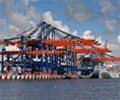
Rotterdam faced exceptional congestion(opens in a new tab) in the first half of the year as rising volumes — including the arrival of more than 100 ships with container exchanges of 12,000 TEUs — kept operations at the port under pressure, the Dutch hub said.
But a deeper concern for Rotterdam is the weakening competitive position of European industry that directly impacts the integrated industrial cluster of the port.
“In recent months, we as a port have been confronted with economic uncertainties, lagging investments and disruptions in supply chains,” Boudewijn Siemons, CEO of the Port of Rotterdam Authority, said in a first-half results statement.
The current investment climate in the Netherlands is causing companies to postpone or cancel investments, including those in sustainability, while at the same time production is increasing in countries outside Europe where conditions are more favorable, the port statement noted.
“In these turbulent times, as a port we must ensure that the security of supply of energy, food and other essential materials in Europe remains guaranteed,” Siemons said. “It is also very important that industry in the port remains competitive so as not to weaken Europe’s strategic autonomy.”
From a container shipping perspective, Rotterdam is back on top as first-half volume allowed it to reclaim its title as Europe’s busiest container port that was lost for the first time to Antwerp-Bruges in the first quarter.
First-half volume increased 2.7% year over year to 7 million TEUs, driven by an 8.4% increase in imports from Asia to support growing European consumption and a 9.1% increase in trade with North America.
Bulk shipments show sharp decline
While Rotterdam works on improving container flows, concerns are growing over the weakening competitive position of European industry. As one of the main gateways to North Europe, that is having a direct impact on Rotterdam’s bulk handling volume, particularly liquid bulk.
Several chemical companies have announced closures of plants in the Rotterdam area with the loss of hundreds of jobs, raising concerns about the future of the Dutch chemicals cluster.
Rotterdam’s total liquid bulk segment declined 5.3% year over year in the first half to 96.2 million metric tons. The throughput of mineral oil products showed a decline of 21.5% to 6.2 million metric tons, with the port describing the market as being in “backwardation,” which makes storage unprofitable because the current spot price is higher than the product’s futures price.
LNG was an outlier in the liquid bulk sector, with throughput increasing 9% as gas stocks in Europe continued to be replenished during the summer. But the volume of product categorized as “other liquid bulk cargo” fell 5.9% in the first half, mainly due to lower supplies of biodiesel from China because of anti-dumping duties and reduced use of palm oil as a raw material for biodiesel production in Europe.
Throughput of dry bulk cargo fell 8.9% year over year in the first half. The volume of iron ore and scrap was down 12.2% because of lower production in the German steel industry that is influenced by ongoing economic uncertainty and trade restrictions. Coal throughput decreased 21.1% due to lower supplies of coking coal, which is used in blast furnaces for steel production.
Source: Platts