LMT Group demonstrates a new tool for monitoring g...
3 hours ago

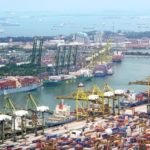
The UK’s sanctions on Russian ‘shadow’ tankers have generally been effective at reducing the overall volume of Russian crude that they have transported. However, many of these sanctioned vessels continue to operate and circumvent restrictions by delivering crude to five main ports in non-sanctioning countries.
Over the past two years, India and China have become the largest importers of Russian crude transported by UK-sanctioned vessels as there have been no sanctions preventing India and China from importing Russian crude oil, refining it, and exporting the products to sanctioning countries. However, in July 2025, the EU announced its 18th sanctions package that will ban the importation of oil products refined from Russian crude in third countries.
Recent developments
Recently, the UK has significantly increased the number of Russian ‘shadow’ vessels it has sanctioned, adding 254 new vessels across three tranches—on 9 May, 20 May, and 21 July, 2025—bringing the total to 355.

Of these 355 vessels, 70 have not been sanctioned by either the EU or US (OFAC), 113 have been sanctioned by all three jurisdictions (UK, EU and US), and 165 have been sanctioned by only the EU and UK.
However, of the 590 tankers that CREA has classified as Russian ‘shadow’ tankers transporting Russian oil and oil products between January 2024 and May 2025, 303 (51.4%) remain unsanctioned by the UK.
Meanwhile, many of the tankers that are sanctioned by the UK, continue doing brisk business.
CREA fact sheet overview
CREA’s analysis reveals that five ports in India and China received more than 57% of Russian crude transported by UK-sanctioned vessels. However, depending on the ports where they load and unload Russian crude oil, UK sanctions have a disparate impact on the different tankers.
To accurately assess how the behaviour of sanctioned vessels changes, we need data from an additional 30 to 60 days after the sanctions are imposed to capture the full impact. Therefore, this fact sheet focuses only on the 93 crude oil tankers sanctioned by the UK before the additions in May and July 2025.
Key findings
Policy recommendations
Methodology
The data used in this analysis is based on the Kpler dataset, which provides detailed information on the voyages of tankers transporting Russian crude oil and refined oil products. This data includes vessel identities, cargo types, volumes, origin and destination ports, specific routes, and ship-to-ship (STS) transfers.
Using CREA’s own pricing methodology detailed further here, we calculated the value of these trade flows. The data covers the period from June 2024 until the end of May 2025 and includes vessels sanctioned on specific dates: 13 June, 24 June, 18 July, 11 September, 17 October, 25 November, and 17 December 2024.

To accurately assess how sanctioned vessels’ behaviour changes, we need data from both the 45-day wind-down period and an additional 30-60 days post-sanctions to capture the full impact. Therefore, vessels sanctioned in the May 2025 tranches have been excluded from this analysis. Only completed trades within valid sanction dates, vessel identifiers, and destination timestamps were included in the analysis.
For each vessel, we established a 6-month baseline period immediately preceding the vessel’s sanction date. The post-sanction period spans from each vessel’s individual sanction date to the dataset end (31 May 2025). Monthly averages for both the baseline and post-sanctions periods were calculated by dividing the total trades/volumes/value (GBP) by six (for baseline) or by the total number of months after being sanctioned.
To calculate figures for the impact of sanctioning vessels by origin port, we included STS operations involving UK-sanctioned vessels. However, for analyses on destination ports we only measured the physical volumes of Russian crude unloaded at the destination ports, not the total volume handled by sanctioned vessels throughout their voyages. For example, if sanctioned Vessel A loads 1 tonne of crude and transfers it via STS to sanctioned Vessel B, which then delivers it to a destination port, we count only 1 tonne—the actual volume delivered—not 2 tonnes (the sum of both vessels’ involvement). While tracking total vessel involvement can help highlight the broader role of UK-sanctioned vessels in the transport of Russian oil, this analysis focuses on actual crude volumes reaching their final destinations.
CREA has compiled a list of 590 ‘shadow’ tankers that have transported Russian oil and oil products between January 2024 and the end of May 2025 according to the following methodology. However, of the 355 vessels sanctioned by the UK, 68 are not part of CREA’s ‘shadow’ tankers list, mainly because our methodology excludes LNG tankers. Therefore, when calculating how many ‘shadow’ tankers remain unsanctioned by the UK, we only counted the 287 UK-sanctioned tankers that appear in our ‘shadow’ tankers list, meaning 303 (51.4%) have yet to be sanctioned.
Source: Centre for Research on Energy and Clean Air (CREA)