Wärtsilä: All-Time High Operating Result And Cash ...
1 month ago

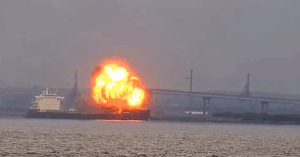

A 751-foot cargo ship carrying coal reported an explosion Monday evening while sailing through Baltimore Harbor, close to the site of last year’s deadly Francis Scott Key Bridge collapse. Authorities confirmed that all 23 people on board were safe, though the vessel suffered visible fire and blast damage.
The vessel, identified as the W-Sapphire, is a Liberian-flagged bulk carrier. According to officials, the ship had just loaded coal at CSX’s Curtis Bay terminal and was beginning its voyage to Mauritius when the explosion happened around 6:30 p.m. local time.
The blast occurred in the Patapsco River, less than half a mile from the remains of the Key Bridge, which partially collapsed on March 26, 2024, after being struck by the container ship Dali. That tragedy killed six construction workers and left Baltimore Harbor closed for months. Demolition of the collapsed bridge is still ongoing, and a replacement is not expected before 2028.
Video and photos from the scene showed heavy black smoke rising from the vessel after the explosion. Baltimore City Fire Department crews responded both by land and with fireboats, supported by tugboats that helped stabilise the ship. The fire was eventually extinguished while the ship was still afloat.
BREAKING: Cargo ship explodes in Baltimore Harbor in Chesapeake Bay, Maryland. pic.twitter.com/HuAErSIisR
— AZ Intel (@AZ_Intel_) August 18, 2025
Officials confirmed that 23 crew members and two pilots were on board at the time of the incident. None were injured. The Baltimore Fire Department described the vessel as showing “signs of damage consistent with a fire and explosion.”
A safety zone was established around the vessel. Coast Guard officials reported a 2,000-yard restricted zone, stretching from the Key Bridge site to Brewerton Angle Channel buoy “14.” Earlier reports also mentioned a 500-yard safety perimeter to keep other vessels clear of the main 700-foot-wide shipping channel.
Authorities said the vessel will remain at a designated anchorage area until Coast Guard inspections are complete. The exact cause of the explosion and fire remains under investigation.
Maritime experts have long warned that coal is one of the riskiest bulk cargoes to transport by sea. Hazards include self-heating, methane gas buildup, spontaneous combustion, and dust explosions.
Under the International Maritime Solid Bulk Cargoes (IMSBC) Code, coal must be closely monitored for methane emissions, temperature changes, and liquefaction risks. Cargo hotter than 55°C should be rejected, and continuous gas sampling is advised.
The UK P&I Club recently reported incidents where coal loaded from the U.S. East Coast emitted dangerously high methane levels. Petar Modev, the Club’s Head of Ship Inspections, warned in late 2023 that natural ventilation on ships was sometimes not enough to remove the excessive methane concentrations.
References: USCG, nbc news