New construction milestone for Yinson Production’s...
2 hours ago

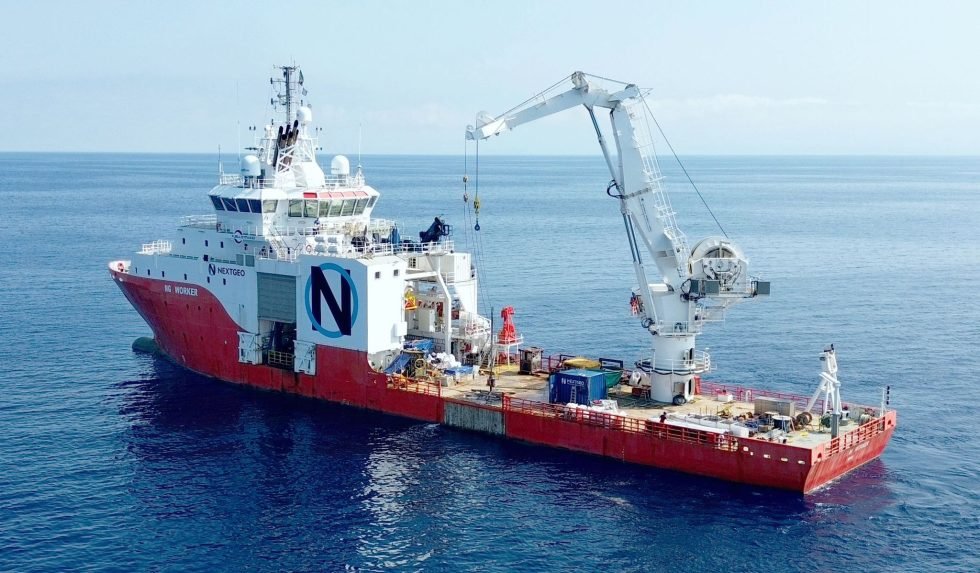
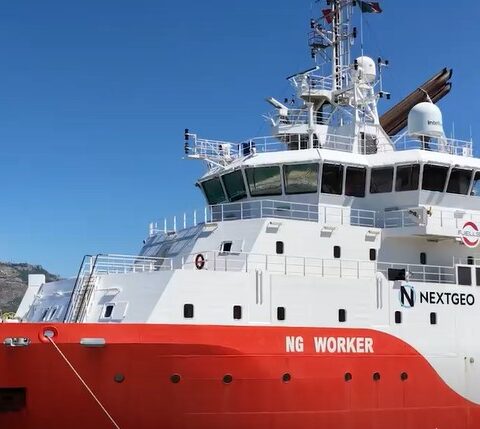
Italy-headquartered Next Geosolutions (NextGeo) has begun seabed surveys along the cable corridor route for the second electrical interconnector between Malta and Italy.
The IC2 interconnector will link the Terna substation at Ragusa, Sicily, and the Enemalta terminal station in Maghtab, to be laid in parallel to the existing HVAC cable link.
InterConnect Malta reported yesterday, September 21, that the survey vessel had completed mobilization and was set to begin seabed mapping operations from Sicily towards Malta, covering a 50-meter corridor along the 100-kilometer route.
“We are proud to be supporting ICM and Nexans in this important project by playing an active role in a strategically important energy infrastructure such as the Malta–Italy Interconnector 2,” said Giovanni Ranieri, CEO of NextGeo.
“Through the provision of high-quality geophysical and geotechnical seabed data along the cable route, we will contribute to a safe and reliable cable installation.”
The Detailed Marine Survey (DMS) uses ROV-mounted multi-beam, side-scan, sub-bottom, image capture, and magnetometer/UXO checks to de-risk the corridor and confirm burial and protection strategies, and will cover an area of about 5 square kilometers, InterConnect Malta said.
Nexans, which also delivered the first Malta-Italy interconnector in 2015, is manufacturing the 245 kV high-voltage subsea cable system for this second interconnector.
“This survey is a vital milestone in preparing for the Malta–Italy Interconnector 2. Working with NextGeo ensures that we have the most accurate seabed data available, allowing us to plan the final cable route, installation and protection with confidence and deliver a high-voltage subsea link that will serve Malta for decades to come,” Pascal Radue, EVP, PWR-Transmission at Nexans said.
To remind, IC2 obtained its final approval in January after securing the permit from the Italian Ministry for the Environment and Energy Security (MASE).
This second Malta-Sicily cable link is part of the Maltese Government’s future energy strategy for meeting the 2030 climate and energy targets and the longer-term decarbonization objectives.
The project, co-financed by the European Union under the European Regional Development Fund 2021-2027, is expected to be commissioned in 2026. The ERDF funding amounts to €165 million and will cover more than half of the total investment costs.

𝐓𝐚𝐤𝐞 𝐭𝐡𝐞 𝐬𝐩𝐨𝐭𝐥𝐢𝐠𝐡𝐭 𝐚𝐧𝐝 𝐚𝐧𝐜𝐡𝐨𝐫 𝐲𝐨𝐮𝐫 𝐛𝐫𝐚𝐧𝐝 𝐢𝐧 𝐭𝐡𝐞 𝐡𝐞𝐚𝐫𝐭 𝐨𝐟 𝐭𝐡𝐞 𝐨𝐟𝐟𝐬𝐡𝐨𝐫𝐞 𝐰𝐨𝐫𝐥𝐝!
𝐉𝐨𝐢𝐧 𝐮𝐬 𝐟𝐨𝐫 𝐛𝐢𝐠𝐠𝐞𝐫 𝐢𝐦𝐩𝐚𝐜𝐭 𝐚𝐧𝐝 𝐚𝐦𝐩𝐥𝐢𝐟𝐲 𝐲𝐨𝐮𝐫 𝐩𝐫𝐞𝐬𝐞𝐧𝐜𝐞 𝐢𝐧 𝐭𝐡𝐞 𝐡𝐞𝐚𝐫𝐭 𝐨𝐟 𝐭𝐡𝐞 𝐨𝐟𝐟𝐬𝐡𝐨𝐫𝐞 𝐞𝐧𝐞𝐫𝐠𝐲 𝐜𝐨𝐦𝐦𝐮𝐧𝐢𝐭𝐲!