Wärtsilä: All-Time High Operating Result And Cash ...
2 months ago

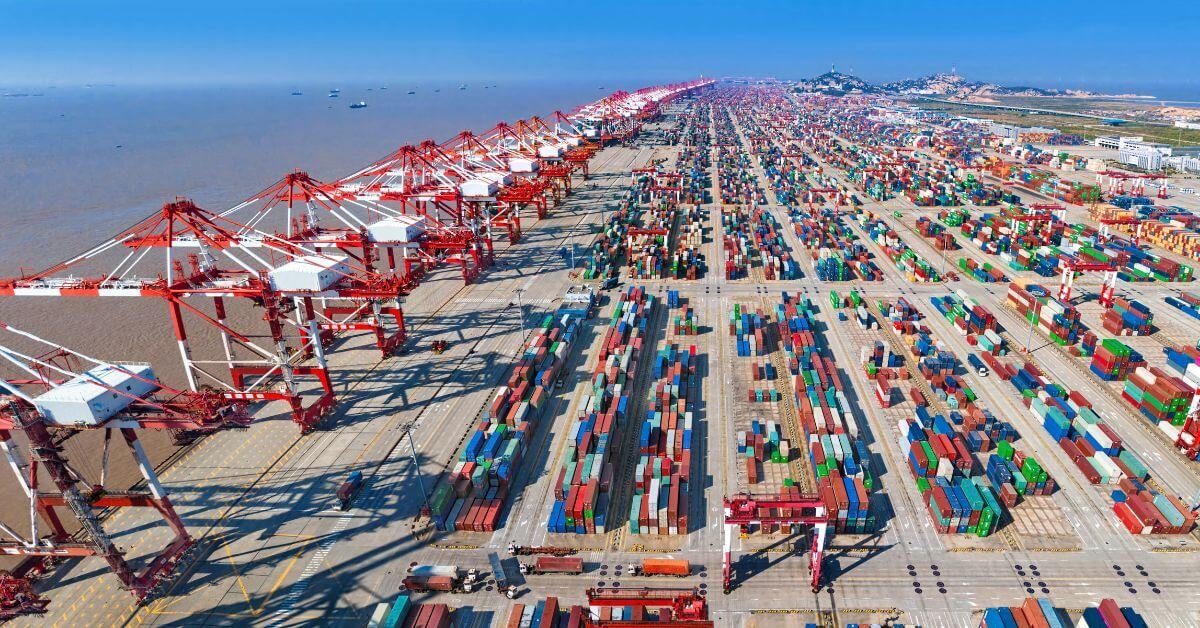
Terminal operators at Huangdao Port in east China’s Shandong province are set to enforce strict new rules from November 1 to curb visits by shadow fleet vessels and aging oil tankers.
The measures, detailed in an official notice reviewed by Reuters and a tanker-tracking firm, aim to block ships with fake International Maritime Organisation (IMO) numbers and vessels older than 31 years.
According to traders, the restrictions are directed at the so-called shadow fleet, a group of tankers often deployed to carry oil from countries under Western sanctions.
The announcement follows the U.S. decision last month to designate an oil terminal in nearby Dongjiakou port as a recipient of Iranian crude delivered by sanctioned ships. Both Dongjiakou and Huangdao are part of the Qingdao port area, which serves as China’s largest entry point for Iranian oil.
The notice was jointly issued by four terminal operators: Qingdao Haiye Oil Terminal Co, Qingdao Shihua Crude Oil Terminal Co, Qingdao Gangxin Oil Products Co, and Qingdao Lixing Logistics Co.
Tankers holding expired or invalid certificates from international agencies will be banned, along with ships that have recorded any pollution incidents or accidents in the past three years.
To tighten screening, Huangdao will also implement a scoring system to assess each tanker’s risk profile. The system assigns up to 100 points, with deductions for factors such as vessel age, classification society, and pollution liability cover. Ships rated below 55 points will be considered high risk and barred from anchoring at the port.
Emma Li, a China analyst at tanker tracker Vortexa Analytics, said that the changes appear to be a precautionary measure linked to environmental concerns and growing U.S. sanctions pressure.
She noted that while sanctions were not explicitly mentioned in the notice, the timing suggests Beijing is acting to reduce potential risks. Li also pointed out that the overall impact may be limited, as Huangdao handles far fewer high-risk tankers compared to other ports in Shandong.
China remains the top buyer of Iranian oil and has repeatedly defended its crude trade with Tehran, rejecting unilateral sanctions imposed by Western nations. Still, the new rules show that some Chinese terminals are taking steps to avoid vessels operating outside international regulations.
Reference: Reuters

Disclaimer :
The information contained in this website is for general information purposes only. While we endeavour to keep the information up to date and correct, we make no representations or warranties of any kind, express or implied, about the completeness, accuracy, reliability, suitability or availability with respect to the website or the information, products, services, or related graphics contained on the website for any purpose. Any reliance you place on such information is therefore strictly at your own risk.
In no event will we be liable for any loss or damage including without limitation, indirect or consequential loss or damage, or any loss or damage whatsoever arising from loss of data or profits arising out of, or in connection with, the use of this website.
Disclaimer :
The information contained in this website is for general information purposes only. While we endeavour to keep the information up to date and correct, we make no representations or warranties of any kind, express or implied, about the completeness, accuracy, reliability, suitability or availability with respect to the website or the information, products, services, or related graphics contained on the website for any purpose. Any reliance you place on such information is therefore strictly at your own risk.
Do you have info to share with us ? Suggest a correction