Pacific Basin’s new shipbuilding menu: 4 conventio...
12 minutes ago

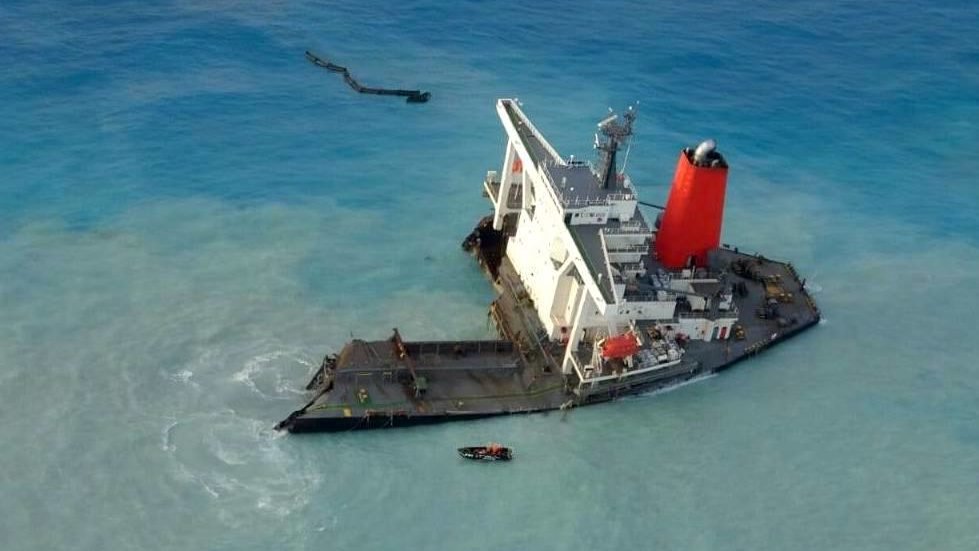
Mauritius has finally published the long-suppressed Court of Investigation report into the 2020 grounding of the Wakashio. The findings are damning — exposing what investigators call a “total lack of safety culture on board the Wakashio,” a disaster born from distraction, negligence, and systemic oversight failures.
The newcastlemax veered just five nautical miles off Mauritius as officers sought a mobile signal. The report notes: “The chief officer was preoccupied with his mobile phone and did not notice the course deviation.” Even when the master returned to the bridge, “no corrective action was taken despite the ship closing dangerously with the shoreline.”
The inquiry also condemned the owner and manager’s safety management system as “not implemented in practice and ignored by senior officers.” Investigators concluded that discipline on the bridge had broken down entirely: “The bridge team failed in their fundamental duty to keep a proper lookout.”
Local authorities do not escape censure either. The Mauritian Coast Guard, tasked with monitoring territorial waters, “failed to detect or act upon the abnormal trajectory of the Wakashio,” while the environmental response was branded “late and inadequate.”
Nearly 1,000 tonnes of fuel poured into lagoons, mangroves, and coral reefs, causing the country’s worst ecological catastrophe. Yet the report itself languished in government drawers for years, fuelling accusations of a cover-up.
The report concluded: “This accident was entirely preventable. It resulted from human error, compounded by systemic failures at every level.”
The Japan Transport Safety Board issued its report on the grounding of the Wakashio newcastlemax two years ago.
As with other reports into the disaster, the decision by the crew to head near to shore to seek out a telephone signal was cited as the primary cause for the accident.
According to the report, the captain of the giant vessel ordered it to divert from its planned route and approach the coast without obtaining marine charts of the area, leading to the grounding of the ship.
The captain also had two glasses of whisky and water at the birthday party of a crewmember before the accident.
Flag state Panama’s final accident report into the grounding of the newcastlemax bulk carrier was made public in July 2023. It also found that the crew’s decision to try and seek a wifi signal near to shore was the primary cause of the accident.
It took 18 months to remove the remnants of the giant Wakashio, which split in two on reefs near a protected UNESCO World Heritage site.
Investigations into the Wakashio have tended to focus on the crew. However, the failings of the coastal state, Mauritius, have received less coverage.
According to Stephen Spark, a UK-based maritime journalist, Splash reader, and keen follower of Mauritian affairs, the country’s coastal surveillance radar was badly maintained and some units were out of action; the coastguard post at Pointe du Diable, near the grounding, was undermanned and the officer on duty wasn’t able to use the radar and radio equipment competently. As a result, according to Spark, the ship was not alerted to the danger it was in.