Splash Singapore assembles maritime power players
3 hours ago

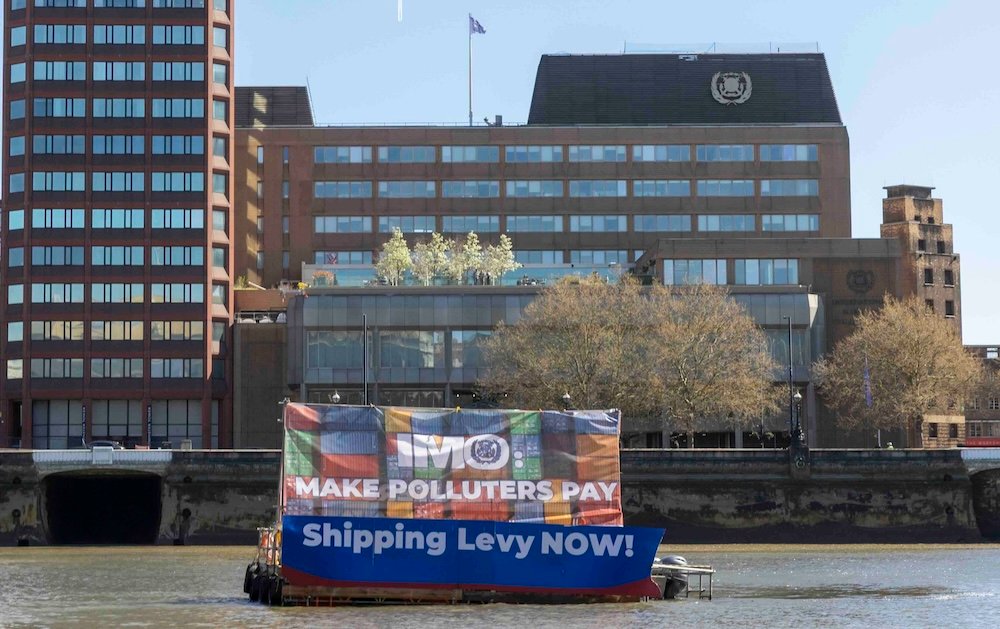
This week’s extraordinary Marine Environment Protection Committee (MEPC) session – running from today through to Friday – will see International Maritime Organization (IMO) member states debate a monumental consolidation: a draft of the entire MARPOL Annex VI (Air Pollution by Ships), including the controversial Net-Zero Framework (NZF). The proposed text stretches 120 pages and comprises six core chapters — spanning general definitions, emissions controls, carbon intensity rules, reporting, compliance verification, and the new NZF regime itself.
Beyond the NZF, the package also folds in prior decisions: MEPC 82’s multi-mode engine rules and data reporting clarifications, and MEPC 83 additions on IMO’s ship fuel data system, short-term GHG measures, and designating the Northeast Atlantic as a new SOx/NOx/PM Emission Control Area.
At the heart of the NZF is the twin mandate: ships must improve their greenhouse gas fuel intensity under two tiers of targets (base and direct), while ships exceeding emissions face annual remedial costs. Rewards are baked in too — carriers using zero or near-zero (ZNZ) fuels and technologies can receive credits drawn from the proposed IMO Net Zero Fund. The fund is tasked with disbursing revenue to support technology transfer, capacity building, and mitigation in vulnerable states (LDCs/SIDS).
Critics will argue the NZF is a global carbon tax by another name. Advocates counter it’s the only path to coherent global climate rules in shipping. The most contentious issues expected are the structure of fuel intensity tiers, the pricing of emissions units, and the enforcement regime. How LNG and biofuels fit into the framework will also be a hot source of debate this week.
With more than 30 submissions in hand and cross-jurisdictional tension rising, this MEPC marks a crossroads: adopt unified regulation or risk splintered regional mandates undermining trade and fairness, with the US in particular making its disdain known for the proposed legislation.
The International Chamber of Shipping has two submissions with the IMO, with the lobby group arguing the IMO’s global approach needs to be supported now and that this requires financial incentives for early movers so that an alternative fuel market can develop and fragmentation of regulation can be avoided. The ICS is also urging the IMO to develop implementation guidelines without delay to aid the process.
Among the many submissions viewed by Splash, there appears to be a wide push for getting the IMO Net Zero Fund operational as a top priority, and a number of countries say that it should start disbursement of revenues to developing and small island countries – accumulated from remedial contributions – by 2029, not later. This, they say, is the only way to gain momentum in the transition to alternative fuels.
Splash has reported repeatedly on the US’s opposition to the proposed legislation. The Trump administration’s weaponisation of trade and shipping reached a new level on Friday, with Washington threatening to sanction nations that vote in favour of the NZF.
In a joint statement, Secretary of State Marco Rubio and Transportation Secretary Sean Duffy said countries backing the IMO’s decarbonisation plan could face port bans, visa restrictions on seafarers, punitive vessel fees, and even sanctions on government officials deemed to be “sponsoring activist-driven climate policies.”
In its submission to the IMO, the US “invites” member states to oppose the IMO proposal, because of it risks imposing significant economic burdens on the shipping industry and its customers, driving inflation for consumers. Affordable and proven transitional fuels like LNG and biofuels are unfairly penalised, especially given the lack of clear existing alternatives, the American submission argues, while suggesting the rapid GHG fuel intensity reduction targets could lead to excessive revenue accumulation without achieving meaningful environmental goals. The Americans also hit out at the management and disbursement of revenues under the framework, claiming it is ill-defined and insufficient to ensure the efficacy of any emissions reduction framework.
Meanwhile, six oil producing states in a joint submission have demanded that the framework be delayed.
The joint submission from Bahrain, Iran, Kuwait, Saudi Arabia, Sierra Leone and Venezuela argues that the proposed framework, including the establishment of the IMO Net-Zero Fund, is out of MARPOL’s scope. The MARPOL Convention’s scope is purely technical with no mandate or provisions related to economic considerations such as establishing a framework to collect from private entities and disburse funds, and to allocate penalties for non-compliance, the submission maintains, claiming that there is no prior precedent within the United Nations system and IMO for adopting a mechanism enabling a UN body to require financial contributions to be paid to the UN body for non-compliance of private entities, such as transportation and shipping companies. The enforcement mechanisms under such bodies rely on flag states to regulate ships under their jurisdiction rather than establishing a direct accountability measure against privately owned ships, the submission from the oil producers argues.
The IMO rarely resorts to formal voting, but sources in London say a ballot looks increasingly likely. If consensus cannot be reached, adoption will require a two-thirds majority — 108 of the 176 member states that have ratified MARPOL Annex VI.
Analysts say the vote could hinge on a small number of undecided states — including several from Southeast Asia, the Middle East, and Latin America — where political and economic alignments are in flux.
Splash will be bringing readers details of all the key outcomes from the IMO meet-up during the week.