Damen delivers CSOV 9020 TSS Cruiser to Ta San Sha...
5 hours ago

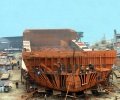
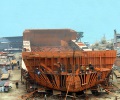
HD Hyundai is exploring multiple options for expanding into the United States, including acquiring shares in an existing shipyard or building one from the ground up — a move that could mark one of the most significant steps yet by a Korean shipbuilder into the U.S. market.
According to industry sources, HD Korea Shipbuilding & Offshore Engineering (HD KSOE), the intermediate holding company for HD Hyundai’s shipbuilding division, is conducting wide-ranging feasibility studies to determine the most viable entry strategy. While discussions remain preliminary, officials say the company is mapping out a detailed business blueprint following months of groundwork.
Earlier this year, HD Hyundai signed two strategic agreements to lay the foundation for its U.S. expansion. In April, it signed a memorandum of understanding with Huntington Ingalls Industries, America’s largest defense shipbuilder, to collaborate on advanced shipbuilding technologies and productivity enhancement.
Two months later, it entered a comprehensive partnership with Edison Chouest Offshore (ECO) to explore opportunities in commercial shipbuilding.
Industry analysts interpret these partnerships as the prelude to establishing a physical production base in the U.S., shifting from exploration to execution. Financing for the potential venture is expected to come from a joint Korea-U.S. shipbuilding investment program being formed by HD Hyundai, Cerberus Capital Management, and the Korea Development Bank.
“If HD Hyundai moves beyond MRO (maintenance, repair, and overhaul) contracts or joint construction to build a full-scale shipyard in the U.S., it would represent a massive investment,” said one industry official. Hanwha Group’s $100 million acquisition of Philadelphia Shipyard last year is seen as a benchmark, but analysts believe Hyundai’s investment could exceed that figure.
The company already operates major overseas shipyards, including HD Hyundai Vietnam Shipbuilding, established in 1996, which has grown into Southeast Asia’s largest yard with annual production of around 10 vessels. It also launched a second overseas site in the Philippines last year.
However, Hyundai’s U.S. ambitions depend heavily on the direction of trade talks and regulatory reforms. In July, Seoul and Washington agreed to lower mutual tariffs on Korean goods from 25 percent to 15 percent and to implement a $350 billion bilateral investment package — 43 percent of which was tied to shipbuilding. But disputes over profit-sharing and investment details have delayed the rollout of the shipbuilding fund.
Further complicating matters is the Jones Act, a long-standing U.S. maritime law that restricts domestic cargo transport to vessels built, owned, and crewed by American citizens or residents. Although a bill seeking to repeal parts of the Jones Act was introduced in both chambers of Congress in June, its prospects remain uncertain.
For now, HD Hyundai is said to be proceeding cautiously, keeping “all options on the table” as it balances opportunity with the complexities of U.S. trade, regulation, and industrial policy.
Source: Korea Bizwire