Lastly, it advised the Coast Guard to ask the International Maritime Organisation (IMO) to make Circular MSC.1/Circ.981 mandatory so PVHO safety rules are applied consistently worldwide.

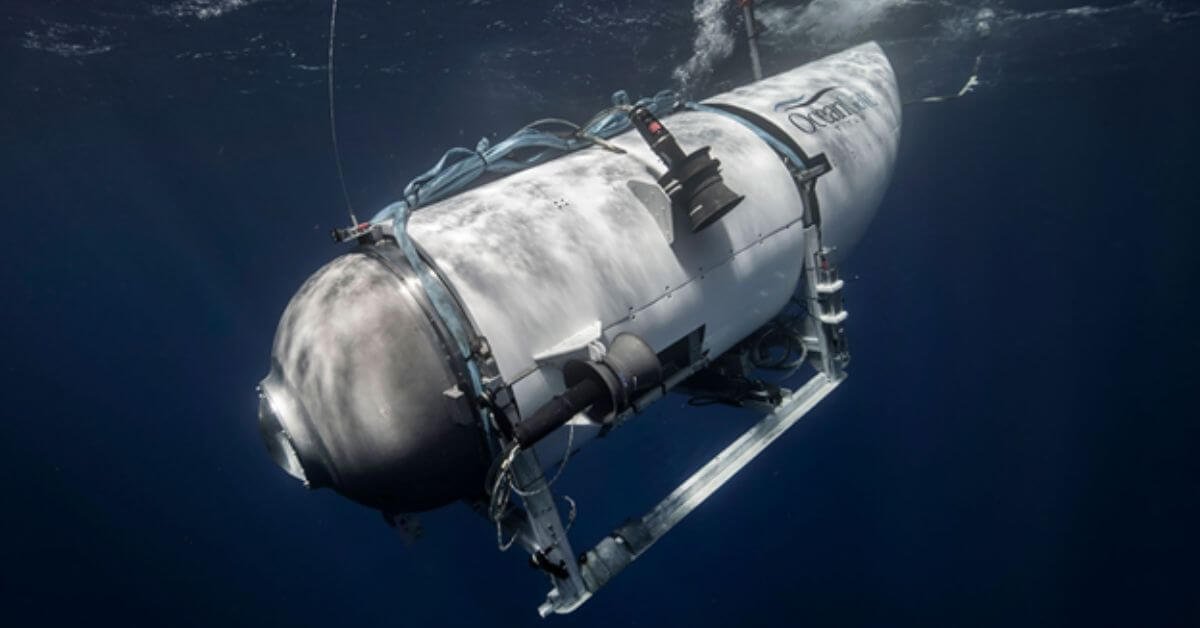

A new investigation by the United States National Transportation Safety Board (NTSB) has concluded that the catastrophic implosion of OceanGate’s Titan submersible in June 2023 was caused by severe design and engineering flaws, compounded by inadequate testing and oversight.
The implosion claimed the lives of all five people on board during a dive to the wreck of the RMS Titanic in the North Atlantic Ocean.
According to the NTSB, the incident occurred at approximately 10:47 a.m. local time on 18 June 2023, about 372 miles southeast of St John’s, Newfoundland and Labrador, Canada.
The Titan’s pressure hull failed while descending towards the Titanic wreck site, leading to a catastrophic implosion. The submersible and its launch and recovery system were completely destroyed. A 2023 customs declaration placed their combined value at around CAD 5.6 million (about USD 4.2 million).
The investigation found that the Titan’s carbon fibre composite pressure vessel likely suffered damage following dive 80, when it surfaced with one or more delaminations that weakened its structural integrity.
Additional damage of unknown origin was believed to have occurred after dive 82, further reducing the strength of the vessel. These defects, which worsened between dives 82 and 88, resulted in a local buckling failure that triggered the implosion.
Investigators determined that OceanGate’s engineering process was inadequate and led to the construction of a pressure vessel that contained multiple anomalies and did not meet required strength and durability standards.
The company reportedly failed to carry out sufficient testing, leaving it unaware of the true capability of the hull and how operational factors such as storage conditions and towing could impact its safety.
The report further stated that OceanGate’s analysis of real-time monitoring data from the pressure vessel was flawed, preventing the company from recognising that the Titan had been damaged and should have been withdrawn from service after dive 80.
NTSB final report on the hull failure and implosion of submersible Titan: https://t.co/unU0WAb9Mj pic.twitter.com/Py6oGAiJB3
— NTSB Newsroom (@NTSB_Newsroom) October 15, 2025
The NTSB added that OceanGate did not comply with the U.S. Coast Guard’s Navigation and Vessel Inspection Circular (NVIC) 05-93, which provides guidance for emergency response plans.
The agency found that had the company followed this guidance, emergency assets would likely have been positioned nearby, allowing the wreck to be found sooner, even though a rescue would not have been possible due to the instant nature of the implosion.
Despite OceanGate’s failure to notify search and rescue authorities before its expedition, the NTSB acknowledged that the U.S. Coast Guard’s coordination of search efforts was effective and led to the timely discovery of the wreckage.
Investigators also concluded that existing U.S. regulations and voluntary guidance for small passenger vessels are not sufficiently developed to address the safety of pressure vessels for human occupancy (PVHOs). The report pointed out that international standards for PVHOs would help ensure uniform safety requirements for such craft operating worldwide.
The NTSB determined that the probable cause of the Titan’s hull failure and implosion was OceanGate’s inadequate engineering process, which failed to establish the actual strength and durability of the carbon fibre pressure vessel. This led to the operation of a damaged structure that ultimately suffered local buckling failure.
It recommended that the U.S. Coast Guard set up a panel of experts to review current PVHO (Pressure Vessels for Human Occupancy) operations and share the study’s findings with the industry. Based on this review, the Coast Guard should create PVHO regulations that align with global standards.
The report further advised updating NVIC 05-93 to reflect the revised definition of small passenger vessels under the Passenger Vessel Safety Act of 1993 and to include the findings of the proposed study.
Reference: NTSB
1. eBooks for Engine Department
Master machinery operations, troubleshooting, and safety procedures with expertly written guides tailored for marine engineers. Prevent costly breakdowns and onboard accidents through practical knowledge.
👉 Explore Engine Department eBooks
2. eBooks for Deck Department
Sharpen your seamanship, navigation, and cargo-handling skills with real-world case studies and practical insights designed for deck officers and cadets.
👉 Discover Deck Department eBooks
3. eBooks on Electrical Fundamentals & Issues
Understand marine electrical systems, identify potential faults, and prevent onboard electrical failures with step-by-step explanations from industry experts.
4. Pocket Guides for Quick Reference
Compact, handy, and loaded with essential checklists—perfect for on-the-go reference during operations and emergencies at sea.
5. Combo Packs to Save Big
Access multiple expert eBooks at discounted prices. Ideal for professionals seeking complete safety and operational knowledge across various ship departments.
6. Digital Maritime Courses – Learn at Your Own Pace
Upgrade your competence with Marine Insight Academy’s online courses. Learn from industry professionals anytime, anywhere, and become a safer, smarter seafarer.
Disclaimer :
The information contained in this website is for general information purposes only. While we endeavour to keep the information up to date and correct, we make no representations or warranties of any kind, express or implied, about the completeness, accuracy, reliability, suitability or availability with respect to the website or the information, products, services, or related graphics contained on the website for any purpose. Any reliance you place on such information is therefore strictly at your own risk.
Disclaimer :
The information contained in this website is for general information purposes only. While we endeavour to keep the information up to date and correct, we make no representations or warranties of any kind, express or implied, about the completeness, accuracy, reliability, suitability or availability with respect to the website or the information, products, services, or related graphics contained on the website for any purpose. Any reliance you place on such information is therefore strictly at your own risk.
In no event will we be liable for any loss or damage including without limitation, indirect or consequential loss or damage, or any loss or damage whatsoever arising from loss of data or profits arising out of, or in connection with, the use of this website.