Wärtsilä: All-Time High Operating Result And Cash ...
2 months ago

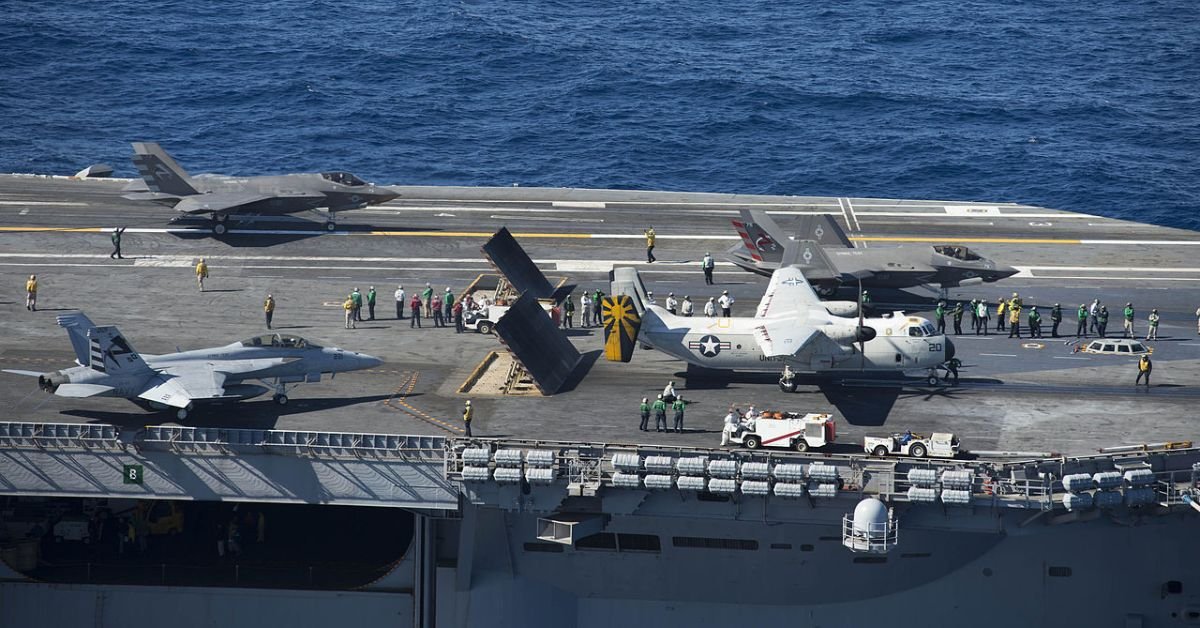
The U.S. Navy is investigating the possibility of fuel contamination aboard the aircraft carrier USS Nimitz (CVN-68) after two aircraft crashed into the South China Sea within thirty minutes of each other on October 26.
All five crew members were safely rescued, according to the Navy’s Pacific Fleet.
The first incident took place at around 2:45 p.m. local time, when an MH-60R Sea Hawk helicopter, assigned to the “Battle Cats” of Helicopter Maritime Strike Squadron 73 (HSM-73), went down while conducting routine operations from the carrier.
Approximately half an hour later, an F/A-18F Super Hornet, belonging to the “Fighting Redcocks” of Strike Fighter Squadron 22 (VFA-22), also crashed while on a separate mission.
All three personnel from the Sea Hawk and two aviators from the Super Hornet were rescued by search and rescue teams from Carrier Strike Group 11. The Navy confirmed that all five are safe and in stable condition.
Speaking to reporters aboard Air Force One on Monday, President Donald Trump suggested that contaminated fuel could have caused the two accidents. He ruled out any possibility of foul play and said investigators suspected “bad fuel” might have been involved.
The President added that the Navy would provide further details once its assessment was complete and said there was “nothing to hide.”
Sources familiar with the early stages of the investigation said fuel contamination is currently the leading theory behind both crashes. However, they also stated that these findings are preliminary, and the final report could take several months.
The Navy’s aircraft operate using JP-5 jet fuel, a specially refined grade designed for use at sea. The fuel is stored and distributed through a complex system of tanks and pumps aboard carriers such as the Nimitz and is supplied by Military Sealift Command oilers, which are replenished from Pentagon-approved sources worldwide.

Navy technical documentation explains that the fuel undergoes multiple rounds of testing and filtration throughout the supply chain. It is filtered before storage, again before being transferred to service tanks near the flight deck, and once more before being delivered to aircraft.
The V-4 Air Department, often referred to as “grapes” because of their purple uniforms, is responsible for managing fuel operations aboard carriers.
A 2019 Navy statement noted that maintaining fuel purity is vital for safe flight operations, as contaminated fuel can cause engine malfunctions or freezing at high altitudes.
The USS Nimitz is currently returning to its home port at Naval Base Kitsap in Washington State after completing a deployment in the Middle East, where it supported U.S. operations in response to Houthi rebel attacks on commercial shipping. This voyage marks the carrier’s final deployment before decommissioning.
In recent months, the Navy has faced a series of operational incidents involving other carriers. The USS Harry S. Truman experienced several accidents while deployed in the Middle East, including a case where a jet was accidentally shot down by a guided-missile cruiser, another where a fighter aircraft slipped off the hangar deck into the Red Sea, and one in which a jet went overboard after failing to engage its arresting cables during landing. No fatalities occurred in any of those cases, and investigations are still ongoing.
References: USNI, AP News
1. eBooks for Engine Department
Master machinery operations, troubleshooting, and safety procedures with expertly written guides tailored for marine engineers. Prevent costly breakdowns and onboard accidents through practical knowledge.
👉 Explore Engine Department eBooks
2. eBooks for Deck Department
Sharpen your seamanship, navigation, and cargo-handling skills with real-world case studies and practical insights designed for deck officers and cadets.
👉Discover Deck Department eBooks
3. eBooks on Electrical Fundamentals & Issues
Understand marine electrical systems, identify potential faults, and prevent onboard electrical failures with step-by-step explanations from industry experts.
4. Pocket Guides for Quick Reference
Compact, handy, and loaded with essential checklists—perfect for on-the-go reference during operations and emergencies at sea.
5. Combo Packs to Save Big
Access multiple expert eBooks at discounted prices. Ideal for professionals seeking complete safety and operational knowledge across various ship departments.
6. Digital Maritime Courses – Learn at Your Own Pace
Upgrade your competence with Marine Insight Academy’s online courses. Learn from industry professionals anytime, anywhere, and become a safer, smarter seafarer.
Disclaimer :
The information contained in this website is for general information purposes only. While we endeavour to keep the information up to date and correct, we make no representations or warranties of any kind, express or implied, about the completeness, accuracy, reliability, suitability or availability with respect to the website or the information, products, services, or related graphics contained on the website for any purpose. Any reliance you place on such information is therefore strictly at your own risk.
Disclaimer :
The information contained in this website is for general information purposes only. While we endeavour to keep the information up to date and correct, we make no representations or warranties of any kind, express or implied, about the completeness, accuracy, reliability, suitability or availability with respect to the website or the information, products, services, or related graphics contained on the website for any purpose. Any reliance you place on such information is therefore strictly at your own risk.
In no event will we be liable for any loss or damage including without limitation, indirect or consequential loss or damage, or any loss or damage whatsoever arising from loss of data or profits arising out of, or in connection with, the use of this website.