Port of Long Beach Nation’s Busiest Seaport throug...
4 hours ago

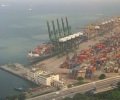
The Maritime and Port Authority of Singapore is going forward with a front-end engineering design study focused on low or zero-carbon bunkering proposals despite the International Maritime Organization’s recent vote to delay regulatory talks for new marine decarbonization rules by a year.
On Oct. 3, MPA awarded the study to a consortium led by Keppel Ltd. to examine solutions on Jurong Island. The Energy Market Authority of Singapore also awarded a study focused on low- or zero-carbon ammonia power generation.
The global shipping sector has been left pondering its next move after the International Maritime Organization member states voted Oct. 17 to delay discussion of its Net-Zero Framework by a year, faced with strong opposition from the US.
Consortium partner Sumitomo confirmed that it is “currently planned to proceed as scheduled, but we are continuing to assess the impact of IMO’s decision, in consultation with the relevant governmental agencies,” the company said in an email to Platts on Oct. 27.
Singapore remains committed to accelerating maritime decarbonization, an MPA spokesperson told Platts on Oct. 28.
“This pause does not affect Singapore’s efforts and the work already underway to support the decarbonisation of international shipping,” the MPA spokesperson said. “By the final day of the IMO meeting, the mood was no longer conducive for a vote on the adoption of the Net-Zero Framework. Singapore assessed that, on balance, deferring the vote would best preserve the progress already made on the NZF, allow Member States additional time to bridge remaining differences, and help ensure that when adopted, the NZF has broad and durable support from across the IMO membership.”
IMO’s adoption of the NZF was “supposed to be a milestone for shipping,” said Joey Ng, global head of decarbonization and fuel transition for shipbroker Braemar.
“What is now made crystal clear is that the flags will take the lead in terms and carbon will be regulated regionally and locally,” Ng said. “There will be a lack of global clarity and alignment, resulting in fragmented policies and systems.”
A shipping line told Platts that top management is still discussing the impact of the IMO decision and has yet to respond to the delays in implementing the NZF. Another shipping source informed Platts that many in the shipping industry will press ahead with decarbonization efforts despite the IMO setback.
The Global Centre for Maritime Decarbonisation is “pressing ahead with the work that needs doing now,” said CEO Lynn Loo.
“The delay of the vote doesn’t change the course we’re on, but it does expose how much broader the challenge has become,” Loo said. “Through pilots on ammonia bunkering, biofuels assurance, onboard carbon capture, and energy efficiency, we’re tackling the safety, operational, and verification gaps that must be closed before green fuels and technologies can be deployed with confidence.”
Source: Platts