Wärtsilä: All-Time High Operating Result And Cash ...
2 months ago

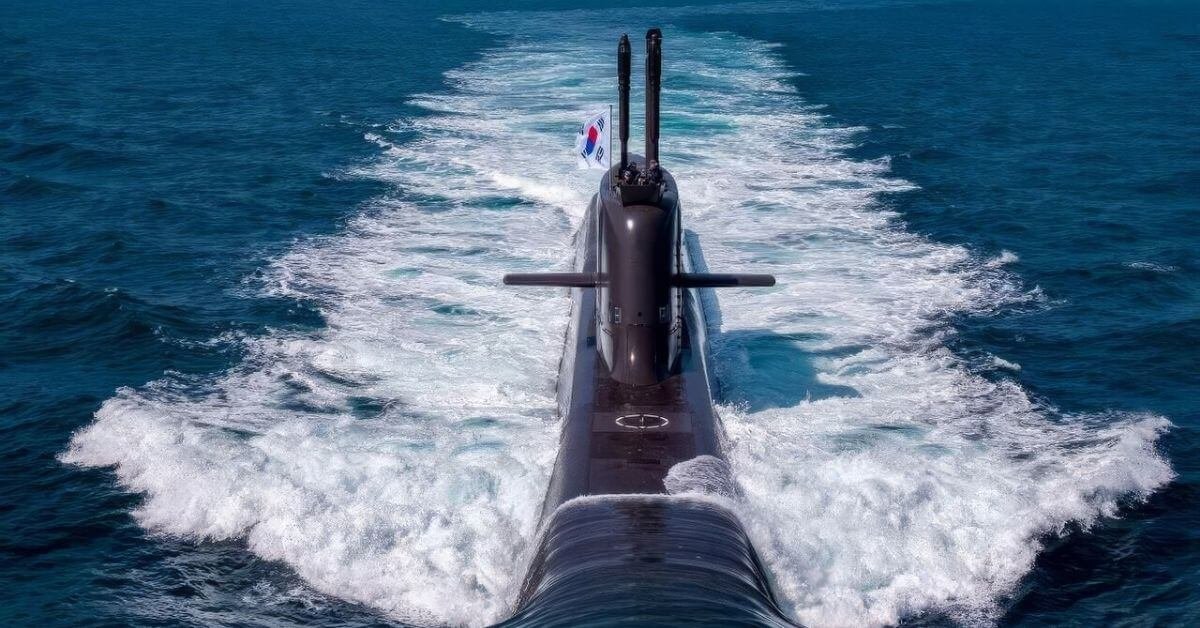
Senior South Korean officials have expressed doubts over the feasibility of constructing nuclear-powered submarines at a Korean-owned shipyard in the United States, following remarks from Prime Minister Kim Min-seok and Defence Minister Ahn Gyu-back during parliamentary hearings this week.
Prime Minister Kim told lawmakers on Thursday that the Philly Shipyard in Philadelphia, owned by South Korea’s Hanwha Group, currently lacks the capability to build nuclear-powered submarines. His comments came after U.S. President Donald Trump announced on social media that he had approved South Korea’s plan to build such submarines at the facility.
In a post on his Truth Social platform late last month, Trump said he had authorised South Korea to build nuclear-powered submarines “rather than the old-fashioned, far less nimble diesel-powered submarines they have now”. The post followed a summit where President Lee Jae Myung reportedly sought U.S. support for acquiring nuclear fuel for submarines equipped with conventional weapons.
However, many in Seoul believe the submarines should be built domestically. Defence Minister Ahn Gyu-back told lawmakers on Wednesday that it was more practical to build them in South Korea because of the country’s advanced shipbuilding technology and decades of experience in submarine construction.
South Korea is already home to some of the world’s top shipbuilders, including Hanwha Ocean, which jointly owns the Philly Shipyard.
The Philly Shipyard, located along the Delaware River, is currently working on training ships for U.S. maritime academies and preparing to produce modules for Navy auxiliary vessels in the future.
Hanwha acquired the yard from Norwegian owner Aker last year and pledged a $5 billion investment to expand its role in the U.S. shipbuilding industry.
During a press conference earlier this week, U.S. Defence Secretary Pete Hegseth said that the administration would work closely with the Departments of State and Energy to implement the president’s commitment. He added that the U.S. intended to help its allies strengthen their own defence capabilities.
A Pentagon official also told U.S. media that Washington was committed to empowering allies such as South Korea to take a greater role in their national defence, while ensuring that cooperation on nuclear-powered submarines adhered to all applicable laws and policies.
Under the 2015 Atomic Energy Peaceful Uses Agreement, South Korea is restricted in the amount of nuclear fuel it can produce, effectively preventing it from developing or operating nuclear-powered submarines without U.S. authorisation.
South Korea previously sought a separate nuclear fuel agreement during Trump’s first term, but the proposal never advanced into a formal accord. Industry sources have said that any new deal would likely only involve fuel supply and would not include access to sensitive U.S. reactor technology.
Defence experts in Seoul view nuclear-powered submarines as an important step to counter North Korea’s submarine-launched ballistic missile (SLBM) threat.
Former South Korean President Moon Jae-in had said in 2018 that nuclear-powered submarines would allow longer underwater patrols and improve the country’s ability to counter the North’s SLBM operations.
That same year, South Korea considered designing a submarine based on France’s Barracuda-class, which uses low-enriched uranium fuel. It is still unclear if that idea is still being considered.
Naval Chief of Staff Kim Tae-hoon said last month that discussions so far remain “at the level of political declarations,” and that developing and launching a nuclear-powered submarine could take more than a decade.
References: USNI, Reuters
1. eBooks for Engine Department
Master machinery operations, troubleshooting, and safety procedures with expertly written guides tailored for marine engineers. Prevent costly breakdowns and onboard accidents through practical knowledge.
👉 Explore Engine Department eBooks
2. eBooks for Deck Department
Sharpen your seamanship, navigation, and cargo-handling skills with real-world case studies and practical insights designed for deck officers and cadets.
👉Discover Deck Department eBooks
3. eBooks on Electrical Fundamentals & Issues
Understand marine electrical systems, identify potential faults, and prevent onboard electrical failures with step-by-step explanations from industry experts.
4. Pocket Guides for Quick Reference
Compact, handy, and loaded with essential checklists—perfect for on-the-go reference during operations and emergencies at sea.
5. Combo Packs to Save Big
Access multiple expert eBooks at discounted prices. Ideal for professionals seeking complete safety and operational knowledge across various ship departments.
6. Digital Maritime Courses – Learn at Your Own Pace
Upgrade your competence with Marine Insight Academy’s online courses. Learn from industry professionals anytime, anywhere, and become a safer, smarter seafarer.
Disclaimer :
The information on this website is for general purposes only. While efforts are made to ensure accuracy, we make no warranties of any kind regarding completeness, reliability, or suitability. Any reliance you place on such information is at your own risk. We are not liable for any loss or damage arising from the use of this website.
Disclaimer :
The information on this website is for general purposes only. While efforts are made to ensure accuracy, we make no warranties of any kind regarding completeness, reliability, or suitability. Any reliance you place on such information is at your own risk. We are not liable for any loss or damage arising from the use of this website.