No reported injuries in container vessel fire in S...
4 days ago

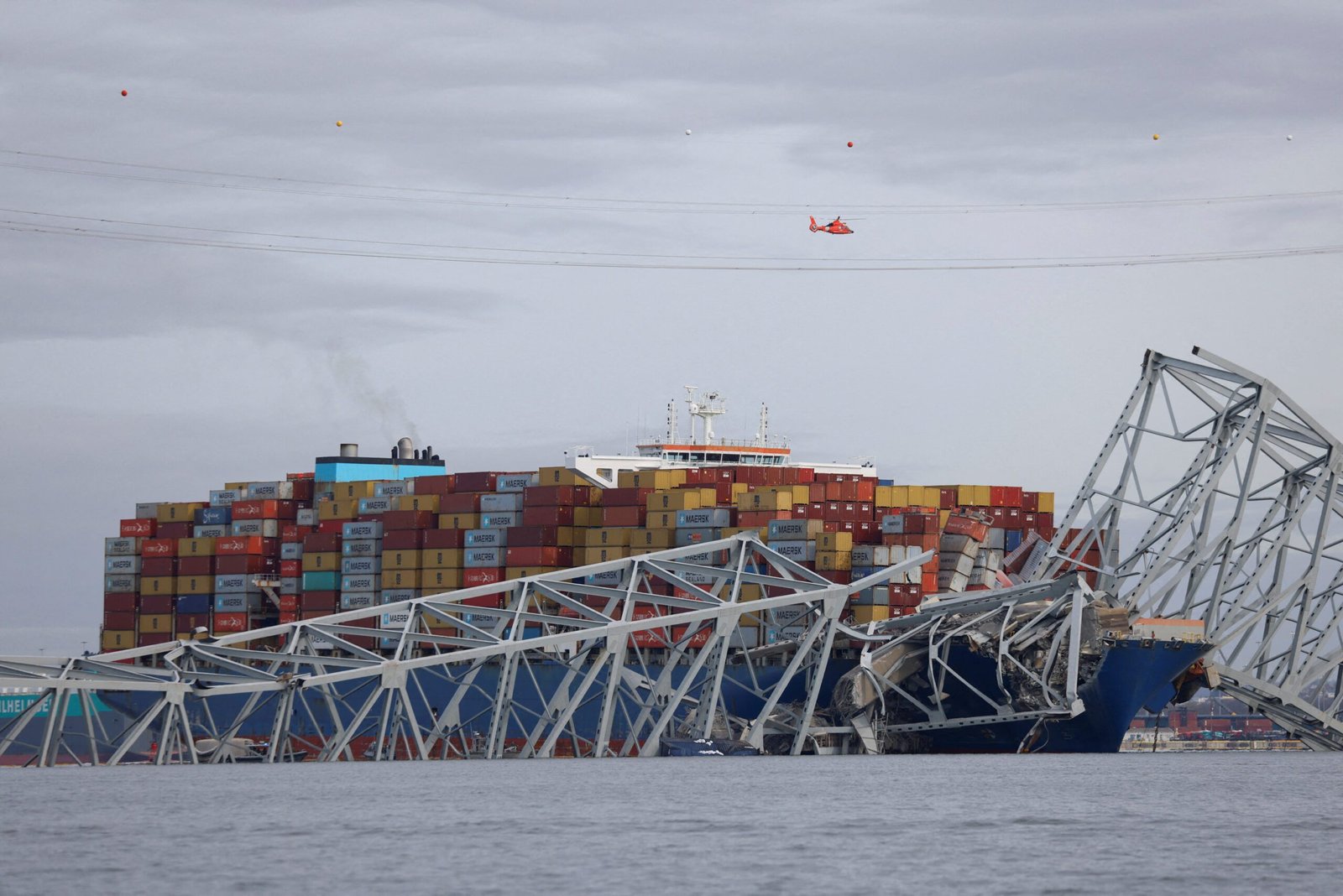
A labeling band on a single signal wire caused the electrical blackout that led to the containership Dali’s collision with Baltimore’s Francis Scott Key Bridge in March 2024, killing six highway workers, the National Transportation Safety Board revealed Tuesday.
The investigation found that wire-label banding prevented the wire from being fully inserted into its terminal block spring-clamp gate, causing an inadequate connection in the 984-foot vessel’s electrical system. When the wire electrically disconnected, a high-voltage breaker opened unexpectedly, triggering a cascade of events that resulted in the loss of propulsion and steering as the Singapore-flagged containership departed Baltimore Harbor.
“The Dali, at almost 1,000 feet, is as long as the Eiffel Tower is high, with miles of wiring and thousands of electrical connections,” said NTSB Chairwoman Jennifer Homendy. “Finding this single wire was like hunting for a loose rivet on the Eiffel Tower.”
The initial blackout occurred at approximately 0129 local time on March 26, 2024, cutting power to critical systems including steering gear pumps, the fuel oil flushing pump, and main engine cooling water pumps. After the blackout, the Dali’s heading began swinging to starboard toward Pier 17 of the Key Bridge. Despite efforts by the pilots and bridge team to alter the vessel’s trajectory, the loss of propulsion rendered their actions ineffective.
When the vessel struck the southern pier supporting the bridge’s central span, a substantial portion of the structure collapsed into the Patapsco River. Portions of the pier, deck, and truss spans fell onto the vessel’s bow and forwardmost container bays.
Six members of a seven-person road maintenance crew died in the collapse. One highway worker survived with serious injuries, and an inspector escaped unharmed. One of the 23 persons aboard the Dali sustained a minor injury.
The NTSB determined the probable cause to be the “loss of electrical power (blackout), due to a loose signal wire connection to a terminal block stemming from the improper installation of wire-label banding, resulting in the vessel’s loss of propulsion and steering close to the bridge. Contributing to the collapse of the Key Bridge and the loss of life was the lack of countermeasures to reduce its vulnerability to collapse due to impact by ocean- going vessels, which could have been implemented if a vulnerability assessment had been conducted by the MDTA as recommended by AASHTO. Also contributing to the loss of life was the lack of effective and immediate communications to notify the highway workers to evacuate the bridge.”
The NTSB investigation identified additional safety concerns beyond the immediate cause. The vessel’s main engine was configured to shut down due to low cooling water pressure—a design that met classification standards at the time of construction but endangered the ship when the cooling pump lost power. Investigators also found issues with the flushing pump being used as a fuel service pump for diesel generators, a role for which it lacked redundancy.
“But like all of the accidents we investigate, this was preventable,” Homendy said. “Implementing NTSB recommendations in this investigation will prevent similar tragedies in the future.”
The investigation revealed that infrared thermal imaging could have identified the loose wire if it had been used to inspect the Dali’s high-voltage switchboard connections as part of the vessel’s preventative maintenance program.
Contributing to the severity of the incident was the bridge’s vulnerability to large vessel strikes. The Key Bridge opened in 1977, and vessels have grown substantially larger since then. The Dali measured 984 feet—ten times the size of the Blue Nagoya, a containership that caused only minor damage when it contacted the same bridge after losing propulsion in 1980.
As part of the Dali investigation, the NTSB expanded its focus beyond Baltimore, sending letters to 30 owners of major spans over navigable waterways across the country. The agency urged these bridge owners to evaluate how vulnerable their structures are to strikes from today’s much larger ocean-going vessels and, where necessary, develop concrete risk-reduction plans.
This directive requires owners to apply long-standing AASHTO (American Association of State Highway and Transportation Officials) guidance on vessel-collision design, calculate collapse risk probabilities, and consider real-world countermeasures—from fendering and structural upgrades to motorist warning systems and traffic controls. The Key Bridge collapse is being treated not as an isolated incident, but as a wake-up call for every aging, ship-exposed bridge in the U.S. maritime system.
The NTSB found that quick actions by the Dali’s pilots, shoreside dispatchers, and the Maryland Transportation Authority to stop bridge traffic prevented greater loss of life.
Damage to the Dali exceeded $18 million, with cargo damages undetermined. Bridge replacement costs are estimated between $4.3 billion and $5.2 billion, with completion anticipated in late 2030. Over 34,000 vehicles that formerly traveled over the Key Bridge daily—including 10% trucks and all vehicles carrying hazardous materials prohibited from using Baltimore’s tunnels—must now take extended detours.
Grace Ocean and Synergy Marine Group, the vessel’s owner and manager, issued a statement thanking the NTSB “for the professionalism and technical rigour it has applied throughout this investigation.” The companies said they would review the Board’s findings “in detail with our technical teams, the vessel owner and counsel.”
Eight Dali crew members have remained in the United States to support the investigation. Four have now been granted permission to visit their families in early December.
The NTSB issued 18 new safety recommendations to multiple organizations, addressing issues ranging from vessel redundancy and electrical maintenance to bridge protection and emergency communications:
In March 2025, the NTSB issued urgent recommendations addressing bridge vulnerability to vessel strikes:
A synopsis of actions taken Tuesday, including the probable cause, findings and recommendations, can be found on ntsb.gov. The complete investigation report will be released in the coming weeks.

Sign up for gCaptain’s newsletter and never miss an update