Wärtsilä: All-Time High Operating Result And Cash ...
3 months ago

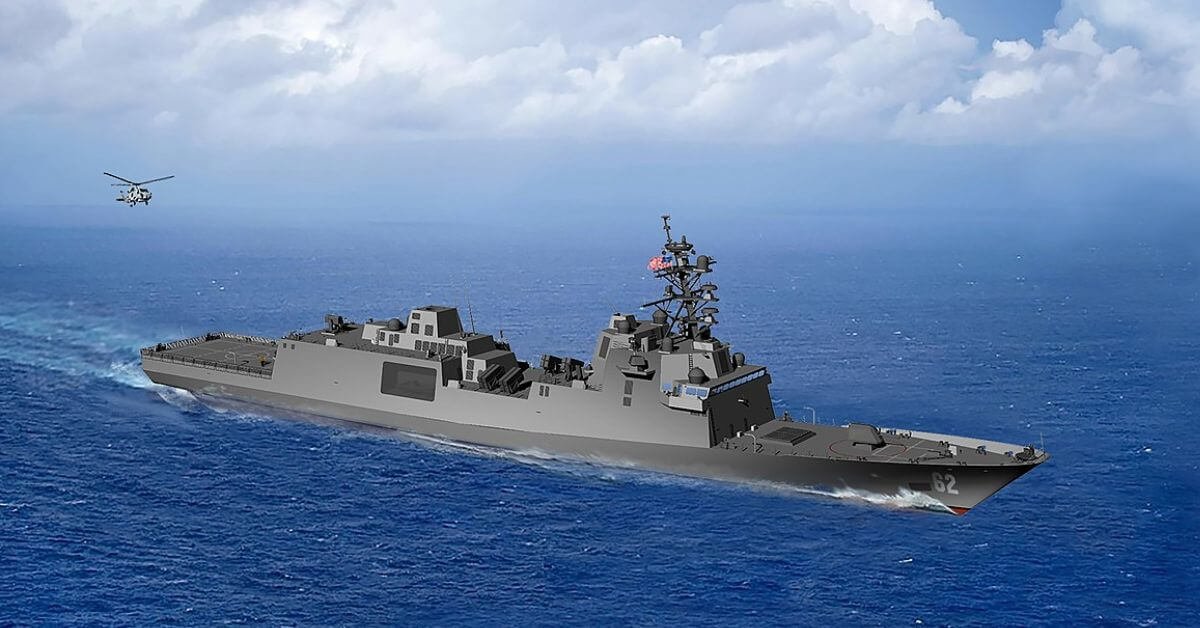

The U.S. Navy has cancelled the Constellation-class frigate program after years of delays, cost increases and design complications, and shifted its focus toward new small surface combatants that can be delivered faster.
The decision was announced by Secretary of the Navy John Phelan, who described it as part of a strategic move to speed up shipbuilding across the fleet.
Under the new framework agreed between the Navy and shipbuilder Fincantieri Marinette Marine, the service will terminate the last four frigates planned in the class.
Only the first two ships, Constellation (FFG-62) and Congress (FFG-63), will continue through the production process to keep the Wisconsin shipyard active as the Navy transitions to future programs. None of the cancelled ships had begun construction.
A defence official said keeping the yard active was essential for the Navy’s long-term industrial base, as Marinette employs around 3,000 workers across its three facilities on Lake Michigan.
The yard’s existing workload includes the final Freedom-class Littoral Combat Ship and four Multi-Mission Surface Combatants for the Royal Saudi Navy.
Fincantieri’s leadership said the company expected the Navy to channel new work into the shipyards, including potential roles in amphibious platforms, icebreakers, special-mission vessels and the small surface combatants the Navy aims to field more rapidly.
The Navy plans to ask Congress to reallocate a portion of the unspent Constellation-class funding towards new ships that can be produced more quickly at Marinette. According to Navy budget data, the service has invested about $2 billion so far, while Congress has appropriated $7.6 billion for the programme’s six hulls.
The Constellation-class was selected in 2020, based on the European FREMM frigate used by the French and Italian navies. However, once detailed design work began, extensive modifications were required to meet US survivability and systems standards. These changes added more than $1 billion to programme costs and pushed the lead ship’s delivery from 2026 to late 2029, a delay of nearly three years.
The redesign also increased the ship’s length by more than 20 feet and added around 500 tonnes of displacement. The final product shared only about 15% commonality with the original FREMM design, far below the Navy’s intended 85%.
A former senior acquisition official, Nickolas Guertin, had remarked earlier this year that altering foreign designs was “much harder than it seems”, stating that the process often becomes more complicated than designing a new vessel from scratch.
The Navy is currently conducting a fleet design review that will influence the next generation of warships and unmanned systems.
The service maintains a requirement for 73 small surface combatants, and officials have showed interest in accelerating the Landing Ship Medium programme and larger unmanned surface vessels, both of which could potentially be built at Marinette.
References: USNI, Naval News
Disclaimer :
The information on this website is for general purposes only. While efforts are made to ensure accuracy, we make no warranties of any kind regarding completeness, reliability, or suitability. Any reliance you place on such information is at your own risk. We are not liable for any loss or damage arising from the use of this website.
Disclaimer :
The information on this website is for general purposes only. While efforts are made to ensure accuracy, we make no warranties of any kind regarding completeness, reliability, or suitability. Any reliance you place on such information is at your own risk. We are not liable for any loss or damage arising from the use of this website.
1. eBooks for Engine Department
Master machinery operations, troubleshooting, and safety procedures with expertly written guides tailored for marine engineers. Prevent costly breakdowns and onboard accidents through practical knowledge.
👉 Explore Engine Department eBooks
2. eBooks for Deck Department
Sharpen your seamanship, navigation, and cargo-handling skills with real-world case studies and practical insights designed for deck officers and cadets.
👉Discover Deck Department eBooks
3. eBooks on Electrical Fundamentals & Issues
Understand marine electrical systems, identify potential faults, and prevent onboard electrical failures with step-by-step explanations from industry experts.
4. Pocket Guides for Quick Reference
Compact, handy, and loaded with essential checklists—perfect for on-the-go reference during operations and emergencies at sea.
5. Combo Packs to Save Big
Access multiple expert eBooks at discounted prices. Ideal for professionals seeking complete safety and operational knowledge across various ship departments.
6. Digital Maritime Courses – Learn at Your Own Pace
Upgrade your competence with Marine Insight Academy’s online courses. Learn from industry professionals anytime, anywhere, and become a safer, smarter seafarer.