Wärtsilä: All-Time High Operating Result And Cash ...
3 months ago

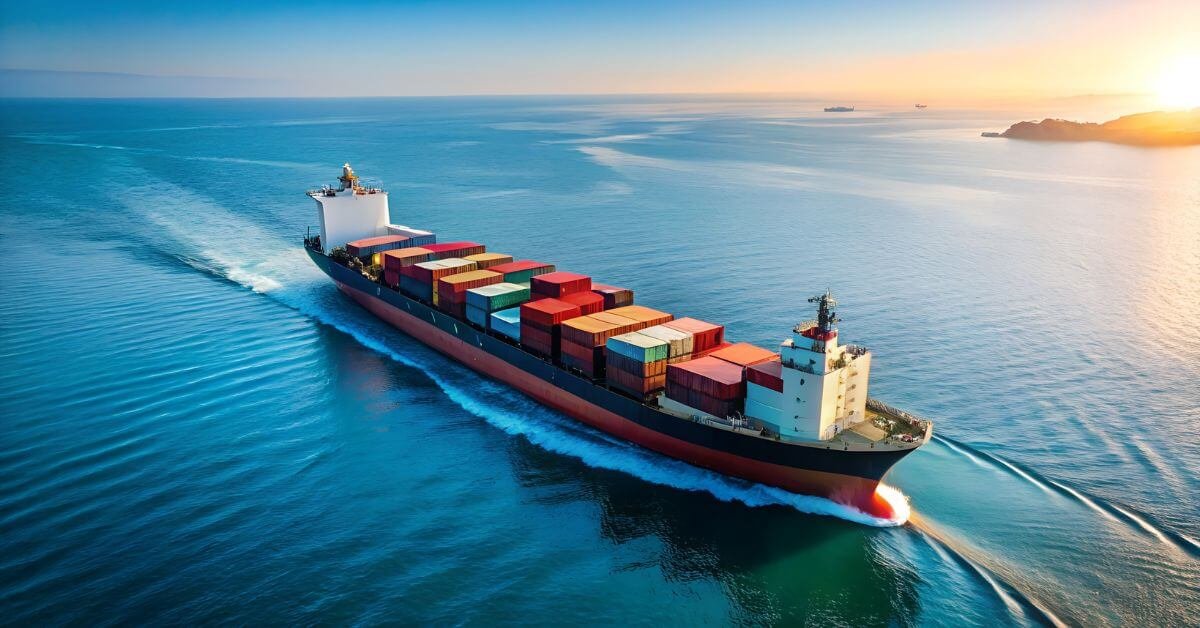

A new industry report reveals how nuclear propulsion creates competitive advantage for both operators and charterers through superior economics and performance.
Nuclear-powered containerships have the potential to eliminate bunker costs, cut greenhouse gas (GHG) emissions and deliver faster transit times, while maintaining safety and economic competitiveness.
The findings are drawn from a new Lloyd’s Register and LucidCatalyst report for Seaspan Corporation Pte. Ltd. The report examines the technical, economic, and regulatory potential of integrating small modular reactors (SMRs) into the containership fleet. LucidCatalyst performed a comprehensive analysis of the costs and benefits for Seaspan’s business model and collaboratively developed requirements that, if met, would create significant value.
For vessel operators, nuclear-powered vessels eliminate their largest operating costs, up to $50 million annually in bunker fuel and an estimated $18 million in carbon penalties.
According to the analysis, a single 15,000 TEU nuclear-powered containership operating at 25 knots (39% faster than conventional vessels) could deliver up to 38% higher annual cargo capacity compared to conventionally fuelled vessels through a combination of increased speed (enabling 6.3 versus 5 round voyages annually) and 5% additional container space from the elimination of fuel tanks and systems.
The report highlights that translating these requirements into a rigorous, requirements-led supply chain and procurement strategy, through a cross-industry consortium, is essential for widespread success. If industry pledges to purchase more than 1,000 units in 10–15 years, it estimates that modular reactors could be produced for US$750–1,000 per kilowatt, significantly cheaper than conventional nuclear power plants, and maintained within standard vessel drydock cycles. Each unit would be designed to operate for around five years between refuelling, drastically reducing downtime and providing independence from global bunkering networks.
The study outlines a roadmap showing how manufactured nuclear propulsion units could reach commercial readiness within four years of starting an intensive program, with total system costs below $4,000/kW and fuel costs under $50/MWh. Market modelling indicates potential uptake of 40–90 GW by 2050, depending on regulatory progress and industry adoption.
The findings also point to best practices for designing a competitive supply chain that provides depth of supply, competition on price and performance, and avoids vendor ‘lock-in’, as well as innovative reactor and fuel-leasing models that could help shipowners and operators manage upfront costs while maintaining safety and regulatory compliance.
The report forms the first phase of a three-part programme. The next stage will focus on concept design and regulatory readiness, including engagement with shipyards, port authorities, and nuclear regulators. A final phase will create a detailed implementation roadmap, outlining risk management, certification, and investment strategies for large-scale deployment.
Meg Dowling, Senior Engineer – Nuclear Technology and Alternative Fuels, Lloyd’s Register, said: “The energy transition and long-term sustainability challenges of shipping demands long-term solutions that can scale. Nuclear propulsion offers not just a decarbonised solution, but a transformative economic opportunity for shipowners and charterers alike. The results of this research give us a strong foundation to define how systems can be integrated within the commercial fleet to provide a credible pathway towards safe, commercially viable, zero-emission shipping.”
Peter Jackson, Chief Technology Officer at Seaspan Corporation Pte. Ltd., said: “As part of our ongoing efforts to find safe and commercially viable energy transition pathways, we have partnered with LR and Lucid Catalyst to explore nuclear propulsion for containerships. Small Modular Reactors (SMR’s) is a very exciting technology offering several desirable benefits for shipowners and operators, as outlined in this report. Naturally there are challenges to overcome, but I am confident that ongoing work in this area and studies like this will soon allow nuclear powered containerships to be operating safely, economically, and emission free.”
Eric Ingersoll, Managing Partner, LucidCatalyst, added: “Nuclear propulsion transforms shipping economics, not just emissions. Our analysis shows that nuclear-powered containerships will likely outcompete conventionally fuelled and green fuelled competitors—dominating their trading routes through superior performance without requiring green premiums. The key to unlocking this advantage is organising the market through sophisticated supply chain and technology strategies. By forming a cross-industry consortium, we can build a responsive supply chain and achieve competitive reactor costs, making nuclear the economically optimal choice for shipowners and charterers alike.”
LR has been leading industry efforts to develop the safety, regulatory and assurance frameworks needed for nuclear propulsion at sea. It is a founding member of the Nuclear Energy Maritime Organisation (NEMO) and an active contributor to the IAEA’s Atomic Technologies Licensed at Sea (ATLAS) programme. Both initiatives are shaping the global regulatory landscape for commercial nuclear shipping.
LR recently issued Navigating Nuclear Energy in Maritime, a new guidance document providing the first roadmap for the safe and responsible use of nuclear technology in commercial shipping and offshore industries. This guidance builds on LR’s industry-leading Fuel for Thought: Nuclear research programme, which brings together decades of classification, safety and compliance expertise with specialist nuclear insight to provide an evidence-based framework for project teams at every stage of development.
Press Release
Disclaimer :
The information on this website is for general purposes only. While efforts are made to ensure accuracy, we make no warranties of any kind regarding completeness, reliability, or suitability. Any reliance you place on such information is at your own risk. We are not liable for any loss or damage arising from the use of this website.
Disclaimer :
The information on this website is for general purposes only. While efforts are made to ensure accuracy, we make no warranties of any kind regarding completeness, reliability, or suitability. Any reliance you place on such information is at your own risk. We are not liable for any loss or damage arising from the use of this website.
1. eBooks for Engine Department
Master machinery operations, troubleshooting, and safety procedures with expertly written guides tailored for marine engineers. Prevent costly breakdowns and onboard accidents through practical knowledge.
👉 Explore Engine Department eBooks
2. eBooks for Deck Department
Sharpen your seamanship, navigation, and cargo-handling skills with real-world case studies and practical insights designed for deck officers and cadets.
👉Discover Deck Department eBooks
3. eBooks on Electrical Fundamentals & Issues
Understand marine electrical systems, identify potential faults, and prevent onboard electrical failures with step-by-step explanations from industry experts.
4. Pocket Guides for Quick Reference
Compact, handy, and loaded with essential checklists—perfect for on-the-go reference during operations and emergencies at sea.
5. Combo Packs to Save Big
Access multiple expert eBooks at discounted prices. Ideal for professionals seeking complete safety and operational knowledge across various ship departments.
6. Digital Maritime Courses – Learn at Your Own Pace
Upgrade your competence with Marine Insight Academy’s online courses. Learn from industry professionals anytime, anywhere, and become a safer, smarter seafarer.