Wärtsilä: All-Time High Operating Result And Cash ...
2 months ago

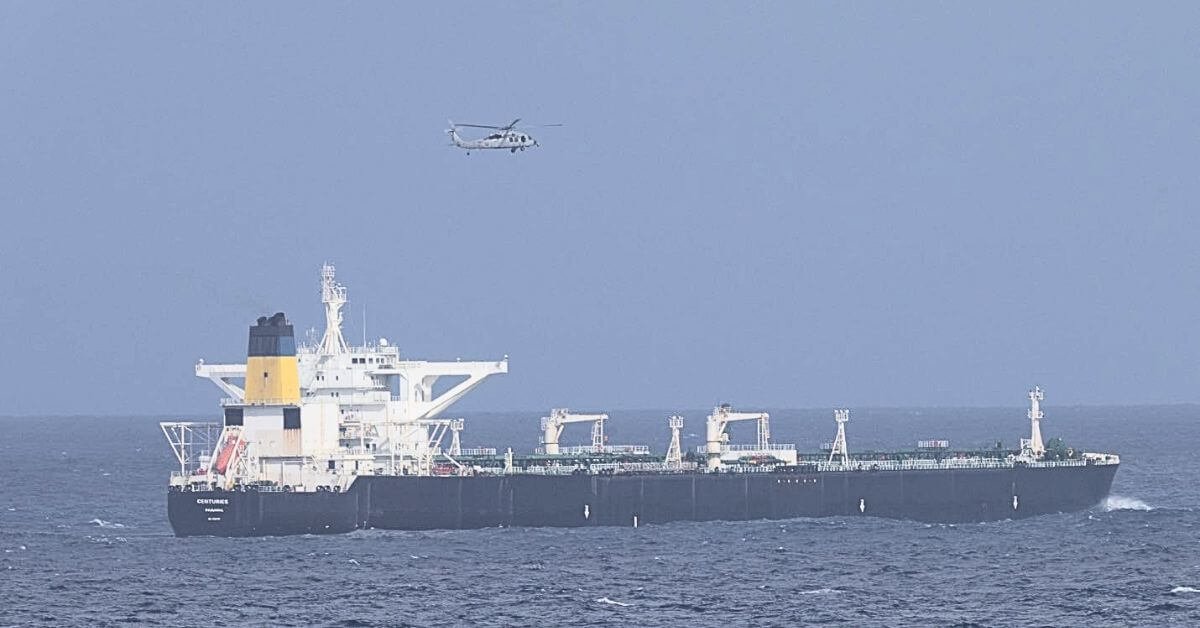
The United States has intercepted a second oil tanker linked to Venezuela in international waters in recent weeks, while US Coast Guard forces are separately pursuing a third vessel in the Caribbean.
US Homeland Security Secretary Kristi Noem confirmed that American forces intercepted and boarded the tanker Centuries in a pre-dawn operation, with assistance from the Department of Defense.
According to US officials, the vessel had last docked in Venezuela and was carrying oil under US sanctions. The interception followed Trump’s announcement of a “total and complete blockade” of sanctioned oil tankers entering and leaving Venezuela.
The White House said the tanker was falsely flagged and operating as part of Venezuela’s so-called shadow fleet. US officials alleged that such vessels are used to move sanctioned oil and generate revenue for the government of President Nicolás Maduro. Noem said the United States would continue targeting illicit oil movements linked to sanctions evasion.
Venezuela’s government condemned the interception, describing it as a serious act of international piracy. Caracas accused US forces of unlawfully seizing a private vessel in international waters and forcibly detaining its crew, and said it would raise the incident at the United Nations Security Council and other international forums.
Maritime risk analysts identified Centuries as a Panama-flagged supertanker intercepted east of Barbados in the Caribbean Sea. Shipping and company documents showed the vessel was carrying about 1.8 million barrels of Venezuelan Merey crude bound for China.
The oil was sold by state-owned PDVSA through intermediaries supplying Chinese independent refiners. Sources said the tanker had briefly been escorted out of Venezuelan waters by the Venezuelan navy before continuing its voyage.
Legal and sanctions experts stated that while the cargo on Centuries was under US sanctions, the vessel itself had not been listed before. Former US sanctions officials said the action showed a stricter enforcement approach against ships carrying sanctioned Venezuelan oil, even if the ships were not formally designated.
The interception of Centuries followed the earlier seizure of the Skipper on 10 December. US officials described that vessel as a stateless tanker involved in illicit oil shipments linked to sanctioned networks.

The Skipper later arrived at the Galveston Offshore Lightering Area near Houston, where its cargo was transferred to smaller vessels.
Separately, US officials confirmed on Sunday that the Coast Guard is in active pursuit of another tanker believed to be part of Venezuela’s sanctions-evasion network.
The vessel, identified by maritime security sources as the Bella 1, is under US sanctions, is alleged to be operating under a false flag and is subject to a judicial seizure order. Officials emphasised that it has not been boarded yet and the operation is still ongoing.
Per tracking data, Bella 1 was empty while approaching Venezuelan waters and had previously transported Venezuelan and Iranian crude. US officials said interceptions can involve a range of actions, including close escort or aerial monitoring, and do not always result in boarding.
The recent US actions have already disrupted Venezuela’s oil exports. Tanker-tracking firms reported that many vessels carrying Venezuelan crude have remained in local waters rather than risk interception, causing exports to drop sharply. Of over 70 tankers near Venezuela linked to the shadow fleet, about 38 are under US sanctions, and at least 15 are fully loaded.
China remains Venezuela’s largest crude buyer, accounting for roughly 4% of China’s oil imports. Analysts said December shipments were on track to average more than 600,000 barrels per day before the recent seizures.
China’s embassy in Washington reiterated its opposition to unilateral sanctions, stating that such measures lack authorisation under international law.
President Maduro has accused the United States of using military pressure to destabilise his government and seize control of Venezuela’s oil resources, which are the world’s largest.
Washington has rejected those claims, maintaining that its actions are aimed at enforcing sanctions and cutting off funding linked to criminal and terrorist activities.
References: Reuters, Bloomberg
Disclaimer :
The information on this website is for general purposes only. While efforts are made to ensure accuracy, we make no warranties of any kind regarding completeness, reliability, or suitability. Any reliance you place on such information is at your own risk. We are not liable for any loss or damage arising from the use of this website.
Disclaimer :
The information on this website is for general purposes only. While efforts are made to ensure accuracy, we make no warranties of any kind regarding completeness, reliability, or suitability. Any reliance you place on such information is at your own risk. We are not liable for any loss or damage arising from the use of this website.
1. eBooks for Engine Department
Master machinery operations, troubleshooting, and safety procedures with expertly written guides tailored for marine engineers. Prevent costly breakdowns and onboard accidents through practical knowledge.
👉 Explore Engine Department eBooks
2. eBooks for Deck Department
Sharpen your seamanship, navigation, and cargo-handling skills with real-world case studies and practical insights designed for deck officers and cadets.
👉Discover Deck Department eBooks
3. eBooks on Electrical Fundamentals & Issues
Understand marine electrical systems, identify potential faults, and prevent onboard electrical failures with step-by-step explanations from industry experts.
4. Pocket Guides for Quick Reference
Compact, handy, and loaded with essential checklists—perfect for on-the-go reference during operations and emergencies at sea.
5. Combo Packs to Save Big
Access multiple expert eBooks at discounted prices. Ideal for professionals seeking complete safety and operational knowledge across various ship departments.
6. Digital Maritime Courses – Learn at Your Own Pace
Upgrade your competence with Marine Insight Academy’s online courses. Learn from industry professionals anytime, anywhere, and become a safer, smarter seafarer.