Wärtsilä: All-Time High Operating Result And Cash ...
3 months ago

Venezuela’s maritime environment is undergoing a profound and accelerating transformation. Over the past year, a surge in opaque and unconventional vessel behavior has emerged across its surrounding waters. This activity spans foreign strategic actors, transnational criminal organizations, and offshore commercial facilitation networks. While each of these domains has historically presented its own risks, the patterns now appearing are distinct in form, frequency, and intent, and collectively signal a broader shift in the region’s maritime landscape.
Sanctions pressure, geopolitical realignment, and an increased U.S. naval presence are reshaping how both state and non-state actors operate at sea. Established sanctions-evasion corridors are being replaced by longer, indirect voyages optimized for risk avoidance rather than trade efficiency. Traditional narcotics corridors are adapting under enforcement pressure and beginning to fracture. While offshore waters have long been used for oil-related ship-to-ship operations, they are now increasingly hosting prolonged ship-to-ship activity involving a broader mix of vessel types and cargoes, obscuring cargo movements and supply chains beyond traditional crude trade
Taken together, these developments point to a maritime domain where visibility is eroding, and risk is escalating. Behaviors once flagged as outliers – extended loitering at sea, multi-stage ship-to-ship chains, or long-haul rerouting that defies commercial logic – are now regularly observed. Venezuela’s waters are no longer defined solely by economic strain or long-standing smuggling routes. They now serve as a meeting point for strategic logistics, covert maritime behavior, and adaptive illicit networks.
This report unpacks how this shift is unfolding, offering a closer look at the vessels, behaviors, and patterns driving increased maritime opacity across Venezuela’s EEZ.
Foreign Strategic Actors Enter the Picture
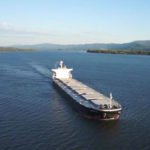
A new and concerning pattern has begun to emerge in the maritime links between Russia and Venezuela – one characterized by first-time voyages, direct routes from strategic Russian ports, and opaque behavior profiles. The clearest example is a Bangladesh-flagged bulk carrier, beneficially owned by the Bangladeshi government, which conducted its first-ever voyage to Venezuela. Before arriving at Puerto Cabello on October 30, the vessel sailed directly from St. Petersburg, where it berthed from October 3-9, 2025.

St. Petersburg is a highly significant origin point. While it handles a wide range of commercial cargo, it is also a major export node for the Russian government and defense-related shipments. When a state-owned vessel with no prior history of Venezuelan calls departs directly from this port and proceeds nonstop to Puerto Cabello – a location that hosts both Venezuela’s largest commercial port and a key naval facility – it becomes a noteworthy anomaly in the maritime picture.
Russia remains one of Venezuela’s primary military partners, and recent reporting indicates that Caracas has sought Russian military assistance in response to U.S. naval activity and regional strikes. Although bulk carriers are not typical platforms for weapons exports, Russia does use them to transport bulk commodities to Venezuela. In an environment of heightened geopolitical tension, the combination of a first-time voyage, a strategic origin port, and a military-adjacent destination warrants closer scrutiny, particularly for potential movement of sanctioned or dual-use commodities, even if not armaments.
Windward’s AI-driven risk model independently flagged the vessel as moderate risk for border security (smuggling), driven by two indicators:
To determine whether this reflects a broader trend, Windward examined vessel behavior over the past 180 days. The analysis identified four vessels that conducted port calls in St. Petersburg, followed by their first-ever entry into Venezuelan territorial waters. All were rated high or moderate risk for smuggling, including:

These repeating patterns – across different flags, ownership profiles, and cargo types – suggest the emergence of an informal logistics corridor between Russia and Venezuela, distinct from traditional commercial trade flows.
The Gambia-flagged general cargo vessel, assessed as a moderate smuggling risk, warrants further attention following its transatlantic voyage in November 2025. The vessel departed Bronka Port, its first-ever call at the Russian terminal, on 16 October. It then went dark for approximately one day before making its first recorded voyage to the Americas. It entered the South Atlantic on November 11, arrived in Venezuela waters for the first time on November 12, and called at Puerto Cabello on November 13.
Following this call, the vessel proceeded north but did not enter port in Colombia. Instead, it loitered south of Cartagena before continuing to Cuba, where it called at Mariel on November 30. This voyage included multiple first-time port calls in Venezuela, Colombia, and Cuba, as well as prolonged loitering and temporary AIS loss.
Research by the Norwegian Broadcasting Corporation (NRK) has previously linked the vessel to Russian arms transfers. While general cargo vessels are not typically used for overt weapons shipments, Russia has a documented history of transporting military equipment aboard civilian ships. In the context of heightened geopolitical tensions, the vessel’s first-time port calls, strategic destination ports, temporary AIS gap, and links to a defense-adjacent origin port collectively warrant closer scrutiny for the potential transport of sanctioned or military-related cargo.

Russian Maritime Behavior Escalates in Venezuelan Waters
Since May 2025, Windward has observed a rise in vessels with Russian General Compliance risk indicators conducting ship-to-ship (STS) meetings in Venezuela’s EEZ.

This behavioral shift aligns with a broader set of geopolitical, commercial, and sanctions-driven developments, including:
Taken together, these developments point to a coordinated maritime supply chain, not an isolated set of anomalies. The pattern reflects a deepening alignment between Russia and Venezuela, now operationalized through deliberate maritime tradecraft and increasingly coordinated and opaque logistics at sea.
Remote Sensing Confirms Smuggling Risk Cluster in Venezuela’s Waters
A key element of Venezuela’s evolving smuggling landscape is the sharp rise in ship-to-ship operations involving vessels with smuggling risk indicators. Windward’s Early Detection solution identified a 65% increase in these behaviors within Venezuela’s EEZ starting in April 2025.

The activity accelerated significantly toward the end of the year. Between November 25 and December 16, 37 vessels held 173 ship-to-ship meetings, forming a dense, persistent cluster between Venezuela and Trinidad and Tobago.

To validate these behavioral signals, Windward leverages Remote Sensing Intelligence over the area. Satellite imagery captured on December 13 provides direct visual confirmation of how these operations unfold at sea.

Coordinated Rendezvous Between Moderate-Risk Cargo Vessels
Venezuela’s rise as an offshore transfer hub is visible from space. Satellite imagery captured in December shows how these meetings play out on the water with multiple vessels from different flags and categories gathering in patterns that match known smuggling tactics.
From micro-vessels without ID to cargo ships with prior risk indicators, these encounters point to coordinated, high-risk operations just off Venezuela’s coast.
The image below shows a Venezuela-flagged cargo vessel (moderate risk) meeting simultaneously with:

The presence of an unregistered micro-vessel alongside larger cargo ships is a known indicator of narcotics insertion or removal, particularly in areas where smugglers attempt to blend illicit cargo into legitimate shipments.
Ship-to-Ship Transfers With Micro-Vessel
The imagery below captures a second meeting between a Marshall Islands-flagged cargo vessel (moderate risk) and a Venezuelan vessel just 8 meters long and unregistered. This size disparity is consistent with cash- or narcotics-handoff tactics, in which smaller vessels operate as mobile transfer platforms.

A second satellite pass on December 15 showed continued ship-to-ship clustering in the same area, confirming the persistence of this trend.

Four-Vessel Meeting Involving a High-Risk Cargo Ship
This example highlights the complexity and coordination increasingly seen in offshore smuggling operations. As Venezuela’s waters evolve into a hub for covert maritime activity, multi-vessel rendezvous involving diverse flags and vessel types are becoming more common. These formations are designed to fragment responsibility, obscure cargo flows, and complicate interdiction.

The image shows a four-way meeting involving:
The cross-flag, multi-role interaction reflects a well-documented tactic in narcotics supply chains, which involves layering vessel types and ownership structures to preserve plausible deniability and conceal the true nature of the transfer.
Repeat Rendezvous Captured Two Days Later
The same group of moderate-risk cargo vessels, including the Singapore and Panama-flagged ships, and the unregistered Venezuelan mini-vessel reappear in imagery from December 15, still conducting their two-day rendezvous.

Why This Matters
These imagery collections confirm that the behavioral anomalies detected by Windward’s models represent real, recurring vessel interactions happening within Venezuela’s EEZ. The presence of high-risk ships, unregistered micro-craft, and multi-day rendezvous points to a coordinated offshore logistics network. This network is likely designed to facilitate the movement of illicit goods across the Atlantic, while avoiding growing U.S. maritime enforcement.
This case study highlights the growing importance of multi-source intelligence. Only by combining behavioral analytics, remote sensing imagery, and transatlantic vessel tracking can authorities gain a full picture of how Venezuela’s smuggling infrastructure is evolving and where it’s headed next.
A Region Entering a New Phase of Maritime Risk
Throughout 2025, Venezuela’s maritime environment has undergone a rapid transformation driven by geopolitical realignment, economic strain, criminal adaptation, and increased U.S. naval pressure. What once appeared as isolated anomalies now forms a coherent pattern: Venezuela is emerging as a central node in a multi-layered ecosystem of opaque maritime activity. Two trends define this shift:
1. Strategic State Actors Are Expanding Their Maritime Footprint
Repeated first-time voyages from St. Petersburg to Venezuela, dark activity near Russian ports, and Russian-linked ship-to-ship operations inside Venezuela’s EEZ point to a deepening logistical and political alignment. These behaviors echo known proliferation and sanctions-evasion tradecraft, suggesting the formation of a Russia-Venezuela maritime corridor operating outside traditional commercial channels.
2. Offshore Waters Have Become a Shadow Logistics Hub
From April to December 2025, smuggling-related ship-to-ship meetings inside Venezuela’s EEZ surged by 65%, with 173 operations detected over a three-week span. Remote sensing imagery confirms dense offshore activity, including multi-vessel rendezvous, unregistered micro-craft, and military-controlled cargo vessels. This is not opportunistic and instead reflects a persistent offshore infrastructure built to mask, fragment, and redistribute illicit cargo flows.
Taken together, the behavioral models, vessel investigations, and remote sensing imagery point to a clear conclusion: Venezuela’s maritime domain is becoming one of the most opaque, strategically significant, and risk-dense environments in the Western Hemisphere.
This shift is being driven by both geopolitical realignment towards Russia and the emergence of offshore “shadow infrastructure” used for smuggling and sanctions evasion.
In such an environment, visibility and early detection depend on multi-source intelligence. Only by integrating AIS data, behavioral analytics, ownership networks, and Remote Sensing Intelligence can organizations gain a clear picture of the scale, structure, and intent of maritime activity surrounding Venezuela.
Source: Windward.AI