OOCL challenges FMC court system after $45m ruling
5 hours ago

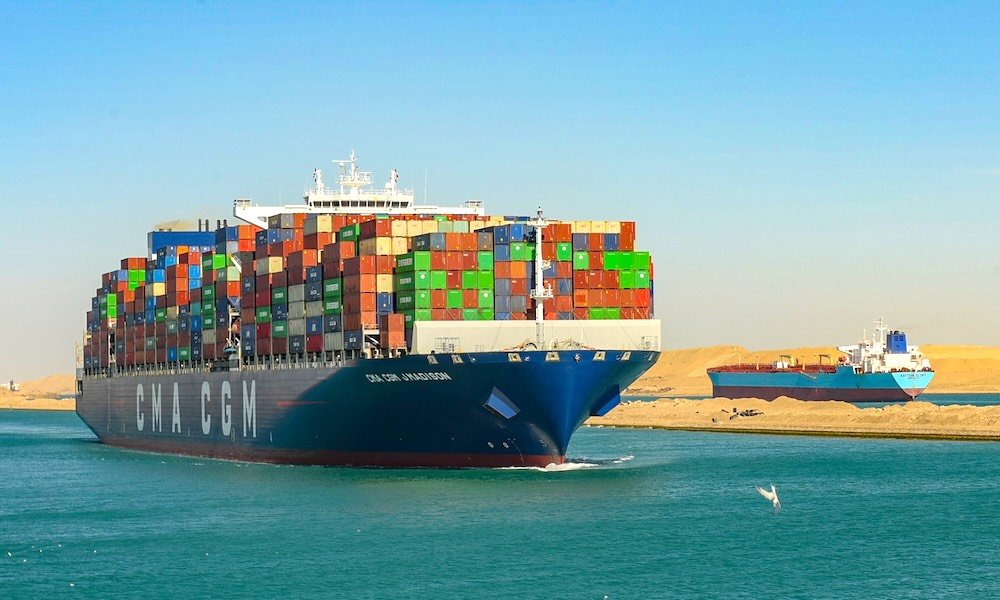
Suez Canal traffic remains sharply lower more than three months after the last reported Houthi attack, underlining how slow ship operators have been to return to the Red Sea route.
According to BIMCO, it has now been 100 days since the last vessel was attacked, when the Minervagracht was hit on September 29. The Houthis declared an end to attacks 43 days later, but transit volumes through the canal have yet to recover in any meaningful way.
“In the first week of 2026, Suez Canal transits were still around 60% below the same week in 2023, before widespread diversions around the Cape of Good Hope began,” said Niels Rasmussen, BIMCO’s chief shipping analyst.
Close to 100 ships have been attacked or hijacked since November 2023. While several incidents occurred late in 2023, significant declines in Suez traffic only took hold from January 2024. Since then, quarterly deadweight capacity transiting the canal has been between 51% and 64% lower than in 2023.
The picture remained largely unchanged through 2025. Suez Canal dwt transits were 57% to 64% lower than pre-crisis levels, with container shipping seeing the sharpest drop. In the fourth quarter of 2025, container ship transits were down 86% compared with 2023, while bulkers, crude tankers and product tankers were down 55%, 32% and 19% respectively.
Product tankers have been the main exception. Higher freight rate premiums have encouraged more of this segment back through the canal. In the final quarter of 2025, product tanker transits were only 19% lower than in 2023, compared with a 45% drop during 2024.
Container shipping has largely stayed away. However, CMA CGM has said it will return its MEDEX and INDAMEX services to Suez Canal routings from January 2026. Maersk also made a tentative move back in December, when the Maersk Sebarok became the first Maersk vessel to transit the canal since early 2024. The carrier said further sailings would depend on security conditions continuing to meet its thresholds.
Lower war risk premiums could help bring more traffic back. S&P Global reported in early December that Red Sea premiums had fallen to about 0.2% of hull value, the lowest level since November 2023.
“A normalisation of ship transits now appears more likely than at any point over the past two years, but the pace remains uncertain,” Rasmussen said. While a return to Suez would cut operating costs for owners, it would also reduce tonnage demand. BIMCO estimates a full normalisation could cut containership demand by around 10%, with other sectors facing reductions of 2% to 3%.