Wärtsilä: All-Time High Operating Result And Cash ...
2 months ago

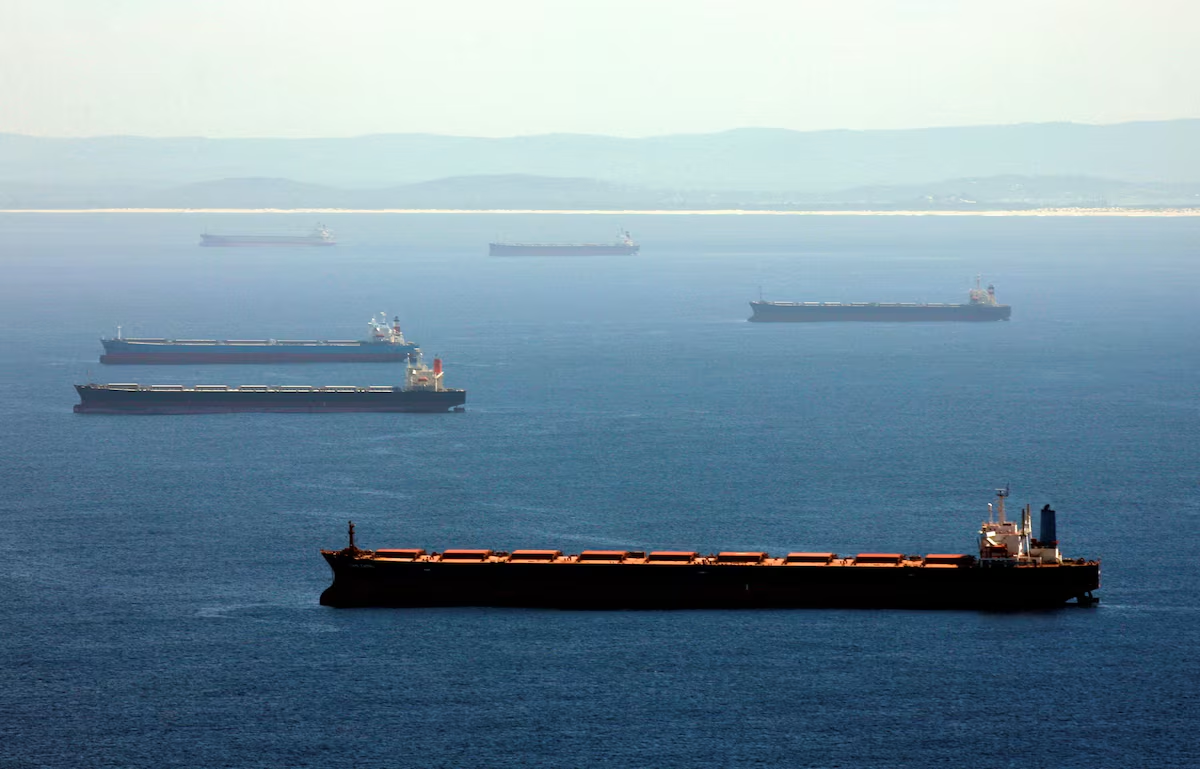
Seaborne coal shipments to China fell 10% in 2025 as increased domestic supply and weakening demand from steel manufacturing and electricity generation combined to reduce the world’s largest coal importer’s appetite for the fuel, according to a new analysis from BIMCO.
The decline, which particularly affected shipments from Indonesia, the United States, Australia and Colombia, has sent ripples through the dry bulk shipping market, with tonne miles for coal heading to China decreasing 21%. The impact was amplified by shortened average sailing distances as shipments from the US and Colombia plummeted 70% and 80% respectively, unable to compete with Asian suppliers on price while facing increased tariffs on US coal.
“The drop in coal shipments to China negatively impacted the dry bulk market as tonne miles for coal heading to China decreased 21%. On top of the weaker cargo volumes, average sailing distances shortened as shipments from the US and Colombia fell 70% and 80% respectively. These cargoes faced stiff price competition from Asian suppliers while an increase in tariffs on US coal further discouraged purchasing,” said Filipe Gouveia, Shipping Analysis Manager at BIMCO.
China accounts for 28% of global seaborne coal shipments, which represent 4% of dry bulk tonne mile demand. Thermal coal used for electricity generation comprises 87% of seaborne coal shipments to China, while coking coal for steel production makes up the remaining 13%.
The capesize and supramax segments bore the brunt of the decline, with coal tonne mile demand falling 44% and 19% respectively. Capesize vessels were especially hard hit by the collapse in Colombian coal shipments, while panamax coal volumes declined only 1%, though tonne miles still fell 8% due to reduced US shipments.
Looking ahead, the outlook for coal shipments to China appears increasingly challenging. The International Energy Agency projects Chinese coal demand will fall 1% between 2025 and 2027, affecting both thermal and coking coal. The agency estimates that China’s installed renewable energy capacity will nearly triple between 2025 and 2030, potentially meeting or even exceeding the country’s growing electricity demand.
Adding to the headwinds, the World Steel Association forecasts Chinese steel demand to decline 1% in 2026, while the Chinese government aims to reduce steel production to address overcapacity in the sector. Meanwhile, total Chinese coal supply is expected to fall faster than demand due to 2025’s oversupply, which pressured prices and boosted inventories. The IEA estimates a 4% reduction in Chinese production between 2025 and 2027, marking the first decline since 2016.
“The IEA forecasts that total Chinese coal imports will drop 8% amid stable overland imports of Mongolian coal, implying 10% lower seaborne coal shipments to China in 2027 compared with 2025. The severeness of the decline will ultimately hinge on how much China’s government will rein in domestic mining,” Gouveia noted.
In 2025, 90% of seaborne shipments to China originated from Indonesia, Australia and Russia, with Indonesia primarily supplying thermal coal while Australia and Russia provided a mix of thermal and coking coal. China also imports significant volumes overland from Mongolia and Russia.
Sign up for gCaptain’s newsletter and never miss an update