Russian Baltic Port Halts Crude Loading as Drones ...
1 day ago

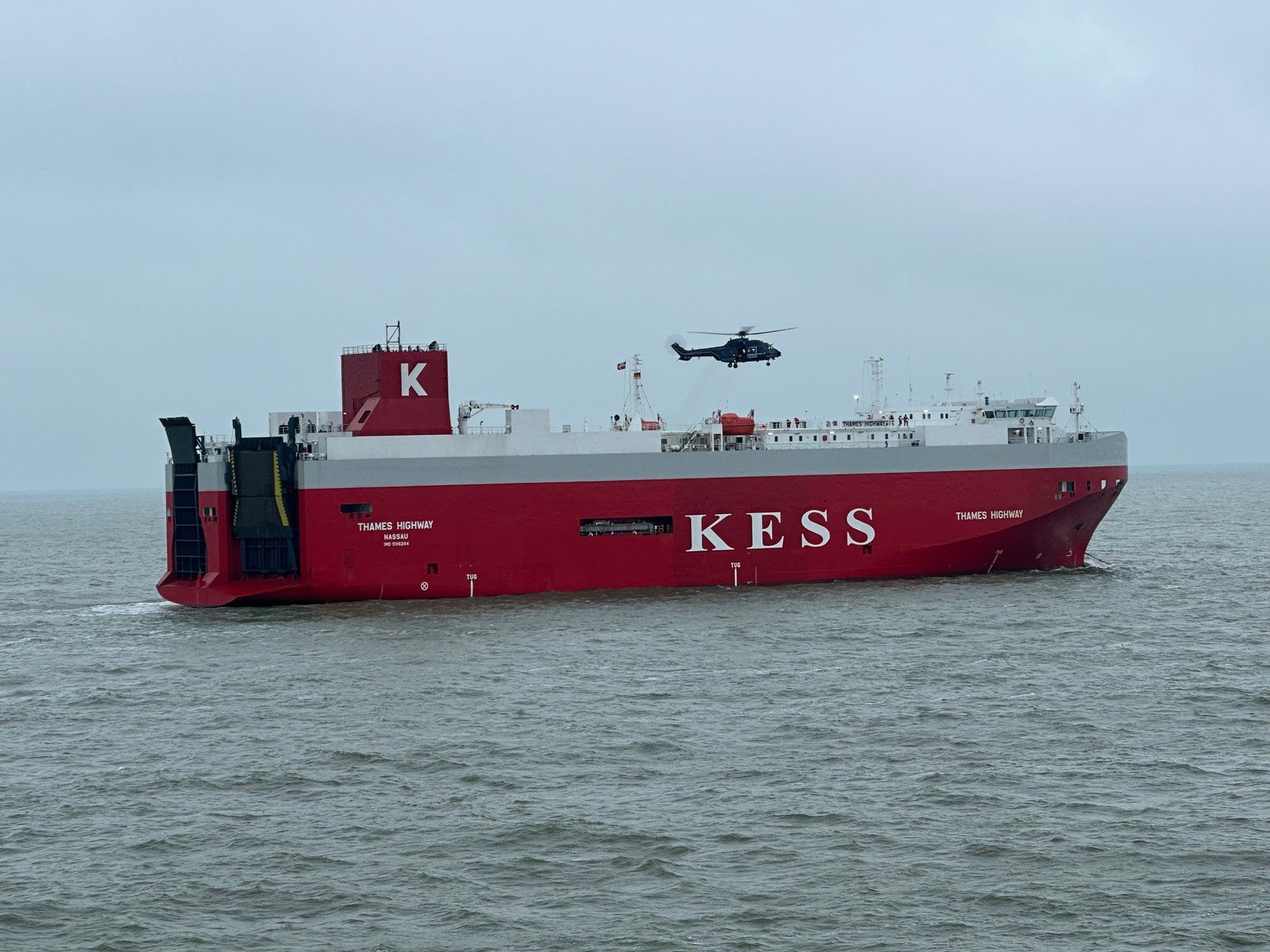
German emergency responders have successfully extinguished a fire aboard the Bahamas-flagged car carrier MS Thames Highway after a late-night engine room blaze left the vessel disabled off the island of Borkum in Germany.
The 149-meter ship, carrying 1,294 vehicles including 477 electric cars, suffered an engine room failure shortly after departing Emden on Monday evening, bound for Grimsby, England. The vessel is now anchored northwest of Borkum outside the Ems estuary fairway, unable to maneuver under its own power.
All 18 crew members and one pilot aboard were safely accounted for, with no injuries or pollution reported. According to German authorities, the crew’s rapid response — sealing the engine room to cut off oxygen — prevented the fire from spreading.
Germany’s Central Command for Maritime Emergencies assumed operational control at 12:10 a.m. on Tuesday, January 27, deploying a specialized six-person maritime firefighting team from Cuxhaven by Federal Police helicopter. The firefighters were winched aboard in challenging conditions, including two-meter seas and winds at force four.
Additional fire crews from Emden and Wilhelmshaven joined the response, while the sea rescue cruiser Hamburg, stationed at Borkum, remained on scene throughout the operation in case medical support was required. The emergency tug Nordic, buoy tender Norden, and federal multi-purpose vessel Mellum were also mobilized, with the Dutch Coast Guard’s emergency tug Multraship Protector standing by near the German-Dutch border.
By late morning, authorities reported no further fire or smoke development. Operational control was transferred to the Emden Vessel Traffic Service, and private salvage companies began towing the disabled vessel back to Emden.
The incident comes amid growing concern over fire risks associated with electric vehicles aboard car carriers. Lithium-ion battery fires can trigger thermal runaway — a self-sustaining reaction that generates extreme heat and is notoriously difficult to extinguish at sea.
Several high-profile casualties have underscored the challenge. The car carrier Morning Midas sank in the North Pacific in June 2025 after a fire broke out on a deck carrying electric vehicles, forcing all 22 crew members to abandon ship. The vessel was transporting more than 3,100 vehicles, including electric and hybrid models.
In July 2025, U.S. carrier Matson suspended shipments of electric and plug-in hybrid vehicles, citing “increasing concern for the safety of transporting vehicles powered by large lithium-ion batteries.” The company said it would only resume shipments once adequate safety solutions are in place.
The 2022 loss of the Felicity Ace, which sank in the mid-Atlantic with nearly 4,000 vehicles aboard, remains one of the most high-profile examples, with lithium-ion batteries widely suspected as the ignition source.
As regulators and industry groups continue developing new safety guidance for lithium battery transport, the maritime sector remains under mounting pressure to find effective solutions to one of shipping’s most dangerous emerging fire risks.

Sign up for gCaptain’s newsletter and never miss an update