Wärtsilä: All-Time High Operating Result And Cash ...
2 months ago

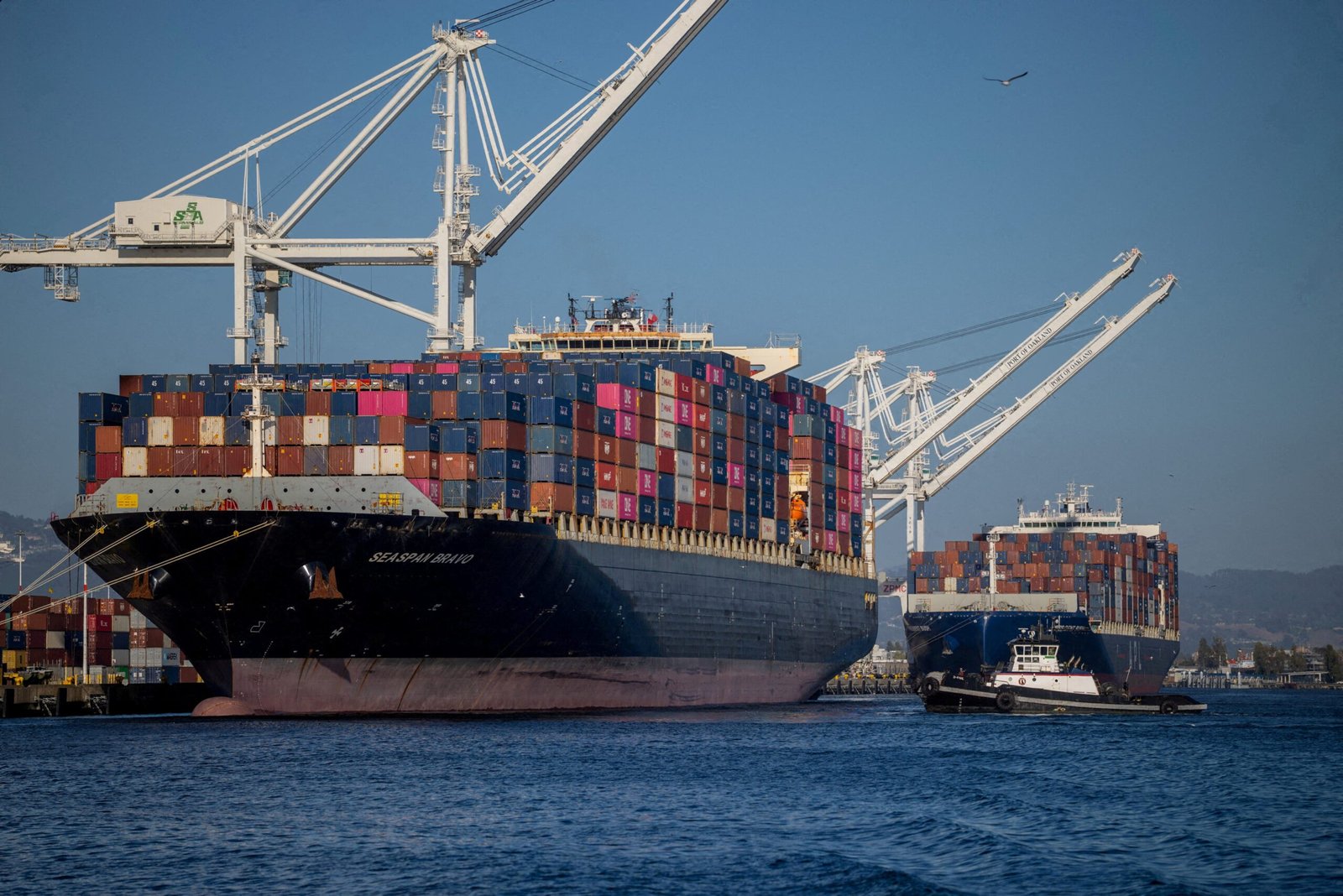
Global container shipping rates extended their decline for a third straight week, with weakening demand ahead of Chinese New Year and uncertainty over Suez Canal transits adding fresh pressure across major trade lanes.
The Drewry World Container Index fell 5% to $2,107 per 40-foot container, driven largely by sharp drops on the Transpacific and Asia–Europe routes. Spot rates from Shanghai to New York slid 7% to $2,969, while Shanghai to Los Angeles fell 4% to $2,442, according to the latest weekly data.
Drewry said freight rates are likely to remain under pressure in the coming weeks as demand softens further and carriers adjust capacity.
According to Drewry’s Container Capacity Insight, carriers have announced 63 blank sailings for February, up sharply from 27 in January, as factories across China shut down for the Lunar New Year. The increase in canceled sailings highlights carriers’ continued reliance on capacity management to support rates amid fragile cargo demand.
The market is also being shaped by growing uncertainty over carrier routing decisions through the Red Sea, with conflicting strategies amplifying rate volatility on Asia–Europe trades.
Spot rates from Shanghai to Rotterdam fell 5% to $2,379, while Shanghai to Genoa dropped 6% to $3,293. The declines come as CMA CGM withdraws its Asia–Europe services from the Suez Canal region, while Maersk plans to resume India–U.S. East Coast services via the canal, signaling a split in risk tolerance among major operators.
“These conflicting operational decisions suggest that effective shipping capacity will be reintroduced to the market gradually rather than all at once,” Drewry said, adding that the phased approach could help prevent a sharp collapse in spot rates.
Diversions around the Cape of Good Hope have absorbed roughly 2 million TEU of global container capacity, equivalent to about 8% of the world fleet, tightening supply and helping support rates over the past year. A widespread return to the Suez route could quickly unwind that buffer.
Drewry analyst Philip Damas said the timing and scale of any return to Suez remains one of the biggest variables for the container market in 2026.
“The return to the Suez Canal is one of this year’s key swing factors for capacity, freight rates, and transit times,” Damas said, noting that carriers are closely monitoring security risks, insurance premiums, competitor behavior, and port congestion risks.
Industry analysts continue to warn that global freight rates could fall by as much as 25% in 2026, even if Red Sea conditions remain unchanged, as new vessel deliveries and softening demand weigh on the market.
Sign up for gCaptain’s newsletter and never miss an update