SAAM Towage Strengthens Fleet with Construction of...
3 hours ago

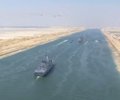
Egypt could recover much of the Suez Canal revenue losses recorded in 2023 and 2024 within three to five years if it accelerates a shift towards value-added and logistics-based services, according to the International Marketing Board (IMB).
Speaking to Ahram Online, Abdalla Gadalla, IMB’s regional director, said recent disruptions to global shipping routes in the Red Sea had led many vessels to divert around the Cape of Good Hope, cutting Suez Canal revenues by an estimated 40 to 60 percent over the past two years. The decline, he said, placed pressure on Egypt’s foreign currency inflows and exposed the risks of relying mainly on transit fees.
Gadalla said the issue is no longer when shipping traffic will return to normal levels, but how Egypt can redesign the canal’s business model to make it more resilient to global shocks.
He argued that expanding value-added services around the canal, including bunkering, ship maintenance, container handling, advanced storage, and regional logistics distribution, could raise economic returns per vessel by 15 to 25 percent, even if traffic volumes remain flat. Such a strategy, he said, could allow Egypt to offset the recent losses within three to five years.
Gadalla also pointed to the Suez Canal Economic Zone as a key pillar for future growth. He said that if industrial and logistics activities in the zone grow by 10 to 12 percent annually, they could add between $3 billion and $5 billion a year to Egypt’s GDP over the medium term, while reducing dependence on global shipping fluctuations.
Artificial intelligence and data analytics, he added, could play a central role in improving efficiency. The use of AI in ports and customs operations could cut clearance and ship turnaround times by 30 to 40 percent and reduce operating costs by up to 20 percent through better planning and maintenance.
On investment policy, Gadalla said performance-based incentives would be more effective than broad tax exemptions. Linking incentives to exports, job creation, technology transfer, and environmental standards could boost localisation in trade-related industries by five to seven percent annually.
Gadalla said recent discussions at the World Economic Forum in Davos, including high-level meetings involving President Abdel-Fattah El-Sisi, sent a signal that Egypt is seeking long-term strategic partnerships rather than short-term capital inflows, with the Suez Canal positioned as a central part of that strategy.
Source: Ahram