SAAM Towage Strengthens Fleet with Construction of...
2 hours ago

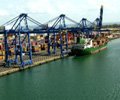
Demand for bunker fuels at the Sri Lankan ports of Colombo and Hambantota remained stable in January, supported by strong supplies, according to market sources. Trincomalee continued to see volumes rise amid higher demand from bulk carriers.
Stable volumes
Market participants said demand for bunker fuels remained stable in January at Colombo, the country’s largest bunkering port.
“The demand was decent at around 83,000-85,000 mt during the month of January,” a Colombo-based trader told Platts, a part of S&P Global Energy Feb. 7, adding, “We didn’t have any impact of price volatility since our shipments are fixed basis trigger pricing and not cost basis, so we were able to reflect the price movements. But amid price volatility, demand fluctuated as buyers held back inquiries.”
“We observed the Colombo-India price gap for the month at around $22/mt,” said another Colombo-based trader.
Platts assessed the average price of marine fuel 0.5% Colombo-delivered for January at $499.43/mt Feb. 1, up $12.33/mt month over month. In Mumbai, Platts assessed the average price of marine fuel 0.5% at $462.38/mt, down $2.85/mt over the same period.
“We observed that the inquiry volumes started to rise after Jan. 15, and overall, the market was neutral in terms of demand. However, our barge is still under maintenance, so we’re working with other suppliers to manage deliveries,” a Sri Lanka-based trader told Platts on Feb. 9.
Trincomalee demand strong
“Over the past six months, we have consistently observed an average volume of around 12,000 mt,” a Sri Lanka-based supplier said, adding, “This increase in demand can be attributed to the rise in bulk carrier ship movements along the Indian east coast. On average, the stem size for very low sulfur fuel oil is between 800 mt and 900 mt. Additionally, smooth port operations, with no weather disruptions, have contributed to increased ship traffic to Trincomalee. In January, we supplied nearly 15,000-16,000 mt of product.”
“Lanka IOC PLC is doing considerable volumes at Trincomalee. They brought a big barge a couple of months ago with a capacity of 2,000 mt, up from the previous barge capacity of approximately 800 mt. This helped them operationally to manage bigger volumes,” another Sri Lanka-based trader said.
According to data from S&P Global Commodities at Sea, total bunkering and ship-to-ship calls in Sri Lanka increased by 5.40% month over month in January to 273. Trincomalee saw the largest rise in bunkering and STS calls during January, with calls reaching 26, up from 20 in December. This was followed by Colombo with 212, up by 4, and Hambantota with 34, up by 4.
Supply availability
Supply availability, supported by cargo imports from Singapore and Fujairah, facilitated stable volumes at Colombo, according to market sources.
“For VLSFO, there are back-to-back shipments coming with arrivals scheduled for all main suppliers,” a Colombo-based trader told Platts, adding, “We received a cargo of 10,000 mt on Feb. 6, and then another 6,000 mt and 7,000 mt of shipments are expected. So, there are plenty of supplies. Even Sinopec, a major cargo trader, imported very low sulfur fuel oil and high sulfur fuel oil cargoes, which also added to the market liquidity.”
“We are also exporting two VLSFO cargoes around Feb. 14 to Colombo,” said an India-based supplier close to Bharat Petroleum Corp.
HSFO demand strengthens
According to market sources, demand for HSFO at Sri Lankan ports rose, as Kochi, often considered as a competitive port to Colombo, experienced tight availability of the product.
“There has been some tightness in the availability of HSFO, and Hindustan Petroleum Corp. is the only supplier at the port,” a Kochi-based supplier said Feb. 9, adding. “Another reason could be the cheaper marine gasoil prices at Colombo. Since all scrubber-fitted ships that consume HSFO also consume MGO, they often prefer to bunker at Colombo, and we are losing those MGO volumes to them.”
Platts assessed the average price of marine gasoil delivered to Colombo for January at $737.23/mt on Feb. 1, down $13.12/mt from the prior month. In Kochi, Platts assessed the average price of low-sulfur marine fuel 0.5% at $790.78/mt, down $84.89/mt over the same period.
“For HSFO demand, the first couple of weeks in January were sluggish, but we managed to move our imported volumes. But since the beginning of February, we’ve seen strong demand from Bulk carriers, and most of these are outside port limits deliveries. Tight availability at Kochi has also helped us gain more inquiry volumes,” a Colombo-based trader said.
Source: Platts