SAAM Towage Strengthens Fleet with Construction of...
2 hours ago

Wolfgang Lehmacher discusses Panama’s port shock.
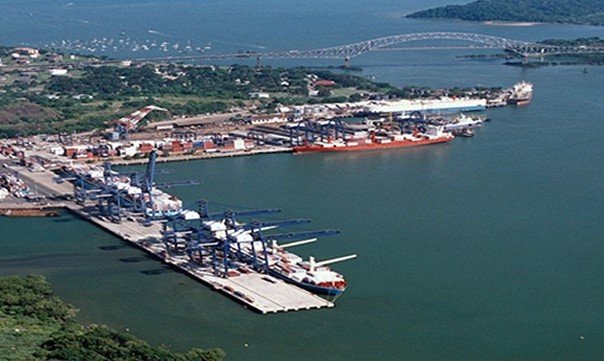
CK Hutchison operates two container terminals at either end of the Panama Canal under a concession that Panama’s Supreme Court has now declared unconstitutional, prompting the Hong Kong group to launch arbitration proceedings against the state. This is a test case for how emerging doctrines are reshaping the Americas from a neutral transit zone into a politicised corridor that companies can no longer treat as given. What follows is an analytical reading of implications rather than any claim of unlawful conduct.
The terminals at Balboa and Cristóbal handle a substantial share of Panama’s container traffic and sit at the centre of global east-west transhipment flows through the canal. This is a new inflection point: under Donald Trump’s Donroe Doctrine, a push to reassert US dominance and limit Chinese and other external control over strategic assets, the Western Hemisphere no longer behaves like a free-trade area, but as a sovereignised zone where ‘strategic’ infrastructure is classified as a national security asset. Panama’s move follows sustained US concerns that CK Hutchison’s control of ports adjacent to the canal gives China influence in a corridor Washington sees as a core security artery.
The ruling also reflects Panama’s own calculus, asserting sovereignty and seeking to defend national revenue and control over key ports, even at the cost of legal disputes and investor unease. Consequently, the roles of concession design and port authorities are again at the centre of global port governance debates. What some analysts describe as an emerging ‘Mulino Doctrine’, coined and developed in Washington’s CSIS Americas work on Panama under president José Raúl Mulino, is evident in recent steps: Panama is using courts and concession redesign to keep strategic options open. Carriers and cargo owners are reassessing exposure to Panama-linked assets; routing and pricing discussions incorporate geopolitical and sovereign-risk scenarios, much as they did when drought and draft restrictions forced services to shift to Suez, the US west coast, or around the Cape.
The Americas are becoming a policy-driven periphery in which dual-use infrastructure and major corridors face a structurally higher probability of abrupt re-nationalisation, re-concession, or regulatory intervention than in the previous era. As the Americas harden, flows will seek new paths, such as transarctic services, turning today’s ‘dashed line’ concepts into tomorrow’s corridors. Boards need new tools, such as the Hardened Americas Corridor Index (HACI), which companies can develop by combining four dimensions: doctrinal exposure (Donroe risk), sovereign assertiveness, sensitivity to foreign ownership, and contract reversibility. Nobody wants to lose billion-dollar assets.
The vital response is to design optionality and anti-fragility into networks.
First, treat each major region as a geopolitical option: build regional hubs (Americas, EU, Asia) with local suppliers, ports, and land-side networks so that the loss of a single corridor does not bring down the entire network.
Second, rewrite investment contracts and concession strategies on the assumption that ‘strategic’ ports will be subject to sovereign intervention under doctrines like Donroe, embedding exit clauses, strong local partnerships, and sovereign risk buffers in all deals.
Third, treat Panama-type shocks as a specific risk factor in corridor and asset valuations, and leverage multi-corridor design and diversified concessions. An HACI-style scorecard can sit alongside cost-to-serve and service-level KPIs, giving boards a single view of where doctrinal and sovereign risk exposure is highest before they commit ships, inventory, or capex.
In 2026, the smart supply chain is policy-aware, option-rich, and anti-fragile. The Panama shock may be the first visible chapter of a new playbook in which hemispheric doctrines shape who can own and operate the world’s chokepoints.