Exmar names ‘world’s first’ ocean-goin...
3 hours ago

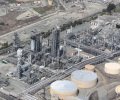
The “Alaska liquefied natural gas (LNG) project,” a mega energy venture worth 6 trillion won and cited as a core policy task of the U.S. Donald Trump administration, has begun full-fledged administrative procedures with the goal of an early groundbreaking in April. Because the U.S. government demanded that the Korea and Japan governments participate in the project during reciprocal tariff negotiations, Korea is increasingly likely to face renewed pressure once the venture begins.
Domestic corporations are watching the government’s decision. Some corporations reviewed joining the project but say it is hard to assess the business case because information on the business sites is limited. The Alaska LNG project is where oil corporations such as ExxonMobil and BP attempted direct development in 2014 but pulled out midway over profitability issues.
According to the U.S. Federal Energy Regulatory Commission (FERC) on the 17th, 8 Star Alaska, LLC submitted on the 5th an implementation plan stating it hopes to start early construction of a pipeline segment, saying it would launch the Alaska LNG project in April. The implementation plan details how the environment will be protected during construction and what structures will be built.
8 Star Alaska, which submitted the implementation plan, is a joint venture created with 25% equity from the Alaska Gasline Development Corporation (AGDC), an agency under the Alaska State Government, and 75% equity from Glenfarne Alaska LNG, established by the U.S. energy corporation Glenfarne Group to carry out the Alaska LNG project. The private corporation Glenfarne will lead the LNG development, with AGDC cooperating.
The Alaska LNG project aims to develop abundant gas in the Arctic and supply it to Asian markets, including Korea. Natural gas in Prudhoe Bay at the northern tip of Alaska will be transported 1,300 km by pipeline to the southern Nikiski port, and all the infrastructure needed to cool it below minus 160 degrees to reduce its volume to one-six-hundredth must be newly built. The total project cost alone is at least $45 billion (about 6.4 trillion won), and the initial pipeline installation is expected to take more than 10 years.
The Alaska LNG project is considered a high-risk investment whose profitability is hard to guarantee. Building gas lines and proceeding to drilling in Alaska’s severe cold, where the ground is frozen for half the year and construction is impossible, entails astronomical expense. During Trump’s first term in 2017, Korea Gas Corporation (KOGAS) also signed an MOU with AGDC, but it did not move forward with the actual project.
President Donald Trump has openly pressed for participation, saying during reciprocal tariff negotiations that Korea and Japan should become partners in the Alaska LNG development. The intent is to share the burden with Korea and Japan, which have LNG demand, because the U.S. government finds it hard to bear the development risk alone. In November, Minister Kim Jung-kwan of the Ministry of Trade and Industry (MOTI) drew a line, saying only commercially reasonable investments would proceed, while noting that LNG imports could be considered positively.
As the United States appeared to pressure the Korea government to join the Alaska LNG development, several corporations reviewed participation. Depending on the outcome of talks over a Korea-U.S. investment package, participation by domestic corporations could be heavily influenced. Groups including Korea Gas Corporation (KOGAS), POSCO, SK, Hanwha, and GS are said to have examined business possibilities in areas such as energy.
Corporations say the uncertainty is simply too great. The total project cost is estimated at more than about 6 trillion won, which is on par with the annual revenue of a typical large corporation. There is a high likelihood of construction delays, and if raw material prices rise, the project cost could swell further. There is also a strong possibility it will lack price competitiveness compared with natural gas sourced elsewhere. Even so, if the government wants participation, it will be hard to turn away entirely.
For now, corporations appear to have received almost no information from the U.S. government. A source in the energy industry said, “We have repeatedly requested related materials from the Alaska State Government regarding the Alaska LNG project, but we have not received anything yet,” adding, “We are at the level of reexamining materials produced 10 years ago.”
So far, the only corporation to explicitly express its intent to participate in the Alaska LNG project is POSCO. POSCO is reviewing participating by supplying steel products locally. It initially planned to make a final investment decision last year, but as the review dragged on, the announcement was postponed to within the first quarter.
Another industry source said, “POSCO’s supply of steel products is a case with clear practical benefit,” adding, “If the project is structured under government leadership and profitability is guaranteed, other corporations would not hesitate to participate.”
Source: The ChosunBiz