Euroseas secures 60% rate jump for boxship after c...
13 hours ago

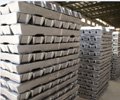
Aluminum market observers expect the escalating conflict in the Middle East to cause supply disruptions to both aluminum and aluminum raw materials shipping to and from the region, together with short-term market volatility and a squeeze on global producer margins from higher energy and freight costs.
Container shipping company Maersk, which transports aluminum among other goods and commodities, said March 1 that due to the deteriorating security situation in the Middle East, it was suspending all vessel crossings of the Strait of Hormuz — the key Persian Gulf chokepoint — until further notice.
It has also paused Suez Canal sailings via the Bab al-Mandab Strait, which have been subject to attacks by Iran-backed Houthi militants in Yemen over recent years. It said all its Middle East-India to Mediterranean and Middle East-India to East Coast US services would now reroute around the Cape of Good Hope.
Middle Eastern aluminum companies have not given any updates on their operations so far, but temporary shutdowns at some smelters are likely, according to AlphaMena financial analyst Kais Kriaa. “I’m thinking of Alba’s Askar smelter [in Bahrain], the largest one ex-China, or in the UAE and even of Maaden’s Ras Al Khair [in Saudi Arabia],” the Tunis-based analyst told Platts, part of S&P Global Energy.
“I imagine the producers have turned the smelters to minimum production for safety reasons, but turning them off would be catastrophic,” a European trader told Platts.
He said that there is already “a big reaction across the board for P1020 [high-purity primary aluminum ingot] and billet”, and that “everything will be going up.”
“The concern is how they will get raw materials in… how much [alumina and bauxite] do they have?” said the trader.
The Middle East region accounts for 6.85 million mt/year of refined aluminum production, the equivalent of around 9% of global output and 22% excluding China, according to Natalie Scott-Gray, senior metals analyst at financial services company StoneX.
In 2025, the region exported 3.7 million mt of aluminum, including unwrought metal and its derivatives, according to S&P Global Market Intelligence’s Global Trade Analytics Suite, or GTAS.
“If we see a total closure of the Strait of Hormuz, then there are no other shipping routes that have a similar capacity, and we would expect near-term impact to result in ingot inventories building up,” Scott-Gray said in a March 1 note.
“Historically, despite numerous threats going back decades (Iran-Iraq War in the 1980s, tensions in 2008, 2012, 2018, 2019), the Strait of Hormuz has never been fully closed to commercial shipping. However, we are in unprecedented times, especially with the attacks on US bases in the region and the promise of ongoing military intervention. While we see full closure as a last resort, the risk cannot be ruled out,” said Scott-Gray.
Smelters normally hold one to two months’ worth of feedstock, but if they were unable to ship in raw materials for a prolonged period, they would be forced to lower run rates or even stop operations given their high dependency on imports of alumina and bauxite, with the latter, for example, coming from far afield suppliers such as Australia, Guinea and Brazil, the analyst noted.
The impact of reduced aluminum exports from the Middle East will likely hit Europe the hardest. Nearly 20% of Europe’s imports come from that region, a share that has risen in recent years due to a shift away from Russian supplies, she said.
Some Asian countries, especially Japan and South Korea, will also feel the pinch, as they might have to obtain more material from Canada, India or Africa, which could elevate regional premiums, but China looks relatively insulated due to its close ties with Russia, according to Scott-Gray.
In 2025, China ramped up its imports of Russian aluminum, including scrap, unwrought metal and finished products, by 54% year over year to a record-high 2.3 million mt, according to GTAS.
While the aluminum sector is less exposed than oil, the conflict is likely to squeeze global producer margins through higher energy prices and freight costs. Also, it is unfolding against a backdrop of China’s self-imposed aluminum capacity ceiling of 45.5 million mt this year, which, with aluminum inventories across all key exchanges below their five-year averages, is a supply concern in itself, noted Scott-Gray.
Platts assessed the aluminum duty-paid in-warehouse Rotterdam premium at $370-$395/metric ton on Feb. 27, with a midpoint of $382.50/mt, up $12.50/mt week over week. The duty-unpaid in-warehouse Rotterdam premium was assessed at $290-$315/mt on the same day with a midpoint of $305/mt, also up $12.50/mt week over week.
Source: Platts