Marinakis’ CCEC partners with BGN on LNG vessel ve...
1 day ago

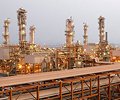
LNG market participants are grappling with a potential supply shortfall as the US-Iran conflict stretches into its third day and disrupts LNG shipments from Qatar and the United Arab Emirates (UAE), which jointly account for about 20% of global LNG supply.
On 2 March, QatarEnergy announced a pause to LNG production at its Ras Laffan hub, after an Iranian drone strike on part of the globally significant terminal.
The two Gulf states have no alternative besides the Strait of Hormuz to export cargoes loaded at their facilities, but Iran has reportedly damaged three oil tankers in the narrow waterway and warned vessels against crossing.

The Strait of Hormuz effectively serves as a chokepoint, with shipowners suspending transits while major insurers have cancelled war-risk cover and raised insurance rates in the Middle East Gulf.
The last laden carrier to cross the Strait of Hormuz was the Endesa-controlled Gaslog Shanghai on 28 February.

Currently, 16 vessels are north of the Strait of Hormuz, of which 11 are laden and five are ballast. There are hence a limited number of ballast vessels remaining to load at Qatar’s Ras Laffan or the UAE’s Das Island facilities.
Ras Laffan is home to 2.3 million cubic metres of aggregate LNG storage tank capacity – equivalent to 13 conventional LNG carriers, or four days of normal Qatar loadings. However, only part of this capacity will currently be free, indicating a looming risk of needing to curtail operations in the coming days – even before the 2 March halt.

Another 16 LNG vessels are holding their position in the Arabian Sea offshore of Oman. Of these, 13 are controlled by QatarEnergy with others controlled by CPC and Shell.
The disruption has not yet spread to Oman’s own LNG export terminal, located south of the Strait of Hormuz, with a cargo loaded onto the TotalEnergies-controlled carrier LNG Endurance on 1 March. The vessel has departed the terminal and is declaring for Incheon in South Korea.

Three ballast vessels are en route to Oman: BP-controlled Attalos, OQ Trading-controlled Cool Explorer, and Vitol-controlled Yari LNG.
Source: Vortexa