Seoul National University, San Diego State launch ...
27 minutes ago

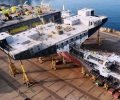

The domestic shipbuilding industry is reportedly being impacted by disruptions in the supply of naphtha, as the situation in the Middle East shows signs of becoming protracted.
The Ministry of Trade, Industry and Energy announced on March 18 that it has alleviated concerns over short-term production disruptions by communicating closely with the shipbuilding and chemical industries. This followed fears of a potential disruption in the supply of ethylene, which is used for cutting steel plates for shipbuilding.
According to industry sources, ethylene, used for cutting steel plates for shipbuilding, is produced by cracking imported naphtha at petrochemical plants. As the potential blockade of the Strait of Hormuz and other factors have made it difficult to import naphtha, alarms have been raised over the supply of ethylene.
The supply crisis for naphtha and ethylene has intensified. Earlier, on March 4, Yeochun NCC, the nation’s largest ethylene producer, declared ‘Force Majeure’ due to a halt in raw material supply. Subsequently, companies including Lotte Chemical, LG Chem, and Hanwha Solutions also notified of the possibility of declaring force majeure for some of their products.
Although the shipbuilding industry’s demand accounts for a minimal portion of domestically produced ethylene, concerns within the sector were significant, as cutting steel plates is impossible without it.
In response, the Ministry of Trade, Industry and Energy held an emergency supply inspection meeting with the shipbuilding industry on March 13 to assess the short-term ethylene requirements of each shipbuilding company.
Following this, on March 15, the ministry arranged a video conference between the chemical and shipbuilding associations, which resulted in a plan to supply short-term volumes of ethylene, easing the supply pressure.
The Ministry of Trade, Industry and Energy stated, “To stabilize the naphtha supply, we are communicating with companies and supporting their efforts to secure alternative import sources through our overseas diplomatic missions and trade centers.”
It also emphasized, “We are currently in discussions with the industry and relevant ministries on measures to support the various incidental costs incurred during naphtha importation.”
Meanwhile, at the ‘2nd Emergency Economic Ministers’ Meeting, which also served as the 8th meeting of the Supply Chain Stabilization Committee,’ held at the Government Complex Seoul on the same day, Deputy Prime Minister and Minister of Economy and Finance Koo Yoon-chul said, “We will temporarily designate naphtha, which has recently faced heightened supply chain risks, as an economic security item.” He added, “We will closely monitor naphtha supply trends and the difficulties faced by companies, and we will implement proactive measures such as securing alternative import sources and imposing export restrictions.”
An economic security item is a designation made by the government for items with significant supply chain risks, such as high dependence on foreign or specific countries, under Article 13 of the Act on the Stabilization of Supply Chains for National Economic Security.
Following this designation, naphtha is now eligible to receive government support related to its supply chain.
Source: Business Korea