Vessel brings over half a billion gallons of US LN...
8 minutes ago

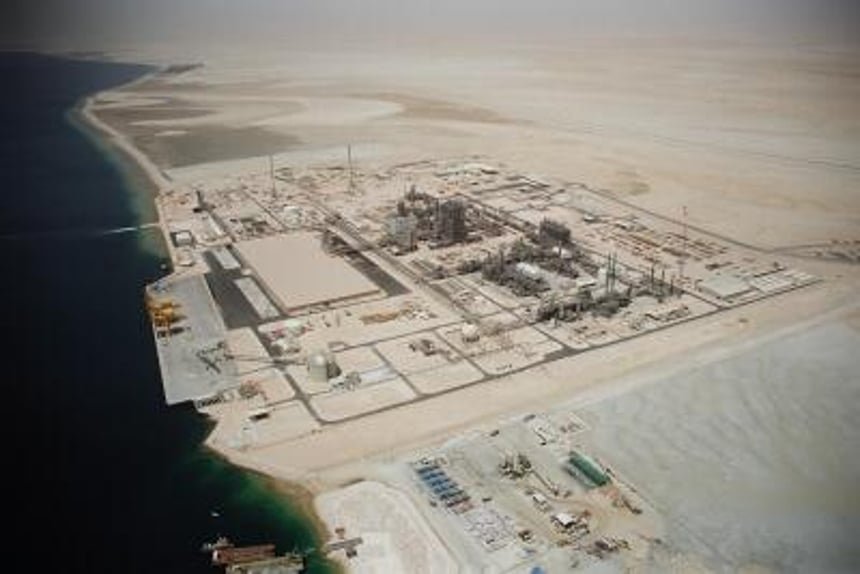
Qatar’s state-owned oil and gas giant QatarEnergy has confirmed missile attacks at multiple liquefied natural gas (LNG) facilities, which sustained significant damage during the assault that left the targeted LNG infrastructure in flames.
Ever since the U.S. and Israel launched a military campaign against Iran, the situation in the Middle East has been escalating, putting the safety and security of people, properties, and critical energy assets in jeopardy, as the country once known as Persia hits out at certain targets that hold significance not just to the region but also the world at large in retaliation, aiming to force the U.S.-Israel alliance to cease their assault.
After Iran’s closure of the Strait of Hormuz, QatarEnergy halted LNG production and associated products at some of its assets and followed the move with a declaration of force majeure to its LNG buyers. However, a major plot twist came with Iran’s warning about its planned attack on oil and gas facilities across the Gulf region in direct response to Israel’s attack on its giant South Pars gas field, which is known as the North field on Qatar’s side.
Only hours after the warning came regarding potential attacks on Samref Refinery and Jubail Petrochemical complex in Saudi Arabia, Al Hosn gas field in the United Arab Emirates (UAE), and Mesaieed Petrochemical complex, Mesaieed Holding Company, and Ras Laffan Refinery in Qatar, QatarEnergy disclosed that the Ras Laffan Industrial City was hit by missiles on March 18, 2026.
“Emergency response teams were deployed immediately to contain the resulting fires, as extensive damage has been caused. All personnel have been accounted for and no casualties have been reported at this time,” highlighted the Qatari energy giant.
Qatar’s Ministry of Foreign Affairs also issued a statement, strongly condemning and denouncing “the blatant Iranian attack,” which targeted Ras Laffan Industrial City, causing fires that left significant damage in the aftermath.
The attack on Ras Laffan Industrial City that caused significant damage to the Pearl GTL (gas-to-liquids) facility was not an isolated event, as QatarEnergy confirmed further missile strikes in the early hours of March 19, 2026, on several of its LNG facilities, which suffered “sizeable fires and extensive further damage.”
“Emergency response teams were deployed immediately to contain the resulting damage with no reported casualties,” emphasized the LNG titan, while the Iranian embassy’s military, security attaches, and staff were declared as persona non grata by Qatar’s Foreign Ministry, which deemed the assault as “a dangerous escalation, a flagrant violation of its sovereignty, and a direct threat to its national security.”
Commenting on the set of attacks on QatarEnergy’s LNG infrastructure, Vivek Chandra, Founder and CEO of Gulfstream LNG, a greenfield LNG project under development on the U.S. Gulf Coast, emphasized: “This could be our industry ‘s most significant ‘Black Swan’ event since Fukushima fifteen years ago. If the damage has hit crucial facilities such as tanks, process units or marine berths, this will have a massive impact on global LNG markets.
“We have seen LNG facilities experiencing collateral damage from domestic civil unrest, such as in Yemen and Mozambique, but we have never seen LNG facilities become a war target from foreign adversary. Now -more than ever- flexibility & diversity of supply and of equity investment should be a priority. Around 50 countries around the world import LNG.
“When ~1/5 of supply is offline, market impacts will be felt globally. LNG facilities are massive complex entities that are designed to work reliably and safely for decades. They’re not designed to withstand a hostile military attack from the air. And repairs can only begin when peace returns. I’ve done a number of blogs recently about the politicalization of LNG. Unfortunately these recent events demonstrate that is happening very quickly.”
Given that the situation in the Middle East keeps heating up, the exact fallout from the U.S.-Israel attack on Iran is hard to predict, especially as it could push the region into a wider conflict, potentially opening the floodgates for more countries to join the fray. Currently, no significant steps have been made to douse the fires of war, as hostilities remain at a very high level.
The price this will have in terms of its impact on the region, economy, and global repercussions is likely to be a hefty one; thus, concerns continue to grow over what may take shape next as the situation unfolds, since it is expected to put more critical energy assets at risk, threatening energy security and keeping global markets on edge.

Take the spotlight and anchor your brand in the heart of the offshore world!
Join us for a bigger impact and amplify your presence at the core hub of the offshore energy community!