Shipyard-based rig intake and inspection gigs on M...
3 hours ago

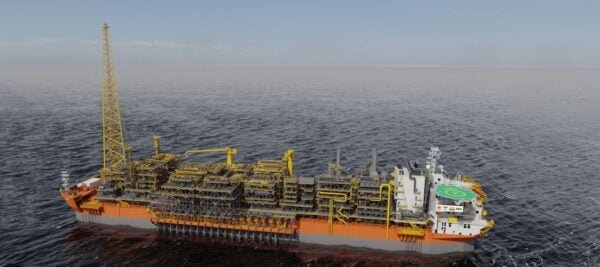
While diving into the evolution journey of its offshore operations model and the implementation of its Fast4ward program, the Netherlands-based SBM Offshore, a provider of the design, construction, installation, and operation of offshore floating facilities, has shed light on the key growth drivers it is employing to pave the way for its floating production, storage, and offloading (FPSO) units to be ready to operate in a rapidly evolving energy landscape.
During a recent interview with Offshore-Energy.biz, Alex Glenn, Chief Operating Officer (COO) at SBM Offshore, who has been with the Dutch giant since 2007, pointed out that robotics, AI-enabled solutions, electrification, and carbon-capture technologies would remain in use to position the firm for future growth.
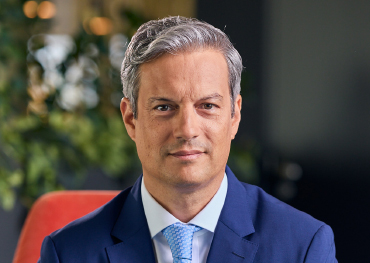
Glenn, who holds a degree in Marine Technology from the University of Newcastle Upon Tyne, began his career in offshore operations with Maersk Contractors in the UK sector of the North Sea. He explained that SBM Offshore shifted from one-off, bespoke FPSO designs to a standardized, modular, and data-driven operating model, with the Fast4Ward program being central to the transformation.
This introduced pre-engineered hulls and topside modules, reducing delivery times and improving cost predictability. While key drivers included safety, sustainability, and efficiency goals, alongside leveraging digital platforms and expanding global execution centers, challenges such as data fragmentation, cultural adaptation, and emissions reduction were addressed through digital integration, training, and partnerships.
The Netherlands-based player is using industrialized execution, AI-enabled predictive maintenance, digital twins, and deepwater specialization, while operational feedback loops continuously refine designs, as alliances with partners like SLB, Cognite, and Mitsubishi Heavy Industries accelerate innovation.
OE: How has SBM Offshore’s operating model evolved over the past decade, and what drove the change?
Alex Glenn: Over the last ten years we have moved from one-off, bespoke FPSOs to a standardized, modular, and data-powered operating model. The launch of our Fast4Ward execution approach created a consistent reference—standardized hulls and topside modules—to continuously improve throughout the asset lifecycle (engineering, procurement, construction & commissioning, installation, operations, decommissioning).
The drivers were clear:
OE: What challenges did you face in adapting traditional offshore practices to today’s efficiency, safety, and sustainability demands?
Alex Glenn: Three stand out. First, data fragmentation—information was trapped in silos across the enterprise. To access in integrate all our data required new platforms and data governance.
Second, change at the edge—rolling out new processes and tools to crews who operate 24/7, many constrained by satellite connectivity, requires robust training and human-factors design.
Third, lower emissions at pace—integrating electrification, flare minimization and future carbon-capture into brownfield and greenfield assets without compromising reliability. We addressed these through our digital program and partnerships, targeted operating standards, and fleet-wide learning loops.
OE: How does SBM Offshore’s current operations model differentiate itself from industry peers?
Alex Glenn: SBM Offshore distinguishes itself through a combination of industrialized execution, data-powered operations, and technology leadership.
1. Standardization at scale: SBM Offshore has institutionalized a standardized FPSO program—Fast4Ward—with proven delivery across multiple basins. This serial approach provides predictability, cost stability, and repeatability for both project execution and long-term operations.
2. Digital integration across the full lifecycle: Our strategic alliances with other industry leaders such as Cognite and SLB allow us to leverage AI-enabled predictive maintenance, integrated digital twins, and cross-domain data contextualization—from subsurface to topsides.
3. Demonstrated technology leadership in operations: The Liza Unity, operated by SBM Offshore on behalf of ExxonMobil in Guyana, became the first FPSO globally to receive the ABS REMOTE-CON notation, validating our capability to safely deploy advanced remote-operations and digital control functionalities.
4. Deepwater specialization: Market analysts consistently position SBM Offshore as the leading player in complex, (extra) large-capacity deepwater FPSOs—a segment with significant barriers to entry due to technical, financial, regulatory and operational demands.
Together with our proven track record, these factors give SBM Offshore an operational and strategic advantage grounded in experience, technology, and disciplined execution.
OE: Regarding the journey to Fast4Ward, which problems were you solving?
Alex Glenn: A decade ago, our industry was facing a very familiar problem: FPSO projects were taking too long, costing too much, and carrying too much execution risk. Every new vessel started almost from scratch — a one-off engineering exercise with bespoke specifications, bespoke integration, and bespoke supply-chain arrangements. That level of customization created complexity, and complexity created vulnerability: schedule slippage, cost growth, and late surprises during integration and commissioning.
At the same time, our clients needed predictability and faster routes from discovery to first oil, especially as deepwater prospects matured and competitive pressures increased. Internally, we asked a simple question: What if we could treat FPSO development as a series business rather than a bespoke craft? That question became the beginning of the Fast4Ward program.
We started by examining our historical project data — lessons from more than 30 FPSOs delivered and over 300 cumulative operating years across the fleet. It became clear that 70–80% of an FPSO’s architecture is repeatable, if we standardize early enough and maintain discipline in execution. So, we flipped the traditional model: instead of waiting for each new award to begin engineering, we started engineering—and even building—hulls in anticipation to market demand.
This led to three major breakthroughs:
1. A standardized multi-purpose floater (MPF) hull. By locking in a generic, class-approved, ocean-proven hull design, we removed months of engineering, reduced integration risk, and enabled parallel work in the shipyard. We committed to this in a series, ordering hulls ahead of allocation — a bold move at the time. By 2024–2025, yards like SWS and CMHI had delivered multiple MPF hulls, validating the model and giving us schedule assurance and true delivery momentum.
2. Standardization of topside modules and interfaces. With field specific requirements, standardization of Topsides modules is more challenging. So, instead of standardization at a ‘macro’ level, we standardized at a ‘micro’ level – standardized design elements and equipment selection. This not only accelerated design but reduced the number of surprises discovered during construction, commissioning and start-up, when the cost of late findings is traditionally highest. Fast4Ward® also gave us more predictable module weights, footprints, and integration sequences.
3. A new execution mindset built around predictability. The program wasn’t only about hardware. We redesigned processes to be more industrialized: tighter supply-chain frameworks, repeatable quality control models, and an execution rhythm that allowed our parter shipyards to refine their own efficiency over multiple hulls. This is why the series effect — hulls #1 through #10 and beyond — became progressively more efficient.
Ultimately, Fast4Ward emerged as a strategic answer to industry volatility, the need for capital discipline, and our clients’ demand for schedule certainty. The results speak for themselves: reduced delivery time by up to a year, fewer integration risks, and a foundation robust enough to incorporate future technologies — digital solutions, emissions-reduction features, or even our lower carbon FPSO concept — without redesigning the entire system.
In short, Fast4Ward took something inherently complex and made it reliable and repeatable. That’s much more than efficiency; it’s a full-on transformation in how our fleet is delivered and how we are applying industrial principles into extremely high-complexity floating asset. It transformed FPSO development from a bespoke engineering challenge into a scalable industrial process — and that shift continues to shape our competitiveness today.
OE: What were the biggest hurdles in implementing Fast4Ward across such a complex environment and how did you overcome them?
Alex Glenn: Implementing Fast4Ward required overcoming several systemic challenges:
We overcame these hurdles by establishing robust technical authorities, strengthening cross-functional governance, investing heavily in supplier and shipyards relationships, and demonstrating—through multiple hull deliveries—the tangible advantages of the Fast4Ward model.
OE: How has Fast4Ward reshaped delivery timelines and cost efficiency?
Alex Glenn: Fast4Ward has had a profound impact on both schedule and cost performance:
Fast4Ward has become one of the most effective levers for delivering predictable, competitive, and lower-risk project outcomes in the offshore industry.
OE: Could you please provide some examples where feedback from operations directly enhanced Fast4Ward?
Alex Glenn: Operational feedback plays a central role in refining the Fast4Ward platform. Examples include:
This structured, fleet-wide feedback loop ensures that every new vessel benefits from the operational history of the entire fleet.
OE: How do you embed a culture of continuous improvement across teams and geographies, balancing consistency with innovation?
Alex Glenn: Standardization of our products and ways of working has provided a consistent reference from which we can identify and deploy improvement opportunities. Our continuous-improvement culture is driven by an organizational ambition to strive for excellence in all forms. When this critical analysis behavior becomes habitual, we experience a every increasing continuous improvement trajectory.
The ‘tension’ between standardization and continuous improvement is managed by a balance of global standardization and local empowerment:
1. Clear global governance: We maintain robust technical standards, operating procedures, and competency frameworks that ensure consistency across all regions.
2. Regional autonomy within a framework: Local operations teams have the freedom to tailor execution approaches within defined boundaries, allowing innovation to emerge organically while preserving baseline consistency.
3. Digital transparency: Shared digital platforms provide real-time operational data accessible across the company, enabling cross-fleet benchmarking and rapid dissemination and implementation of lessons learned.
4. Leadership accountability: Performance management, safety leadership, and cross-functional reviews ensure that continuous improvement is embedded at every level of the organization.
5. People development: Structured training, rotational programs, and communities of practice encourage knowledge sharing and capability building.
This model creates a global operations culture that is disciplined, learning-oriented, and receptive to new ideas.
OE: Where is the offshore operations model heading in five to ten years, and how are you positioning SBM Offshore to meet the demands of the future energy ecosystem?
Alex Glenn: We will continue to pursue our strategy of Advancing the Core and Pioneering More. Advancing the Core will be done by leveraging new technologies – materials, robotics and AI enabled solutions – to:
This further increases standardization and simplification of our products.
Our longstanding experience in the ocean infrastructure presents big potential for other sectors. Our Fast4Ward platform, the digital alliances recently signed, our lower-carbon FPSO concept, and ongoing investment in emissions-reduction technologies are a clear example of what we mean by ‘pioneering more.’
Our strategy centers on delivering assets that are not only operationally excellent today but future-ready for evolving regulatory and market landscapes. We are investing accordingly—standardized platforms, digital alliances, and decarbonization modules—so our clients can scale reliable production with a shrinking emissions footprint.
OE: How does Fast4Ward align with industry trends in digitalization, sustainability, and modular design?
Alex Glenn: Fast4Ward is fundamentally aligned with —and enabling— key industry trends:
Fast4Ward therefore provides a structural foundation for embracing the next generation of offshore technologies.
OE: What role do partnerships and collaborations play in sustaining Fast4Ward and your operations philosophy?
Alex Glenn: Collaborative partnerships are an integral part of our strategy. From shipyards and critical component suppliers who build repeatably, to technology partners—SLB and Cognite on data/AI, Mitsubishi Heavy Industries on carbon capture—and class societies like ABS and Bureau Veritas validating new capabilities, our ecosystem accelerates learning and de-risks innovation for our clients.
OE: Is there anything you would like to add?
Alex Glenn: Only this: safety, emissions and reliability performance rise together when you standardize the platform and empower people with better data. That is what Fast4Ward, our digital alliances, and our decarbonization roadmap are designed to deliver—practical progress, project by project.

Take the spotlight and anchor your brand in the heart of the offshore world!
Join us for a bigger impact and amplify your presence at the core hub of the offshore energy community!