Port of Long Beach Nation’s Busiest Seaport throug...
2 hours ago

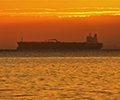
Singapore’s bunker fuel sales and tanker arrivals rose in March, even as the war in Iran weighs on global shipping sentiment.
Data released by the Maritime and Port Authority of Singapore (MPA) on April 14 showed that about 4.8 million tonnes of bunker fuel was sold during the month, up 1.9 per cent from nearly 4.7 million tonnes in February.
The sale of liquefied natural gas (LNG), however, fell about 17 per cent, from 59,000 tonnes to 49,000 tonnes.
Tanker traffic also increased, with 2,302 vessels calling at the port in March – a 10 per cent jump from 2,084 in the previous month.
These included 1,651 oil tankers, which is a roughly 10 per cent increase from the 1,503 that had called at Singapore’s port in February.
Maritime expert Yap Wei Yim noted that similar patterns were observed during the same period in 2025, suggesting that the uptick may be seasonal rather than driven by geopolitical developments.
Associate Professor Yap, head of the maritime management minor at the Singapore University of Social Sciences, said it is too early to infer the impact of the war from MPA’s latest figures, and cautioned against drawing premature links.
In both 2025 and 2026, bunker fuel sales and tanker arrivals dipped in February before rebounding in March.
A fuller picture of the impact will likely be more apparent from April, said Ms Mahua Mitra, head of bunker fuel pricing in Asia at price reporting agency Argus Media.
Data from March would include vessels that had arrived in Singapore during the early weeks of the war, which would not be representative of the current situation.
With the conflict spreading across the Middle East and disrupting not just shipping routes but also bunkering capacity and operations in the region, more vessels have been choosing to call at Asian ports including Singapore.
The trend for LNG sales, however, diverged from 2025’s pattern.
Sales of the gas fell from 32,800 tonnes to 30,000 tonnes in February 2025, before rising to 39,000 tonnes the following month.
In 2026, LNG sales had increased to 59,000 tonnes in February from 42,600 tonnes the month before. The amount sold fell to 49,000 tonnes in March.
Prof Yap said the decline could be linked to supply disruptions in Qatar.
Iran had struck Qatar’s Ras Laffan Industrial City, with the resulting fires damaging a plant that accounts for a fifth of the world’s LNG supply.
Prof Yap added that countries reliant on Qatar for LNG might have to turn to alternative exporters, increasing competition for supply from a smaller pool of sources.
The slight decline also appears to be a reflection of near-term market caution, said Ms Mahua.
Uncertainties about LNG trade flows prompted parts of the market to discuss prioritising the gas for power generation and consumer use, instead of for the maritime sector.
This led to a temporary pause as well as delays in the procurement of LNG bunker supplies, but Ms Mahua said it should be interpreted as an “initial shock response”.
Since the United States and Israel attacked Iran on Feb 28, global oil and natural gas prices have surged, with the Islamic republic closing the Strait of Hormuz in retaliation.
The maritime corridor is a key passageway responsible for the flow of a fifth of global oil and natural gas supplies from the Persian Gulf.
But even if the war were to end soon, Prof Yap warned that oil prices are likely to remain high.
“Demand for oil will remain strong, but supply will still be restricted.
“Even if the Strait of Hormuz is reopened, due to the infrastructural damage and strong demand, oil prices will remain elevated, which in turn will affect costs everywhere, especially since oil affects so many aspects of society.”
Source: The Straits Times