Retrofit of an 82,000 DWT bulk carrier for methano...
52 minutes ago

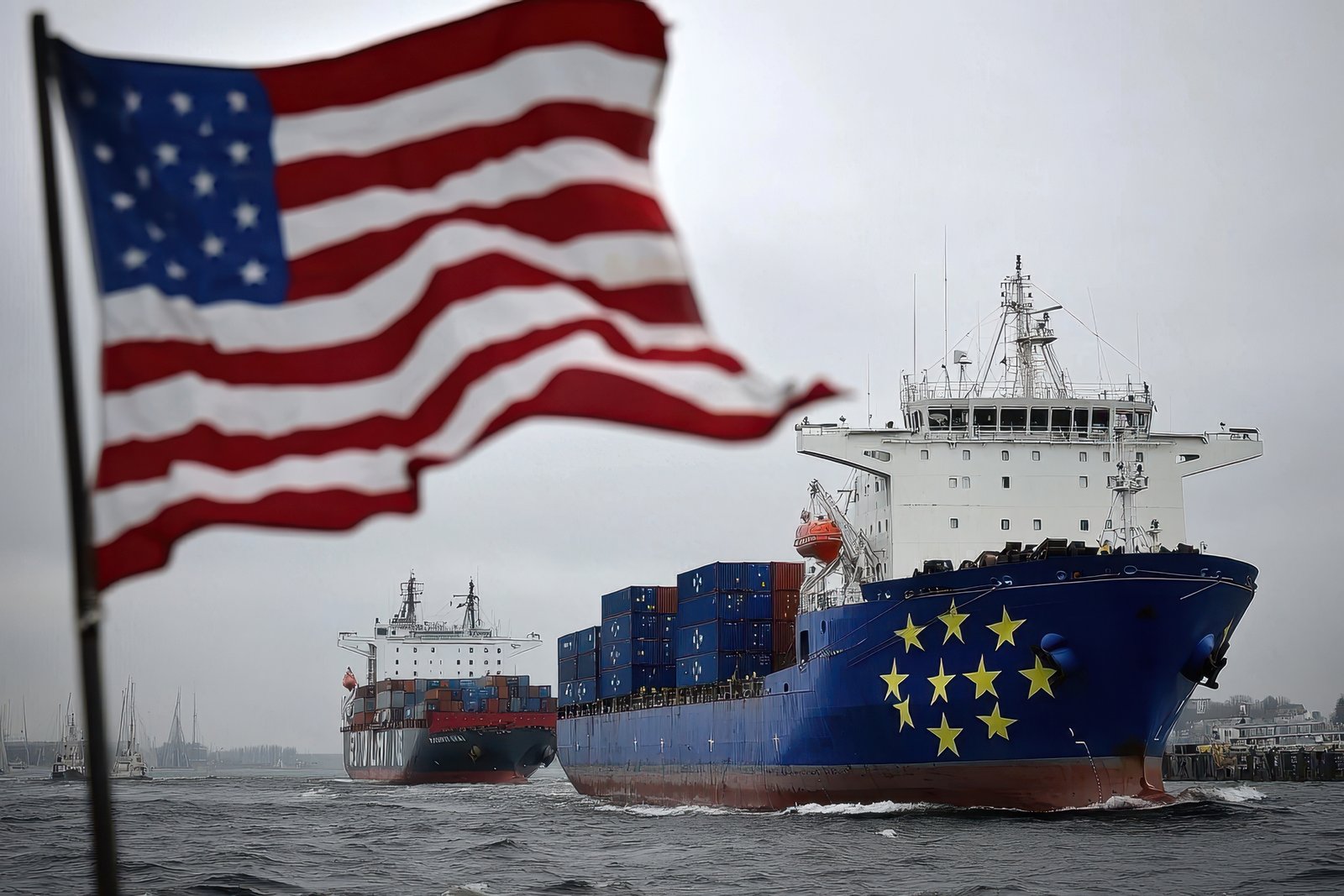
The US has called on the IMO to “end consideration” of the IMO Net-Zero Framework proposal and, instead, devote its attention to considering “alternative proposals.”
Member States are also urged to decide against resuming the second extraordinary session of the MEPC.
On 6 March 2026, the United States submitted a position paper to the Marine Environment Protection Committee (MEPC 84/7/41) calling for non-punitive approach to maritime emissions policy: no carbon tax, levy, or multilateral fund. No penalties or limits on fuel types. And mandatory withdrawal/phaseout of any existing regional shipping emissions reduction scheme, including the European Union’s ETS.
The United States submitted a document with policy positions that “could guide,” as it said, the “development of any possible alternative GHG reduction proposals.”
In short, the US is not just expressing reservations. It is calling for the entire Net-Zero Framework to be abandoned, and it is laying down red lines for any replacement.
The paper states that the previously proposed amendments to MARPOL Annex VI concerning the IMO Net-Zero Framework, as approved by MEPC 83 in April 2025, would have “dire economic consequences for the shipping industry, energy producers, and global consumers” and that the “framework would unwisely promote the use of expensive, unproven, and unavailable fuels in lieu of existing and proven technologies that fuel global shipping fleets.”
The most striking element of the document is its call to end consideration of the IMO Net-Zero Framework entirely and not resume MEPC/ES.2, currently adjourned until November 2026.
In October 2025, after a U.S.-led opposition, the International Maritime Organization (IMO) voted for a one-year delay on the adoption of its landmark Net-Zero Framework, a decision environmental groups called a “major setback” for global efforts to clean up shipping industry emissions.
The United States maintains that, if IMO Member States choose to pursue international regulations or other approaches to reduce GHG shipping emissions, those efforts must be based on fundamentally different principles than those embodied in the IMO Net-Zero Framework.
The document states there must be “no financial penalty, carbon tax, levy, or multilateral fund, or equivalent thereof,” adding that, “the United States will not tolerate an IMO-administered fund of any kind built on revenues from a global carbon tax or penalizing mechanism.”
Any proposal must embrace what the US calls an “energy-all” approach that does not restrict or constrain current or breakthrough fuel types – proposals should not have limits on conventional crude or diesel, LNG, nuclear, biomass-based fuels, or any other type of marine propulsion technology.
It said proposals must eliminate penalties on LNG, recognize biofuels as viable marine fuels, and support industry-led advances in alternative fuels and other technologies without picking “winners and losers” via regulations.
The US suggests Member States and regional organizations to terminate their existing regional schemes to avoid a duplicative system of frameworks/agreements.
In the document it is also stated that, “the explicit acceptance procedure for entry into force should be used. The tacit acceptance procedure, whereby Member States’ support is assumed unless otherwise so stated, is not appropriate given the magnitude of the issue.”
Greek Shipowners (UGS): “Net-Zero Framework does not constitute an appropriate solution”
The president of the Union of Greek Shipowners (UGS), Melina Travlos, issued a statement on Thursday on the occasion of the forthcoming IMO Marine Environment Protection Committee (MEPC 84) Session:
“With the global shipping industry turning its attention to the upcoming session of the International Maritime Organization’s Marine Environment Protection Committee, the Union of Greek Shipowners calls upon all Member States to rise to the occasion in a spirit of pragmatism and constructive cooperation.
“Greek shipping, representing the largest cross-trading merchant fleet in the world, has consistently been at the forefront of environmental stewardship. The Greek shipowning community continues to invest substantially in fleet renewal, energy efficiency and technological innovation, demonstrating that operational excellence and environmental responsibility go hand in hand.
“We remain firmly committed to the decarbonisation of our sector. However, ambition must be grounded in realism. The draft Net-Zero Framework does not constitute an appropriate solution, as evidenced by the absence of support from major and influential States representing a significant share of global tonnage, an element that cannot be overlooked.
“We therefore urge Member States to work towards a global, realistic and implementable solution that can ensure a just and equitable transition, while prioritising safety and providing the necessary certainty for long-term investments. Failing this, the risk of a fragmented regulatory landscape, marked by regional measures that distort competition, will become inevitable. Such an outcome would neither advance the global decarbonisation of shipping nor preserve the central role of the IMO as the competent regulator of international shipping.
“The extensive experience gained through prior negotiations should be used to consider alternative approaches, drawing on the industry’s deep expertise and practical experience. The active involvement of the shipping industry is essential to shaping a robust regulatory framework, one that safeguards both environmental objectives and the resilience of the sector, while also supporting the welfare of societies worldwide.
“In this context, we call upon governments to match the industry’s commitment with the necessary political will and determination.”