Geneva Dry set to tackle shipping’s biggest stress...
2 hours ago

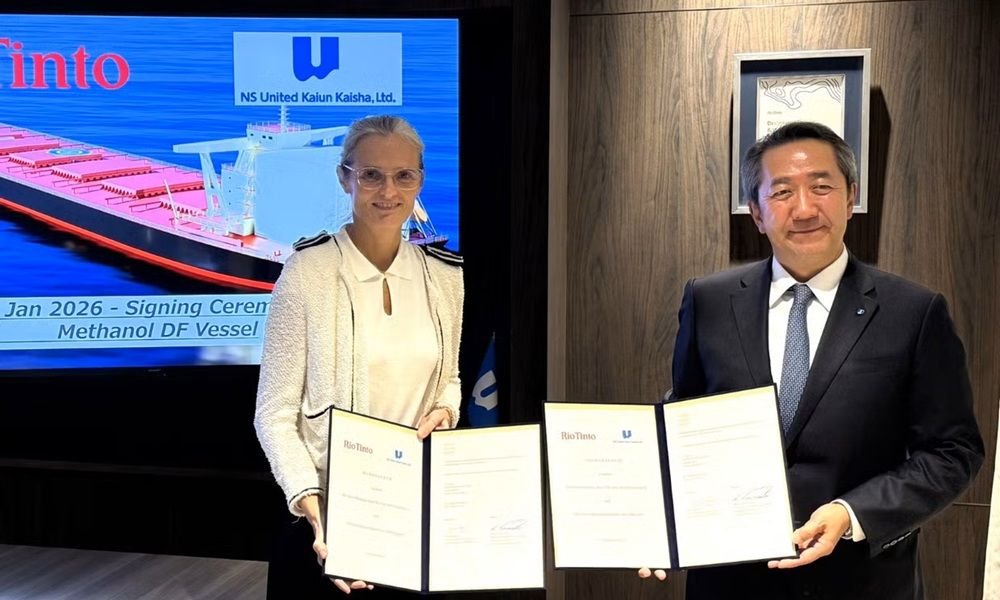
Mining giant Rio Tinto has secured long-term freight cover with a deal to charter two methanol-capable dual-fuel newcastlemax bulkers from Japan’s NS United Kaiun Kaisha, with deliveries set from 2028.
The move gives the miner added flexibility as it looks to future-proof its shipping exposure.
The vessels will be designed to run on conventional fuels as well as methanol, offering optionality depending on fuel availability, regulation and pricing at the time of operation.
Rio Tinto said the deal is part of its broader strategy to build resilience into its freight portfolio while keeping options open on alternative fuels.
“Shipping is entering a period of significant transition, but the pace, direction and economics of alternative fuels remain uncertain. Our focus is on building flexibility into our portfolio so we are prepared for how the industry may evolve, while continuing to operate safely and competitively,” said Laure Baratgin, head of commercial operations at Rio Tinto.
“Our role as a charterer is to work with owners who are willing to taking a long-term view. Futureproofing the fleet takes a shared commercial effort across the value chain, and we are glad to enable this,” she said.
From the owner side, NSU pointed to operational flexibility as a key driver behind the investment.
“From an owner’s perspective, long-term operability and safety come first. Methanol capability is one of several features that provide flexibility as regulatory and market requirements continue to evolve,” said NSU president Kazuma Yamanaka.
Rio Tinto and NSU have worked together for years, and the latest deal builds on that relationship as both sides look to position themselves for tightening emissions rules and shifting fuel economics.
The newcastlemaxes are expected to be deployed in Rio Tinto’s iron ore trades, with methanol use remaining an option rather than a firm commitment, depending on how infrastructure and supply chains develop.
The charter underlines a growing trend among major cargo owners to back dual-fuel tonnage rather than commit to a single pathway too early, as the sector weighs up options including methanol, ammonia and other low-carbon fuels.
A similar approach is emerging elsewhere in the iron ore trades. Brazilian miner Vale has been testing alternative fuels and recently moved into ethanol-linked propulsion through newbuilding deals for VLOCs at Chinese yards, signalling that charterers are increasingly willing to experiment across multiple fuel types.