Why the cloud still runs on coal and gas
2 hours ago

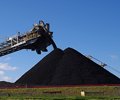
South Korea’s coal power output declined in March, even after the government eased the coal power generation cap in response to the prolonged Middle East conflict, data showed on Monday.
According to data submitted by the Korea Power Exchange to Representative Lee Jong-bae of the main opposition People Power Party on Monday, coal-fired power generation totaled 12.08 million megawatt-hours (MWh) in March, down 8.6 percent from 13.23 million MWh in February.
Gas-and nuclear-powered generation, on the other hand, increased during the same period.
Gas-fired generation rose 8.3 percent to 15.03 million MWh from 13.87 million MWh, while nuclear power generation climbed 9.8 percent to 12.59 million MWh from 11.47 million MWh.
Although the government introduced measures to curb gas-fired generation amid rising liquefied natural gas (LNG) prices caused by the Middle East conflict, the policy appears to have had little effect, observers noted.
On March 16, the Ministry of Climate, Energy and Environment decided to ease the cap on coal-fired power plants—from 80 percent to as much as 100 percent—under the seasonal fine dust management system.
The plan was to increase coal and nuclear power generation to replace gas-fired power.
However, critics pointed out that coal power has failed to effectively substitute for gas generation despite the eased cap, due to transmission constraints.
Along the east coast, more than 5 gigawatts (GW) of coal power capacity is unable to operate because of limits on transmission.
The government applies the N-2 standard, which allows only half of the transmission network to be used to ensure that power can still be delivered even if two transmission lines fail. As a result, coal-fired plants in the region are operating at just 30 percent capacity.
Compounding the issue, maintenance schedules further reduced coal output, preventing it from serving as a viable alternative to gas even amid the energy crunch.
“In March and April, coal plants typically undergo maintenance in preparation for peak summer electricity demand, so output is inevitably lower than in February,” said a ministry official.
“Coal-fired power generation is subject to grid constraints, as renewable energy and nuclear power are given priority in grid access,” said Yoo Seung-hoon, a professor at Seoul National University of Science and Technology. “With many plants undergoing maintenance ahead of summer, it is realistically difficult for the government to increase output even if it wants to.”
There are growing calls for the government to ease transmission-related regulations and adopt more effective measures.
“Government measures that fail to take transmission constraints into account are nothing more than impractical desk-bound ideas,” said Representative Lee. “The government should flexibly adjust the N-2 reliability standard for the transmission grid to ensure that power sources replacing LNG can be supplied to the Seoul metropolitan area.“
Source: Pulse