Baltic Dry Index Snaps 2-Day Advance
7 hours ago

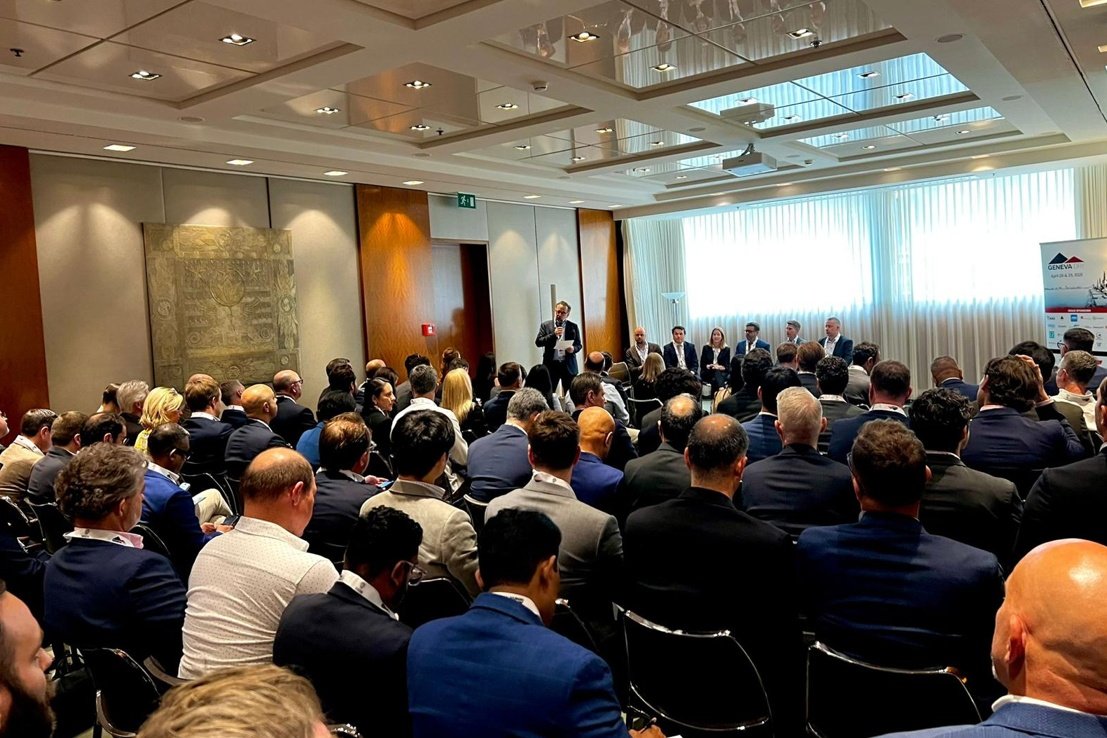
Amid a sea of buzzwords, bold promises and AI evangelism, a refreshingly candid panel at this week’s Geneva Dry conference attempted to answer the question that shipping’s technology buyers most want answered: what is actually delivering results, and what is falling short?
The Digital Dry Hard Talk workshop, moderated by Neville Smith from Mariner Communications, brought together a mix of technology providers and shipping company representatives who wasted little time getting to the uncomfortable truths.
The session opened with a fundamental question about the shape of the market itself. Is the technology landscape still too fragmented, with too many suppliers chasing too few customers? Christoffer Svard, CCO of Sea, argued the answer is nuanced. “In order to service the entire workflow, if you think about a fixture from start to end, there are many, many elements across that workflow. For one single company to service all those elements is virtually impossible,” he said, adding that interoperability between providers is now the critical missing link.
Carlos Pena, CEO of CTM, offered the buyer’s perspective. From where he sits, the proliferation of vendors is not entirely unwelcome. “You can be picky. You can be selective in trying to decide what your company wants. You can identify your problem and look for the solution for that problem,” he said, though he acknowledged the volume of sales calls has become a challenge in itself.
Sanjay Kapoor, CEO of GeoServe, reframed the debate entirely. “It’s not a story of just technology deficit. It also is largely a story of connectivity deficit. While we have today built great systems in silos, it’s very critical to have the latitude across board. Integration connectivity is the new way to look at technology.”
A recurring theme was the tension between scale and innovation. Stephen Fletcher of AXSMarine – newly merged with Signal – noted that consolidation brings real benefits, allowing resources to be redirected from internal competition toward client-facing work. But Friederike Hesse, co-founder of ZERO44, pushed back. “With size also comes complacency and tech legacy. For the innovation that we want to see on the positive side of digitalisation, it’s important to also have the smaller players.”
Daniel Weiss, GM of shipping strategy at Vale, offered what became one of the session’s most quoted insights on where good ideas actually come from. “Smaller players often have a great idea and they want to market it, but often it’s a solution looking for a problem, not the other way around.” His company’s approach – training teams in innovation culture, identifying pain points internally, and then going looking for solutions – drew strong agreement from around the panel.
On the perennial question of return on investment, Pena was practical. “How much time are you saving? Even simple things on technology – painting on ships. If it took five days to clean, with robots now it takes three, two days is fifty grand. That is what we’re looking for.”
The session inevitably arrived at AI, and here the panel was notably measured against the hype surrounding the topic. Hesse argued that the transformational potential of AI lies less in vendor products and more in what it enables internally. “The groundbreaking thing about AI is that it’s making everyone smarter. I need to make my people smarter with AI. You don’t necessarily need to choose an AI vendor – you need to train your people.”
Fletcher drew a careful distinction. “AI makes me more productive. I’m not sure it’s going to make me smarter, to be clear.” He described AXSMarine as an “AI-enabled vendor” rather than an AI vendor – a difference he considered important.
Weiss highlighted a concrete win that cut through the theoretical debate: Vale deployed a machine learning-based ETA prediction tool that achieved 70% higher accuracy than previous methods.
The data quality problem lurking beneath all AI ambition was raised both by the panel and the audience. Hesse said: “For many, many shipping companies, there’s no real data quality management process in place. If you try to put AI on top of that and base your decision making on top of it, it’s garbage in, garbage out.”
On the jobs question – will AI hollow out shore-based shipping roles? – the panel was broadly optimistic, though not naively so. Pena struck the most balanced note: “You will have people who have engaged with it and involved themselves in it succeeding. Maybe some people will be left behind. But as an organisation, you should embrace it positively. If it doesn’t have value, don’t waste your time.”
The final word on AI’s promise and its limits came from Kapoor. “If you resist it, if you’re not ready to accept it, you’re going to be left behind.”