Korea Launches Shipbuilding-Shipping Alliance | He...
10 hours ago

South Korea’s shipbuilding and steel industries are pouring trillions of won into India, a nation of 1.4 billion people, engaging in fierce competition to establish it as a global production and export hub.
According to industry sources on April 28, POSCO and HD Hyundai, representative companies of South Korea’s steel and shipbuilding sectors, are embarking on large-scale investments in India.
POSCO has signed a Joint Venture Agreement (JVA) with India’s top steelmaker, JSW Steel, to construct an integrated steel mill valued at approximately 10 trillion 800 billion won. The plan involves establishing a new corporation, with each company holding a 50% stake, to build a blast furnace-based steel mill in the state of Odisha, India.
The new steel mill is slated to have an integrated process from ironmaking to rolling, with an annual production capacity of 6 million tons. Through this, POSCO aims to expand its production of high-value-added steel products, with the project targeted for completion by 2031.
India is a high-growth market with an annual steel demand growth rate exceeding 10%. Demand for high-value-added steel for automobiles and home appliances is rapidly increasing with urbanization and manufacturing expansion. In response to this trend, POSCO’s strategy is to establish a local production base and strengthen its product portfolio centered on advanced steel grades.
POSCO’s low-carbon operational technology and smart factory capabilities will be applied to this steel mill. Furthermore, there are plans to combine this with JSW’s renewable energy infrastructure to supply a portion of the plant’s power with eco-friendly energy. This move is interpreted as a strategic step to comply with the Indian government’s introduction of a ‘Green Steel Classification System’ and to prepare for strengthening global environmental regulations in the future.
Industry analysts view this investment as a strategy that goes beyond simply securing a production base. It aims to create a virtuous cycle of generating profits in a growing market and reinvesting them into decarbonization transitions and the development of hydrogen-based steelmaking. The analysis suggests that a localized production system based in India will become a key pillar of its mid-to-long-term competitiveness.
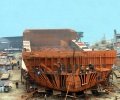
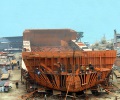
HD Hyundai has designated India as a key region for its overseas production base expansion strategy, following its ventures in Vietnam and the Philippines, and is accelerating the expansion of its shipbuilding business.
The company is also materializing plans to establish a new joint venture shipyard locally. It recently signed a ‘Memorandum of Understanding (MOU) for the establishment of key infrastructure and the pursuit of a joint venture for a new shipyard investment’ with NSHIP TN, a Special Purpose Company established by the V.O. Chidambaranar Port Authority under the Indian government, and the Sagarmala Development Company Limited (SMFCL).
This agreement expands the cooperative framework from the local to the central government level, further strengthening the foundation for the project. It has been assessed as being elevated to a national-level project, combining infrastructure construction with financial support. Previously, HD Hyundai had laid the groundwork for the project by signing an agreement with the state of Tamil Nadu to build a shipyard, and Chairman Kisun Chung personally met with Prime Minister Narendra Modi to discuss cooperative measures.
HD Hyundai plans to participate as the majority shareholder in the joint venture shipyard, overseeing its overall operations. It intends to build a digital shipyard by applying smart shipbuilding technology to design, production, and operations. The company will also focus on securing local talent by establishing a workforce training system.
India is fostering its shipbuilding industry as a national strategic sector through its ‘Maritime Amrit Kaal Vision 2047’, and with the expansion of port and logistics infrastructure, the demand for ships is also rapidly increasing. The industry is closely watching HD Hyundai’s moves, noting the significant mid-to-long-term growth potential for a first mover.
Source: Business Korea