Baltic Dry Index Hits Over 5-Month High
6 hours ago

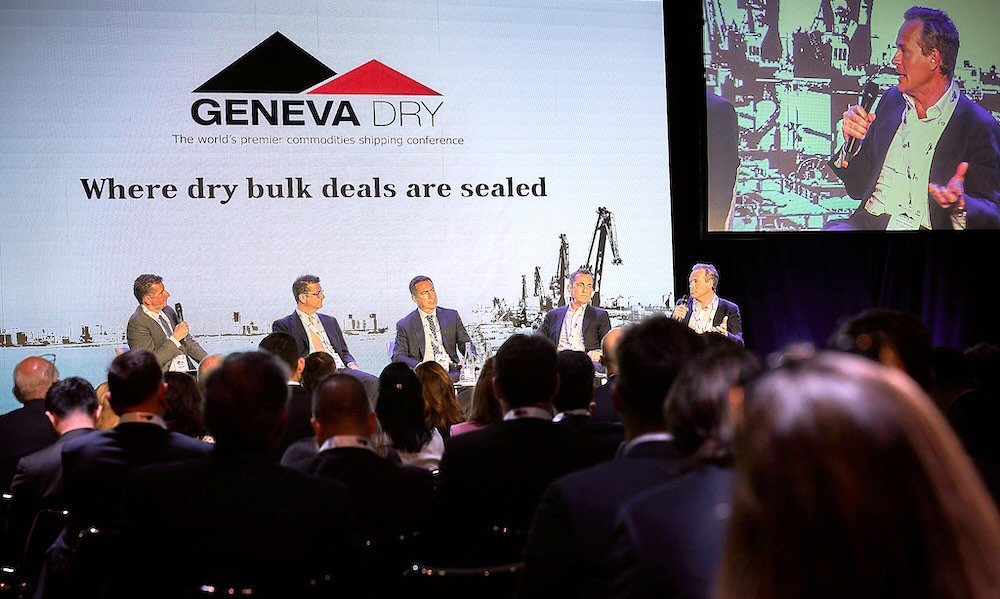
Coal’s obituary may have been written too early.
That was the unmistakable conclusion from last month’s coal session at Geneva Dry, where shipowners, analysts and operators argued that the escalating Hormuz crisis has radically altered the outlook for seaborne coal and, with it, dry bulk shipping demand.
Moderated by Benjamin Wilkes, COO of d’Amico Dry, the discussion quickly evolved beyond coal itself into a broader debate about energy security, geopolitical risk and whether governments are now quietly reassessing the pace of the global energy transition.
“Coal has been remarkably resilient,” Wilkes told delegates. “It keeps getting knocked down only to rise up and come running back at our ESG departments.”
The session came against the backdrop of worsening instability in the Middle East, with multiple panellists arguing that disruption to gas supplies and fears over energy security are driving countries back towards thermal coal.
Burak Cetinok, head of research at broker Arrow, said 2025 had initially looked disastrous for seaborne coal. Global coal volumes fell around 4%, equivalent to nearly 60m tonnes of lost cargoes, while shorter-haul trading patterns caused coal tonne-miles to plunge by roughly 10%.
But the picture changed dramatically after tensions escalated around Hormuz.
“We are witnessing an energy crisis,” Cetinok said. “Demand for coal is rising and I think we are just at the beginning of it.”
Arrow estimates the conflict could add between 55m and 65m tonnes of incremental coal demand, potentially removing the equivalent of around 100 capesize ships from the spot market.
Coal’s resurgence was not just theoretical. Stamatis Tsantanis, chairman and CEO of Seanergy Maritime, revealed that around 40% of his fleet is currently carrying coal cargoes.
“We haven’t seen the end of coal yet,” Tsantanis said.
He described strong demand across multiple routes, including Australia-Far East trades, Colombia-Far East voyages and even ultra long-haul movements from Australia into Europe.
Several panellists argued that what had previously been framed as a decarbonisation debate has now become a question of energy resilience.
Nicos Rescos, COO of Star Bulk Carriers, said governments were increasingly prioritising strategic reserves and stable electricity supply over emissions targets.
“The narrative is changing,” Rescos said. “Industrial groups focused on decarbonising are suddenly realising they need to focus on energy reserves.”
Europe, Japan and South Korea were all highlighted as markets reconsidering the lifespan of coal-fired generation assets, while China was repeatedly cited as the country best prepared for the current disruption.
William Fairclough, managing director of Wah Kwong Maritime Transport Holdings, said Beijing learned hard lessons from its 2021 energy crisis and had spent years strengthening coal security.
“Decarbonisation was dominating the long-term strategy and suddenly energy security became the most important thing,” Fairclough said.
China’s aggressive build-out of renewables remains intact, but panellists noted that coal still accounts for roughly 60% of Chinese electricity generation and increasingly acts as backup capacity during periods of peak demand or renewable shortfalls.
The panel also highlighted the growing unpredictability renewables can inject into freight markets.
Cetinok argued that weather volatility and intermittent renewable output could actually increase swings in coal demand going forward.
“When renewable supply cannot meet demand surges, there’s going to be coal to fall back on,” he said.
India’s role also drew close scrutiny. While Indian thermal coal imports softened last year, panellists stressed that the country continues to expand coal-fired generation capacity aggressively, even as renewable installations accelerate.
Attention then turned to Indonesia, the world’s largest thermal coal exporter, where production quotas and export restrictions are creating fresh uncertainty.
Fairclough suggested Jakarta may ultimately be forced to relax restrictions as global demand rises.
“Everyone has a plan until they get punched in the face,” he quipped.
Perhaps the clearest message from the session, however, was that ship supply fundamentals remain extraordinarily supportive for dry bulk owners regardless of coal’s exact trajectory.
Tsantanis noted that around 1,100 dry bulk ships will turn 20 years old within the next three years, while newbuilding slots at Chinese yards are effectively sold out until 2030.
“The elephant in the room is supply,” Tsantanis said.
Even among owners reluctant to publicly champion coal, the commodity’s importance was difficult to deny. Fairclough admitted roughly 60% of Wah Kwong’s kamsarmax exposure is currently tied to coal trades.
“It’s not something people like to talk about,” he said. “But it forms a very important bedrock.”
Geneva Dry, the world’s premier commodities shipping conference, returns to the Hotel President next year on April 27 and 28.