Diana Shipping secures higher charter rate for pos...
4 hours ago

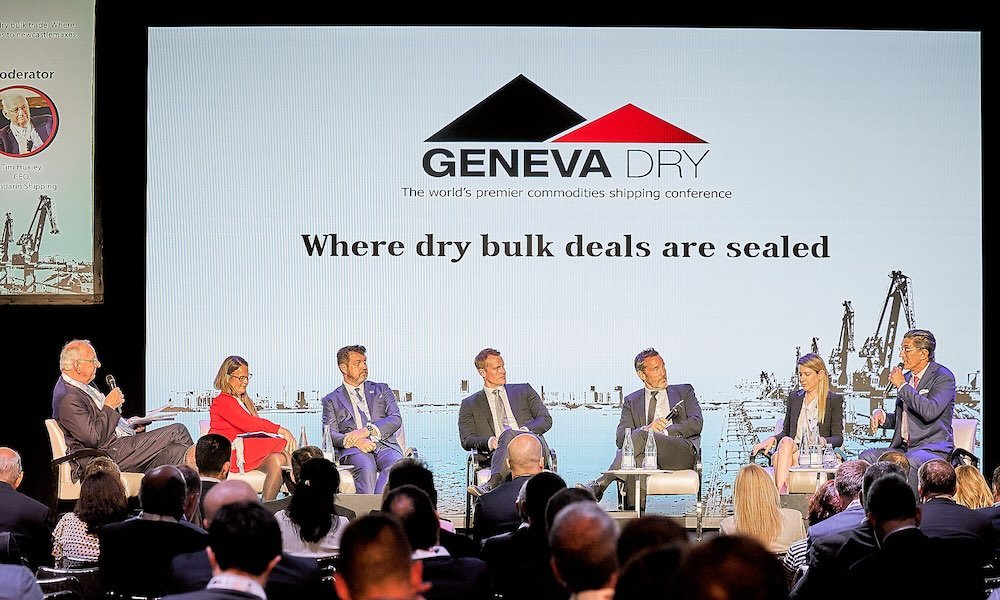
The iron ore session at last month’s Geneva Dry conference ended up being far more than a discussion about ore flows and freight rates. In the space of an hour, the panel veered from bunker shortages and Chinese stockpiling to de-dollarisation, geopolitical fragmentation and warnings that the world is entering its biggest industrial shift since the Industrial Revolution.
If there was one dominant takeaway, it was that despite war, soaring bunker prices and trade disruption, the dry bulk market – particularly capes – remains surprisingly resilient.
“We are at exactly the same values, within 1% or 2%, for Q2 and the balance of the year as where we were before the year, in a totally different environment,” said Peter Weernink, chairman of SwissMarine. “That to me is a big surprise.”
The session opened on a sombre note, however, with John Michael Radziwill, chairman of CTM, paying tribute to seafarers trapped around the Strait of Hormuz crisis.
“As we sit here worrying about our revenues, they’re worrying about their lives,” he said.
From there, attention quickly shifted to why iron ore imports into China have remained so strong despite weaker steel output and mounting concerns over property and industrial demand.
Melinda Moore, managing director of Cleanup Commodities, argued many analysts are missing the structural tightening underway in iron ore markets. Lower ore grades, domestic Chinese mining weakness and inventory distortions mean the market is tighter than headline port stock numbers suggest.
“It is not such a surprise that iron ore prices are up,” Moore said, noting that depletion alone was removing 15m to 20m tonnes of effective supply annually.
The discussion repeatedly circled back to Guinea and Simandou, with speakers convinced West African exports will fundamentally reshape tonne-mile demand for decades. Milena Pappas, commercial director at Star Bulk and head of Oceanbulk Maritime, said China would continue favouring longer-haul higher-grade ore despite surging bunker costs.
“I don’t think bunker costs alone are going to be a reason to shy away and go back to Australia,” she said.
That confidence fed directly into one of the panel’s strongest themes: tonne-miles matter more than volumes.
With bunker prices remaining around 50% above pre-war levels, owners described a market increasingly distorted by inefficiencies. Ships are slow steaming, diverting for fuel and even sailing backwards to secure bunkers.
Weernink revealed some capes were now returning to Singapore simply to bunker before heading towards Guinea, while ultramaxes from India were also rerouting for fuel.
“The fleet is slower,” he said. “Capes are going 4% slower.”
Lars-Christian Svensen, chief executive of 2020 Bulkers and Himalaya Shipping, said eastern Australian coal demand had unexpectedly helped stabilise Pacific cape markets despite the bunker spike.
“The big surprise here was the fact that coal came on and neutralised freight for capesizes,” he said.
The panel then turned geopolitical. China’s growing attempts to gain greater control over commodity pricing and settlement mechanisms dominated discussion, particularly through the activities of China Mineral Resources Group.
Moore described de-dollarisation and supply chain control as long-term structural themes that could reshape commodity markets over the next 15 years.
“This is not over, and it’s going to be really interesting to watch,” she warned.
Radziwill went further, calling de-dollarisation “a huge shift in geopolitical power and trade dynamics”.
Panelists also repeatedly returned to stockpiling and resource security. The consensus was that governments and industrial consumers increasingly favour “just in case” over “just in time” supply chains following Covid, the Ukraine war and now the Hormuz crisis.
“You’re going to see all commodities continue to be stockpiled,” Radziwill predicted.
That outlook fed directly into increasingly bullish sentiment on dry bulk asset values.
Svensen said the low orderbook, Simandou volumes, growing bauxite trades and ageing fleets created a highly constructive setup for capes.
“This market is looking extremely promising going forward,” he said.
Pappas agreed, pointing to minimal fleet growth and growing inefficiencies across ocean basins.
“Tonne miles are much more important than volume,” she said.
Yet there were also warnings against excessive optimism. Chinese shipyard executives in the audience cautioned owners not to underestimate Beijing’s ability to rapidly expand shipbuilding capacity once profitability improves.
“Don’t underestimate the capacity from Chinese shipbuilding,” one delegate warned, noting some yards could soon deliver dozens of bulkers annually.
Even so, the mood by the end of the session remained overwhelmingly bullish. Perhaps the panel’s defining line came from Moore, who urged delegates to remember five words each morning: “demographics, decarbonisation, depletion, decoupling and dislocation”.
For dry bulk owners searching for the next supercycle, Geneva Dry suggested many increasingly believe it may already have started.
The fourth edition of Geneva Dry is scheduled to reconvene at the Hotel President next year on April 27 and 28.