Singapore fuel oil stocks rise to near one-month h...
2 hours ago

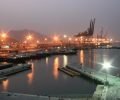
Morocco is accelerating one of the region’s most ambitious maritime infrastructure drives, investing billions of dollars to expand ports, logistics corridors and shipbuilding facilities as Rabat seeks to transform the kingdom into a strategic trade and energy gateway linking Europe, Africa and the Atlantic world.
The North African country is implementing a long-term ports strategy running through 2030, with total investments estimated at around 75 billion dirhams ($8 billion), according to Sanae El Amrani, Director of Ports and the Maritime Public Domain at the Ministry of Equipment and Water.
The programme comes amid growing global competition over maritime routes, supply chains and clean energy infrastructure, with governments increasingly viewing ports not merely as transport hubs but as instruments of geopolitical influence and industrial sovereignty.
Morocco’s plan includes the construction of six new ports, the expansion of five existing facilities and the development of six ship maintenance and repair docks aimed at reducing reliance on foreign shipyards and strengthening domestic maritime industries.
Among the flagship projects is Nador West Med, a major Mediterranean port expected to be completed this year, alongside the vast Dakhla Atlantic Port project in Morocco’s south, which has already reached around 58 percent completion.
Rabat aims to increase the annual handling capacity of Moroccan ports by roughly 15 percent to exceed 450 million tonnes by the end of the decade, up from around 390 million tonnes currently.
The expansion comes as port activity surges. Cargo volumes handled by Moroccan ports climbed to approximately 262 million tonnes last year, marking annual growth of 8.9 percent.
Amrani said the pace of growth reflected the urgent need for “efficient and sustainable ports” capable of supporting trade, investment and Morocco’s integration into global supply chains.
With coastlines stretching roughly 3,500 kilometres across both the Atlantic Ocean and Mediterranean Sea, Morocco sees its geography as one of its strongest strategic assets. The kingdom operates 44 ports, including 14 dedicated to foreign trade, positioning itself as a natural bridge between Europe, Africa and the Americas.
At the centre of this maritime transformation stands Tangier Med, Morocco’s flagship port complex and the largest port in Africa and the Mediterranean basin since entering service in 2007.
Tangier Med has evolved far beyond a conventional shipping facility into a fully integrated industrial and logistics ecosystem hosting export-oriented manufacturing zones, including Renault’s automotive production hub and a network of European-linked industrial suppliers.
But Morocco’s strategy increasingly extends southward toward the Atlantic.
The Dakhla Atlantic Port project is emerging as a cornerstone of Rabat’s broader geopolitical and economic vision for Africa. Moroccan officials view the future port as a major gateway connecting Sahel countries to international trade routes through the Atlantic Ocean.
Nesrine Ayouch, the port’s development director, said the project aligns with Morocco’s broader regional infrastructure ambitions, including initiatives aimed at granting landlocked Sahel states access to the Atlantic and supporting the planned Nigeria-Morocco gas pipeline.
In 2023, Rabat launched an initiative to provide Atlantic access to Sahel countries including Mali, Niger, Burkina Faso and Chad, with Dakhla expected to become one of the initiative’s main logistical pillars.
The project has already attracted around $1.4 billion in investments through public-private partnerships, while total infrastructure spending is expected to reach approximately $3 billion, alongside another $2 billion in logistics investments.
Expected to be completed by 2028, the port will have an annual handling capacity of 35 million tonnes and depths reaching 80 metres, enabling it to receive some of the world’s largest cargo vessels.
Morocco’s maritime vision also reflects shifting global energy priorities.
The government is preparing ports to support exports linked to green hydrogen and renewable energy industries as Europe seeks alternative clean energy suppliers closer to its markets.
Authorities are developing specialised infrastructure in Tan-Tan near areas earmarked for major solar energy and desalination projects, while both Nador and Dakhla are being prepared to handle future green hydrogen products and derivatives.
The wider infrastructure strategy forms part of a programme exceeding $100 billion between 2025 and 2030, covering transport, logistics and energy projects ahead of Morocco’s co-hosting of the 2030 FIFA World Cup alongside Spain and Portugal.
Alongside port investments, Morocco is implementing a nearly $14 billion programme to modernise airports and railway networks, including expanding high-speed rail systems designed to strengthen tourism and reinforce the kingdom’s role as a gateway between Europe and Africa.
Analysts say the strategy reflects growing international competition over African maritime corridors, which are increasingly viewed as strategic platforms where trade, infrastructure, energy and geopolitical interests intersect.
The Policy Center for the New South, a Moroccan think tank, said African maritime routes were no longer merely geographic extensions but had become central arenas shaping global commerce and strategic influence.
The centre warned that intensifying international competition over shipping routes and critical resources across Africa was likely to further increase the strategic importance of investments in ports and maritime infrastructure throughout the continent.
Source: The Arab Weekly