Wärtsilä: All-Time High Operating Result And Cash ...
2 months ago

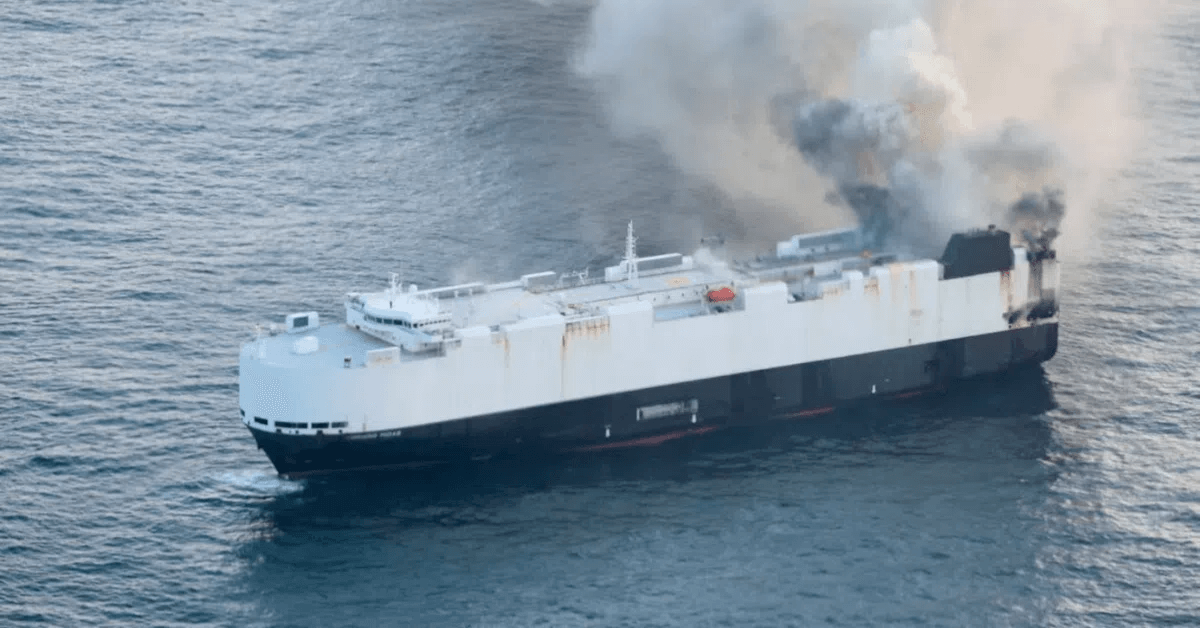

A lithium-ion (Li-ion) battery system recently caught fire onboard an inspected passenger ship after its loosely crimped lugs overheated. Although no one was hurt and the damage to the vessel was minimal, the incident has raised serious safety concerns related to Li-ion battery installations on commercial vessels.
The U.S. Coast Guard highlighted that all integrated Li-ion battery systems used for ship propulsion and electrical power must go through proper engineering plan reviews. These systems must also include safety features, be tested at the time of installation, undergo regular inspections, and be maintained by trained mariners, regardless of the battery bank’s size or use.
Risks Linked to Li-ion Battery Use
Li-ion batteries are widely used on vessels due to their high energy density, which allows ships to travel longer distances and enables full electrification. But the higher the energy density, the higher the risk. If a fire starts, it tends to burn more intensely and last longer.
A major danger is thermal runaway, where an internal failure or short circuit causes the battery to release very hot and flammable gases. These gases can catch fire or explode. The heat from the fire can cause more gas to be released, making the fire worse in a chain reaction that is hard to control.
Once thermal runaway spreads to other battery modules, it becomes extremely difficult to stop the fire. In such cases, the focus shifts to detecting the issue early, containing the fire, and using water-based systems to absorb the heat.
Another concern is the release of toxic gases during thermal runaway. These gases can go beyond the levels considered immediately dangerous to life or health (IDLH), putting passengers and crew in danger. The type of gases released can vary depending on the battery chemistry and manufacturer.
Li-ion batteries are usually connected to a Battery Management System (BMS), which helps prevent problems like overcharging, deep discharging, or overuse. These systems manage propulsion loads, power supply, topping, and recharging cycles. The proper functioning of these systems plays a big role in reducing the risks associated with Li-ion batteries.
Coast Guard Design Requirements
The Coast Guard has issued detailed design rules for integrated Li-ion battery systems in Policy Letter 02-19 (PL 02-19). These rules are based on the ASTM F3353-19 standard, which gives guidance for using Li-ion batteries on ships.
These design requirements include:
Because of the serious safety risks and specific technical requirements, the Coast Guard does not allow expedited plan reviews under NVIC 10-92 for Li-ion battery installations.
This safety alert only applies to Li-ion battery systems that are built into the ship’s electrical system. It does not cover plug-in devices or Li-ion batteries being carried as cargo.
Advice for Vessel Owners and Operators
Li-ion batteries can look similar to lead-acid batteries, so the best way to identify them is by checking the nameplate details. The batteries can vary by the type of electrode, electrolyte, and separator materials. Common types used in ships include:
As battery technology advances, new types are also being introduced.
Plan reviews and testing procedures like DVTPs and PSTPs should be completed during the construction phase. If the system hasn’t been reviewed and tested before delivery, marine inspectors may ask for the plan review to be completed through the Marine Safety Center.
Battery banks should be checked visually for signs of wear or damage, like bulging cells or corroded connections. Records of completed maintenance tasks must be kept on board.
Crew members handling these systems must be trained in the battery manufacturer’s instructions. They should understand how the battery system works, know how to operate and maintain it, and be prepared to respond to abnormal conditions or fires.
Safety drills specifically for Li-ion battery fires should be carried out regularly. Risks related to battery systems should also be considered when conducting other shipboard drills.
Reference: USCG
Disclaimer :
The information contained in this website is for general information purposes only. While we endeavour to keep the information up to date and correct, we make no representations or warranties of any kind, express or implied, about the completeness, accuracy, reliability, suitability or availability with respect to the website or the information, products, services, or related graphics contained on the website for any purpose. Any reliance you place on such information is therefore strictly at your own risk.
In no event will we be liable for any loss or damage including without limitation, indirect or consequential loss or damage, or any loss or damage whatsoever arising from loss of data or profits arising out of, or in connection with, the use of this website.
Disclaimer :
The information contained in this website is for general information purposes only. While we endeavour to keep the information up to date and correct, we make no representations or warranties of any kind, express or implied, about the completeness, accuracy, reliability, suitability or availability with respect to the website or the information, products, services, or related graphics contained on the website for any purpose. Any reliance you place on such information is therefore strictly at your own risk.
Do you have info to share with us ? Suggest a correction