Port of Barcelona to Tender Methanol and LNG Bunke...
2 hours ago

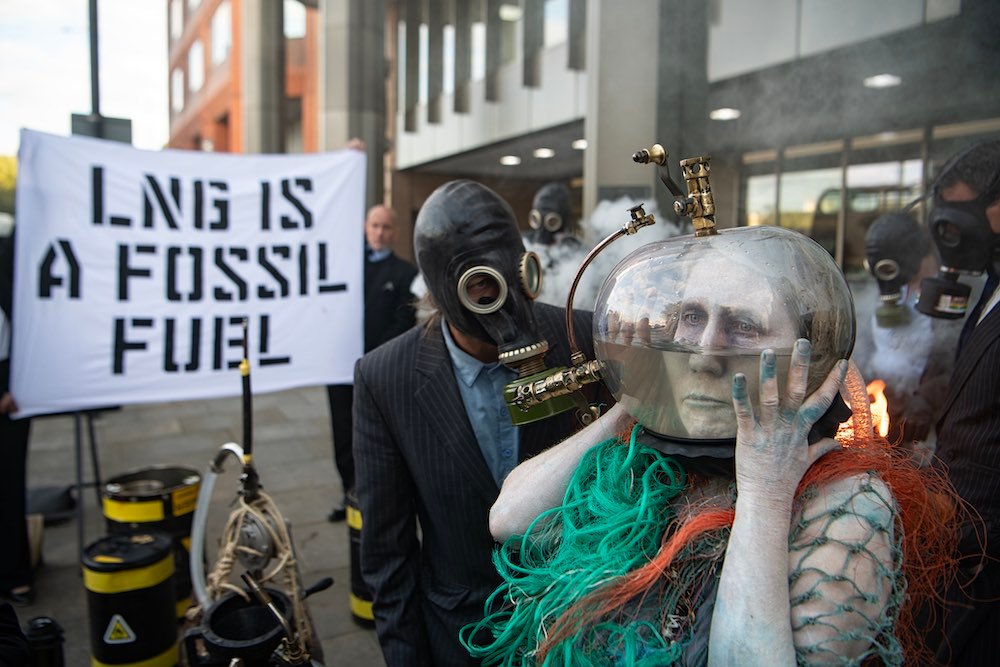
Maritime Beyond Methane (MARBEM) – a new global initiative that works with policy experts, financial analysts, economists and research institutions dedicated to aligning global climate ambition with maritime leadership – launched today to accelerate the shipping industry’s transition beyond methane-based fuels.
Maritime Beyond Methane is an initiative, with partners in 13 countries, focused on the LNG supply chain, including fossil, bio- and e-LNG, to clarify regulations, technologies, and analyse the trends influencing maritime decarbonisation.
Methane, a greenhouse gas 82 times more potent than CO₂ in the short-term, is the primary component in LNG. Methane emissions from LNG-fuelled ships rose 180% between 2016 and 2023, according to MARBEM.
LNG continues to dominate ship engine uptake, with LNG-dual fuel vessels accounting for 55% of the current orderbook.
“If this trend continues, fossil gas could supply more than 10 percent of the energy used by the global maritime fleet by 2030,” MARBEM stated in a release, adding: “At the same time, misaligned solutions, such as e-methane/e-LNG and biomethane/bio-LNG, further risk locking the sector into long-term dependence on methane-based fuels, creating a barrier to the transition to a sustainable, zero-emission future.”
LNG as a future fuel will be debated a great deal at next week’s vote on the International Maritime Organization’s Net-Zero Framework.
Elissama Menezes and Andrew Dumbrille, directors of Equal Routes, serve as MARBEM’s secretariat, with the pair writing for Splash last week, suggesting: “Once the IMO applies this comprehensive life-cycle approach under the framework’s guidelines, it becomes clear that methane-based fuels – LNG, biomethane, and e-methane – cannot credibly deliver on climate, pollution, or human rights objectives, exposing the industry’s rhetoric for what it is: false promises that have propped up LNG all along.
Despite LNG’s popularity as an alternative fuel, methane emissions have been the Achilles’ heel undermining its climate credentials.
However, Japan’s Mitsui OSK Lines (MOL) made headlines on Wednesday when it announced it had achieved a 98% reduction in methane slip during sea trials using a new methane oxidation catalyst and engine modification system aboard an LNG-fuelled coal carrier panamax.
By proving a near-total elimination of slip in real-world sea conditions, MOL and partners may have handed LNG a crucial lifeline in the decarbonisation debate.
In a surprise intervention, Christopher Wiernicki, the departing chairman and CEO of ABS, the third largest shipping classification society in the world, came out against IMO’s planned net zero framework last month.
“Shipping and the IMO are on different trajectories. There is no clear pathway for green fuel availability and scalability and infrastructure support. LNG and biofuels are mission critical to any success and should not be overlooked, over penalised or discarded in the net zero regulation,” Wiernicki said at the launch in London of the 2025 ABS Sustainability Outlook, backing greater support for LNG as a bridging fuel.
“Getting closer to the 2030s, we need to protect the bridge, which is LNG with methane-slip controls and credible bio-/e-LNG pathways,” Wierniki said, his LNG viewpoint is something that is supported by rival class society DNV.
Peter Keller, chairman of SEA-LNG, a lobby group supporting the super chilled fuel as an alternative shipping fuel, claimed earlier this week: “The evidence is clear: LNG is delivering emissions reductions now and providing a practical pathway to net-zero through biomethane and e-methane. It is essential that future regulation builds on this momentum and recognises the proven benefits of the methane decarbonisation pathway.”
LNG’s credentials as shipping’s leading alternative fuel have driven much debate for years, attracting much criticism from academics, NGOs, and even the World Bank.
Overall, 192 new orders for alternative-fuelled vessels have been placed in the first nine months of 2025, with LNG-fuelled vessels accounting for the majority of these orders at 121, followed by 43 orders for methanol-fuelled ships, with the remainder made up by LPG carriers (19), ammonia-fuelled vessels (5), and hydrogen-fuelled vessels (4), according to data from DNV.