German owner Oltmann revealed behind quartet of 10...
2 hours ago

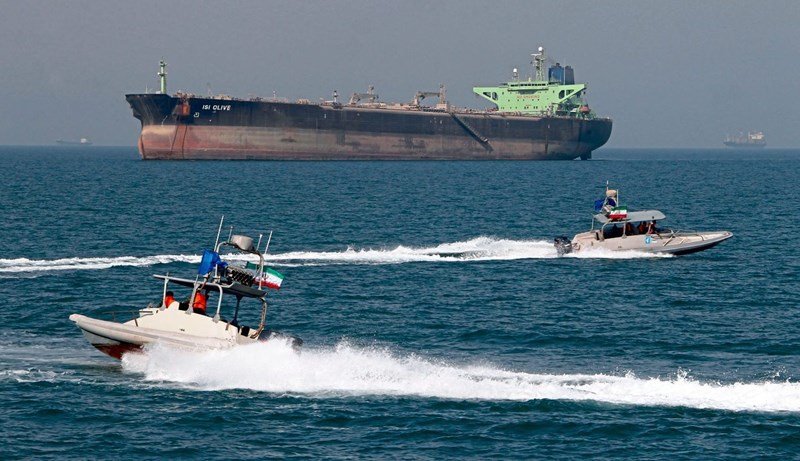
The Trump administration’s Project Freedom operation to guide stranded vessels out of the Persian Gulf through the Strait of Hormuz has been suspended after just two days, as Iran pressed ahead with attacks on commercial shipping and unveiled a formal toll collection authority for the waterway.
President Donald Trump announced on Tuesday evening that the operation would be paused for a “short period of time” by “mutual agreement,” citing “great progress” toward a deal with Iran. The pause came at the request of Pakistan, which has been acting as intermediary between Washington and Tehran. The US naval blockade of Iranian ports, Trump stressed, would remain in place.
Iranian state media wasted no time in claiming victory, characterising the pause as evidence that Trump had “retreated” after “continued failures” to reopen the strait. Iran’s parliamentary speaker Mohammad Ghalibaf, Teheran’s top negotiator in last month’s talks, was bullish. “We know well that the continuation of the status quo is intolerable for America, while we are just getting started,” he said, adding that “their evil acts will fail.”
Secretary of State Marco Rubio said the initial US-Israeli offensive – Operation Epic Fury – had concluded after achieving its objectives, and framed the pause in diplomatic terms. “We would prefer the path of peace. What the president would prefer is a deal,” he told reporters.
The suspension undercut a day’s worth of hawkish messaging from Rubio, Defence Secretary Pete Hegseth and Joint Chiefs chairman General Dan Caine, all of whom had vowed to restore freedom of navigation through the strait. Even as Trump spoke, UKMTO confirmed that a cargo vessel had been struck by an unknown projectile in the strait, later reported to be the Maltese-flagged boxship CMA CGM San Antonio.
For commercial shipping, the suspension of Project Freedom coincides with a troubling new development from the Iranian side. Tehran has launched a formal Persian Gulf Strait Authority, providing shipowners with an official email address – info@PGSA.ir – through which they can arrange transit authorisation with the Islamic Revolutionary Guard Corps.
The creation of the authority gives Iran’s toll regime a veneer of bureaucratic legitimacy, but resolves none of its legal problems. The IRGC remains a US-designated foreign terrorist organisation, and Washington has threatened to sanction any entity that pays Iran for transit. Shipowners considering engagement with the new authority face an acute compliance dilemma – particularly given the surveillance reach of US signals intelligence.