
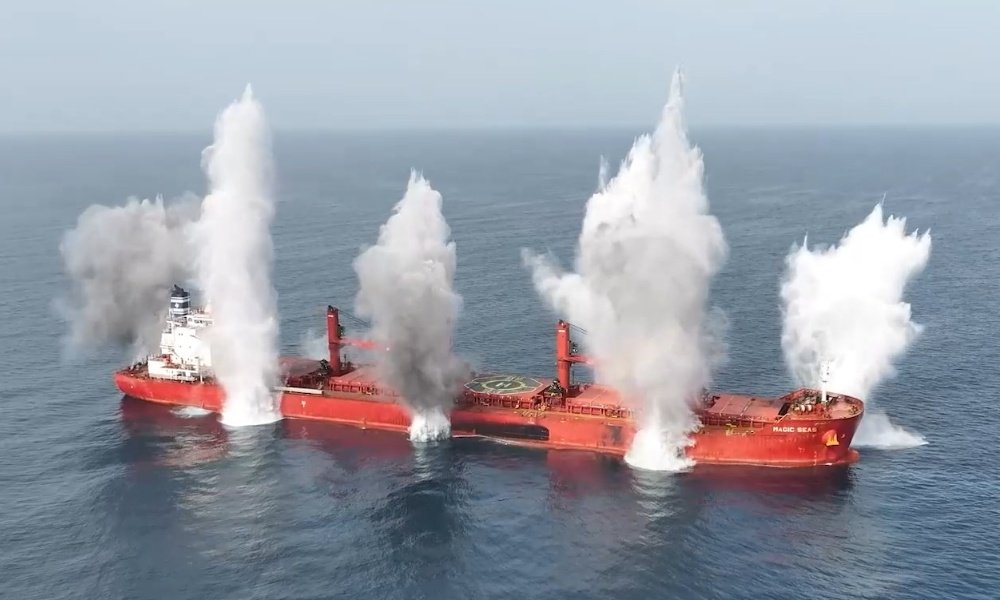
The Houthis officially announced that they have paused maritime attacks on Israel and lifted their so-called naval blockade on Israeli ports. This announcement appeared at the end of a letter sent to Hamas’s military wing, Kata’ib al-Qassam, by the newly appointed Houthi chief of staff, Yousef Hassan Al-Madani, who succeeded Mohammed Al-Ghamari after he died in Israeli airstrikes. Nevertheless, experts covering the Red Sea shipping crisis have advised caution over any swift return to the Middle Eastern tradelane.
Guinea officially launched the vast Simandou iron ore project this week — Africa’s largest greenfield mine and infrastructure development — in a ceremony at the port of Matakong, marking a turning point for both the West African nation and the dry bulk trades. The long-awaited project is viewed as a $20bn game-changer set to shake up global capesize flows, stretch tonne-miles, and tilt the balance of the iron ore market away from Australia and Brazil.
Our brand new Seafarers magazine launched this week to coincide with Crew Connect in Manila, as well as next week’s Hong Kong Maritime Week. A strong theme throughout the 76-page publication looks at how the march of digitalisation risks outpacing the people it’s meant to serve — and how smarter design and training can close that gap.
This week we had not one, but two Maritime CEO interviews with Marlink and Glander International Bunkering.
The opening of the Simandou iron ore project and the structural shift in Atlantic tonne-mile demand for capesizes form this week’s Splash Wrap podcast carried below.