Baltic Dry Index climbs to 2095 up 137 points
39 minutes ago

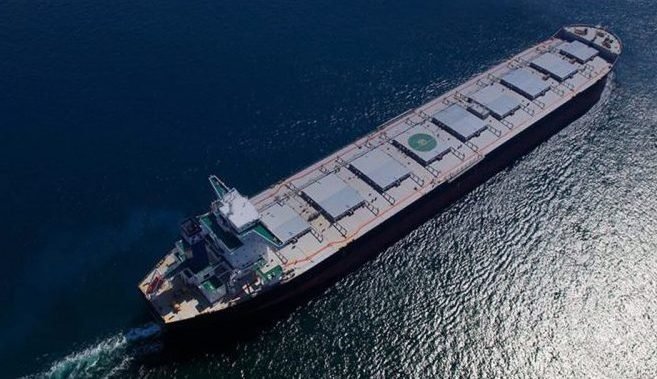
Iron ore continues to dominate global dry bulk tonne-mile generation, though its relative weight has steadily declined over the past decade, from 41.5% in 2015 to a low of 36.2% in 2024, and to around 37.1% in 2025 year to date, according to dry bulk carrier movement data from AXSMarine carried in a new report from Greece’s Ursa Shipbrokers.
Ursa links iron ore’s relative easing to the the maturing phase of China’s steel-intensive growth model and the relative growth of bauxite and the broader spectrum of minor dry bulk cargoes outpacing that of iron ore volumes.
Coal, taking into account both metallurgical and thermal coal varieties, remains the second largest dry bulk segment. After peaking at over a quarter of global tonne-miles in 2018, its share has trended lower in recent years.
The global share of coal cargoes in dry bulk tonne-mile generation reached an annual low of 21.7% in 2020, before rebounding to 22.3% in 2021, 23.8% in 2022, and 24.2% in 2023. The rebound reflected coal’s renewed role as a backup energy source during the global energy crisis that followed the rapid post-pandemic economic recovery and the Russian invasion of Ukraine. Coal cargoes’ share in the global dry bulk tonne-mile landscape eventually retreated to 23.3% in 2024 and in 2025 year to date stands at 21.0%, the lowest level in a decade.
Renewable energy overtook coal as the world’s leading source of electricity in the first half of this year – a historic first, according to new data from the global energy think tank Ember.
By contrast, bauxite has emerged as one of the fastest expanding cargoes, rising from barely 2.0% in 2015 to over 8% in 2025 year to date (8.4%). Bauxite’s rise reflects the rapid build-up of alumina refineries in China and the surge in long-haul exports from Guinea in West Africa.
West Africa now represents 14% of capesize liftings as compared to 6% three years ago, according to recent data from Jefferies, an investment bank. The redrawing of the global cape trading map has been driven by strong bauxite export growth, mainly out of Guinea. Cape volumes out of West Africa are up by more than 30% this year, according to analysts at Jefferies, who note that the November launch of the giant Simandou iron ore project in Guinea will see more long-haul cape loadings from West Africa, tightening the market further.
The International Aluminium Institute estimates China produced 43.4m tonnes of primary aluminium in 2024, more than fifteen times the level recorded in 2000. With electric vehicles and construction fuelling demand, the bauxite trade has become one of the most significant growth stories in dry bulk shipping.
Meanwhile, during the last decade (2015 to 2024), the share of grain shipments (excluding soybeans) in global tonne-mile generation has ranged between 8.4% (2018) and 10.1% (2015), and that of soybeans between 5.5% (2015) and 6.8% (2020). Combined grains and soybean shipments peaked at 16.6% in 2020 in global dry bulk tonne-mile generation, and have reached 14.0% in 2025 year to date, according to Ursa.