Baltic Dry Index climbs to 1972 up 46 points
1 hour ago

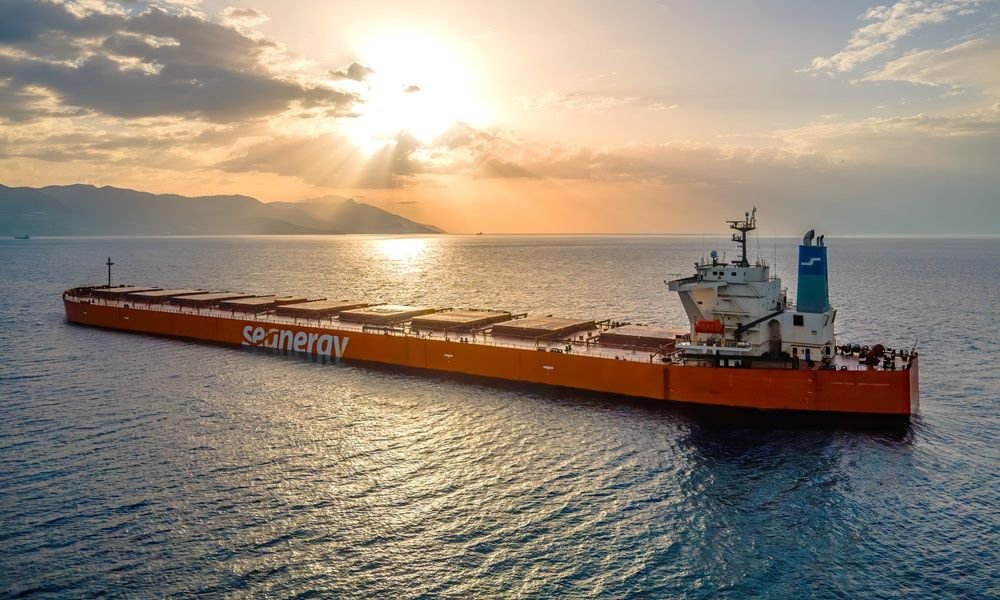
China has set yet another record for bauxite imports, cementing the aluminium raw material as one of the strongest dry bulk growth stories of recent years and a rare source of support for large bulk carrier demand.
Bauxite discharges into Chinese ports reached about 213m tonnes in 2025, up 25% year on year from 171.1m tonnes in 2024, according to vessel-tracking data compiled by Ursa Shipbrokers. It marks the fourth consecutive annual record since 2022.
The surge in Chinese demand has driven global growth as well. Worldwide bauxite discharges reached an estimated 241.4m tonnes in 2025, a 21% increase on the year, lifting bauxite’s share of global dry bulk tonne-mile demand to just under 9%, up from 7% a year earlier and barely above 2% less than a decade ago.
China absorbed an estimated 88% of all ocean-traded bauxite last year, the highest share seen in at least the past decade. Signal Ocean data tells a similar story, showing seaborne bauxite flows rising 18% year on year to around 257m tonnes, with China increasing its share of total imports from 83% to 85%.
Supply remains heavily concentrated in West Africa. Guinea accounted for roughly 72% of global bauxite discharges in 2025 and supplied about three-quarters of China’s imports, with cargoes largely loading at Kamsar and Boffa. Voyages from Kamsar to Qingdao span more than 11,400 nautical miles, keeping tonne-mile demand elevated and favouring larger ships.
That dynamic has fed directly into fleet utilisation. Newcastlemaxes carried about 36% of global bauxite discharges in 2025, followed by capesizes at 28% and post-panamax tonnage at 16%, giving the three largest segments a combined 80% share of the trade, according to Ursa.
Behind the shipping numbers sits a resilient aluminium sector. China’s primary aluminium production hit a record pace in 2025, with output for January to November estimated at 40.4m tonnes, according to the International Aluminium Institute. With copper supplies tight and prices high, aluminium substitution has accelerated, helping keep smelter utilisation rates firm.
Signal Ocean expects those dynamics to carry into early 2026. High power costs in Europe and the US have tightened aluminium supply elsewhere, reinforcing China’s reliance on imported bauxite and supporting continued strong flows in the first quarter.
For the dry bulk market, bauxite stands out. While iron ore and coal face softer outlooks that may weigh on capesize demand, bauxite is expected to outperform in the near term. Longer term, analysts flag Guinea’s plans to expand domestic processing as a potential risk to seaborne volumes, but any meaningful impact is unlikely before the latter part of the decade.