Guinea’s Simandou to become largest driver of seab...
2 hours ago

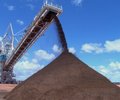
China has moved in earnest to secure leadership in the global iron ore market. In this market worth about $190 billion (about 287 trillion won), it aims to leverage its status as the largest buyer to shake up even the price-setting structure. Foreign media said China, having reaffirmed supply chain anxieties due to the Middle East war, is seeking to rewrite the pricing framework of the global commodities market.
According to Bloomberg on the 2nd, the core pillar of this push is the state-owned China Mineral Resources Group (CMRG). CMRG was established in 2022 by the Communist Party of China Central Committee and the State Council and serves as a national-level purchaser. It is said to have a direct line to China’s economic advisers.
CMRG has been locked in a months-long head-on clash with BHP Group, the world’s largest iron ore supplier. In the past, buyers such as steelmakers and traders in China transacted individually with BHP, but conflict escalated after CMRG began negotiating on their behalf in a consolidated manner. This is seen as the most intense conflict since the 2000s.
According to the report, CMRG is strengthening its de facto role as a market coordinator beyond a “China buyers’ coalition.” It is consolidating the dispersed demand of Chinese steelmakers and traders to boost bargaining power, and since Sept. last year it has begun to control the purchasing flow itself by restricting the use of some BHP products by domestic steelmakers and issuing transaction guidelines.
In addition, CMRG is trying to control logistics flows by mobilizing indirect tools such as tougher port inspections and higher storage expenses. After iron ore arrives at ports, it sits for a period before moving to domestic buyers, during which port inventories can be used to wait out price swings or continue unofficial transactions. CMRG’s tougher port inspections and higher storage expenses appear intended to delay logistics and make stockpiling difficult, thereby blocking bypass transactions and controlling transaction flows. From the companies’ perspective, to avoid the expense burden, they have little choice but to dispose of holdings early or change their transaction methods.
This strategy is exerting direct pressure on BHP. As demand in China— which consumes more than 70% of seaborne iron ore volumes— begins to be controlled, some products are facing sales disruptions and discount pressure, and the existing dollar-based transaction structure is also being shaken.
Skepticism is also rising. Observers note that the iron ore market is already financialized and structurally complex. With various price formation mechanisms intertwined— not only spot transactions but also futures and indexes— it is difficult to fundamentally change the pricing system simply because a specific player intervenes. Bloomberg said, “China has previously tried to strengthen market control, but the results were temporary, and the market structure became even more complex afterward,” quoting University of Ottawa professor Pascal Massot as saying, “If CMRG had existed in 2006, it might have been a different situation, but over the past 15 years the market has evolved, a variety of stakeholders have emerged, and all of them are exerting influence on the current system.”
Source: The ChosunBiz