What Does China’s Shifting Grain Supply Strategy M...
6 hours ago

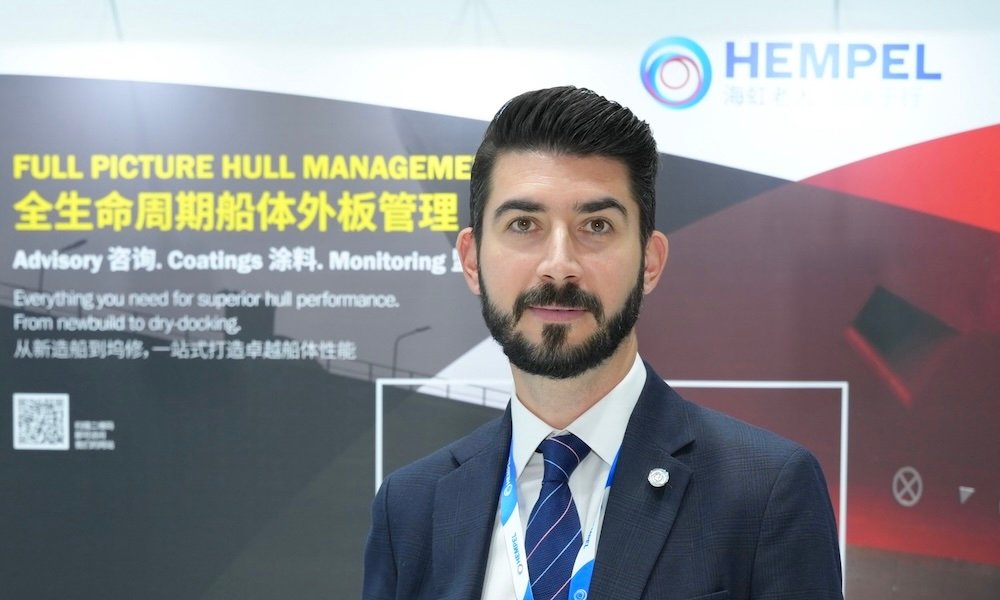
As delegates descend on Switzerland for Geneva Dry next week, the air is thick with anticipation-and a fair amount of regulatory uncertainty. While the high-level panel on decarbonisation, moderated by the World Economic Forum, prepares to tackle the industry’s macroscopic challenges, Yigit Demirel has a more immediate message for the dry bulk sector: don’t ignore what is right under the waterline.
Demirel, Hempel’s hull performance solutions manager, believes that in the rush to find “silver bullet” fuels, the industry often bypasses the low-hanging fruit. To him, some of the most effective decarbonisation measures are also the easiest to overlook.
The backdrop for this year’s summit is a complicated one. Demirel admits there is “some loss of momentum” following the IMO’s late 2025 MEPC session, which failed to formally adopt the NetZero Framework. This delay in GHG pricing has created a “divergence” on the ground. While some owners take a “wait and see” position, Demirel notes that others are pushing ahead, recognising that “improving efficiency is one of the most practical ways to prepare for what comes next.”
At Geneva Dry, Demirel expects the conversation to shift from maintenance to performance. He argues that hull coatings should not be viewed as a routine drydock item, but as a performance decision in their own right.
“Many measures only deliver value under certain operating profiles,” Demirel says. “Hull coatings are different because they act on something fundamental: hull resistance.” By selecting the correct coating for a vessel’s specific trade, owners see “immediate and sustained emissions reductions.”
For the dry bulk owners gathered next week, the bottom line remains the primary driver. Demirel observes that the discussion is “increasingly about total cost of ownership rather than initial cost alone.” This is supported by frameworks like RightShip, which now explicitly recognise the impact of low-friction coatings on the speed-power relationship.
As he prepares to meet clients, Demirel’s focus remains on the practical. While the World Economic Forum panel debates the global roadmap, Demirel is looking at how advanced solutions like Hempaguard deliver measurable results.
“The choice of coating directly influences fuel consumption, emissions, compliance costs and return on investment,” he asserts.
Following a welcome address by Delphine Bachmann, State Councillor in charge of the canton’s Department of Economy and Employment (DEE), the 2026 version of Geneva Dry opens with the Commodities Shipping Outlook and is followed by a risk management session then a special looking at AI, digitalisation and the dry bulk workforce, before closing out day one with the always popular hour devoted to the future of fixing.
Day two starts with a digital drivers panel – with input coming from the outcome of the workshop the day prior – before moving onto the dry decarbonisation session, at which point the conference closes out with cargo-specific panels on minor bulks, agri-commodities, coal and iron ore.
The full Geneva Dry agenda can be accessed here.
Geneva Dry registration, at just $920, can be accessed here.
Special Geneva Dry hotel room rates can be found here.