Guinea weighs bauxite output curbs
1 hour ago

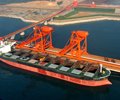
Iron ore futures edged up on Friday as China announced that it would continue with its export licensing plans, but ultimately ended the week lower as inventories grow and demand cools.
The most-traded May iron ore contract on China’s Dalian Commodity Exchange (DCE) traded up 0.71% at 783 yuan($111.74) a metric ton.
The contract was 0.06% lower than last week.
The benchmark January iron ore (SZZFF6) on the Singapore Exchange fell 0.62% to $104.7 a ton, as of 0711 GMT.
China said on Friday that it will continue to regulate crude steel output and prohibit the addition of illegal new capacity from 2026 to 2030.
This comes after Japan Iron and Steel Federation Chairman Tadashi Imai said on Thursday that the licensing system would not be a very effective countermeasure in addressing these issues.
Japan, the second largest exporter of steel globally, criticised Chinese firms for receiving government subsidies that encourage overproduction and low-priced exports, worsening global market conditions.
China’s property market, which used to be the largest steel consumer, has been struggling with a persistent decline since mid-2021, with home prices falling and sales shrinking.
The country announced a licensing system on December 12 aiming to regulate exports of steel in an effort to stabilise prices.
Total iron ore stockpiles across Chinese ports climbed 2.26% week-on-week to about 148.8 million tons, as of December 26, according to SteelHome data.
Inventories of the five major carbon steel products held by the Chinese steel mills declined to 14.5 million tonnes by December 25, logging the lowest since late January, said consultancy Mysteel.
Other steelmaking ingredients on the DCE fell, with coking coal and coke (DCJcv1) down 1.02% and 1.12%, respectively.
Most steel benchmarks on the Shanghai Futures Exchange fell. Rebar lost 0.42%, hot-rolled coil slipped 0.06%, stainless steel stood pat, and wire rod fell 1.29%.
Source: Reuters