Brokers see powerful El Niño adding fuel to freigh...
2 hours ago

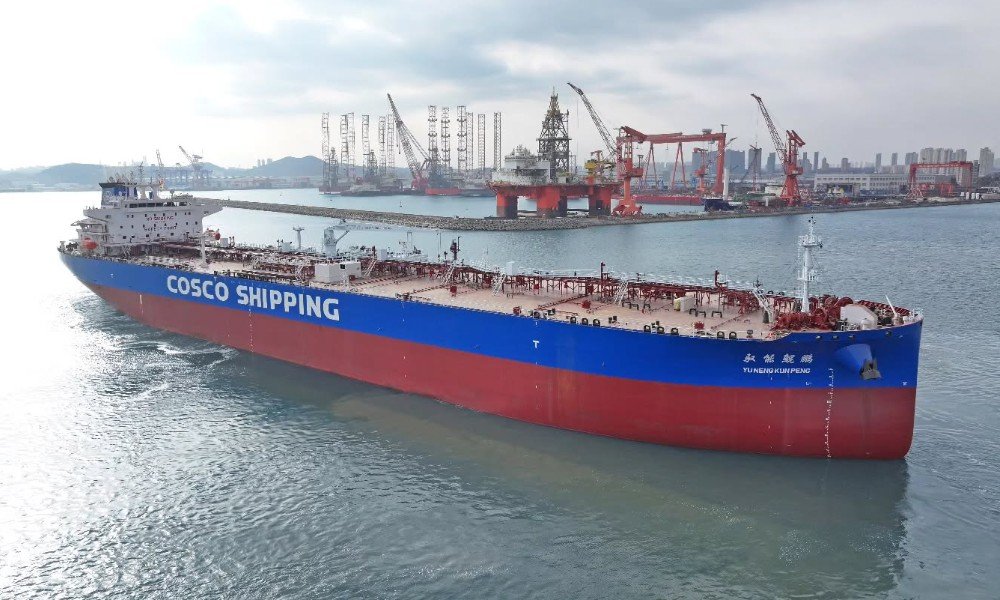
A sweeping new Morgan Stanley research report argues that Asia’s energy security crisis is triggering an investment supercycle that will reshape commercial shipping for the rest of the decade, driving tanker orderbooks higher, accelerating shipyard capacity expansion and generating sustained demand across the coal, LNG and crude carrier sectors.
The 150-page report suggests the Hormuz crisis and broader energy shock are the catalysts for more than $5trn of energy investments across Asia through 2030 – with shipping and shipbuilding explicitly identified as structural beneficiaries of what the bank describes as a once-in-a-generation reorientation of global energy supply chains.
The bank’s central thesis for shipping is straightforward: as Asia diversifies its energy sourcing away from the Middle East toward the US, Latin America, Australia and domestic Asian producers, average trade distances will rise materially, requiring more vessels to carry the same volumes.
The world is entering a period where compute demand exceeds supply
Morgan Stanley sees this tonne-mile expansion driving tanker newbuilding to multi-year highs, with the global tanker orderbook already exceeding 20% of the existing fleet as of April 2026 for delivery over the next three to five years.
On the supply side, the bank sees the compliant tanker fleet as increasingly constrained. Around 19% of crude tankers and 10% of product tankers are currently sanctioned, accounting for roughly 16% of total tanker capacity. Including vessels that are unsanctioned but effectively non-compliant – what Morgan Stanley calls the “shadow but not sanctioned” fleet – Clarksons estimates around 24% of total tanker capacity is outside the mainstream market. This structural removal of tonnage, the bank argues, keeps effective supply tight for compliant owners for as long as sanctions persist or intensify.
Fleet age compounds the dynamic. Around 22% of tanker tonnage is already 20 years or older, with an average fleet age exceeding 14 years. Morgan Stanley sees a mild probability that the tanker orderbook-to-fleet ratio could double by 2030 from its end-2025 level, driven by a combination of accelerating demolitions and new orders serving longer trade routes. The bank draws an explicit parallel to the late 1960s and early 1970s, when the Suez Canal’s closure forced Middle Eastern oil bound for Europe around the Cape of Good Hope and ushered in an unprecedented tanker boom.
The broader crisis context reinforces the Morgan Stanley thesis. Goldman Sachs has described the current supply disruption as the worst oil crisis in history, noting that major economies hold an average of only around 40 days of crude oil in storage – with some, including the UK, at just 14 days. JPMorgan, in a widely cited briefing note, warned of a “ticking time bomb” as physical scarcity of oil began spreading sequentially from east to west through Asian and European markets. The bank noted that if Persian Gulf flows remain near zero, “there is no further offset available and outright supply rationing becomes inevitable” – a conclusion that, if sustained, would keep tanker demand structurally elevated as operators seek ever-longer alternative routing.
The coal carrier sector is identified by Morgan Stanley as another direct shipping beneficiary. The bank forecasts coal consumption for power rising to 4bn tonnes per annum by 2030, its fastest growth this decade, as Asian governments lean on domestic coal reserves to secure AI data centre power demand. Asia holds nearly three-fifths of global coal reserves, and the report argues coal’s comeback will slow LNG infrastructure growth and directly support capesize and dry bulk demand.
That assessment aligned closely with what was being said at last month’s Geneva Dry conference in Switzerland, where the coal session argued that coal’s obituary had been written too early. Arrow research head Burak Cetinok told delegates the Hormuz crisis could add between 55m and 65m tonnes of incremental seaborne coal demand – the equivalent of removing around 100 capesize ships from the spot market.
“We are witnessing an energy crisis,” Cetinok said. “Demand for coal is rising and I think we are just at the beginning of it.”
Nicos Rescos, COO of Star Bulk Carriers, noted that governments were increasingly prioritising strategic reserves and stable electricity supply over emissions targets. “The narrative is changing,” Rescos said. “Industrial groups focused on decarbonising are suddenly realising they need to focus on energy reserves.”
William Fairclough, managing director of Wah Kwong Maritime Transport Holdings, captured the shift most succinctly: “Decarbonisation was dominating the long-term strategy and suddenly energy security became the most important thing.”
LNG shipping also features prominently in the Morgan Stanley report. The bank notes 250 LNG carriers are being added or are in various stages of construction globally, as Asia’s gas infrastructure boom connects suppliers to last-mile consumers across the region.
Analysts at Bernstein similarly forecast global LNG demand to rise by around 8.5% this year to roughly 441m tonnes, driven “almost entirely by Asia”. The bank said Europe’s LNG imports are also likely to remain elevated as countries continue reducing dependence on Russian pipeline gas.
Asia’s shipbuilding industry sits at the centre of Morgan Stanley’s investment thesis.
Morgan Stanley said undersupply of vessels could persist for longer than expected as older ships are scrapped while demand rises for tonnage capable of serving longer-haul energy trades. The bank even suggested the global tanker orderbook-to-fleet ratio could double by 2030 from end-2025 levels.
Morgan Stanley’s own thematic analysts believe the energy implications of AI are still underestimated by markets. In a separate report published this spring, the bank said AI, geopolitics and energy security are increasingly becoming “intersections” driving investment decisions globally.
Stephen Byrd, Morgan Stanley’s global head of thematic research, warned the world is entering a period where “compute demand exceeds supply”, requiring huge increases in power generation, transmission infrastructure and fuel supply.
The bank forecasts global electricity demand will rise by more than 1trn kWh annually through 2030, with AI data centres accounting for nearly one-fifth of that increase.
Energy economists increasingly argue that “just-in-case” sourcing is replacing decades of “just-in-time” efficiency. Rather than relying on nearby suppliers, governments are prioritising security and diversification, often at the expense of shorter shipping routes.