Baltic Dry Index climbs to 1999 up 219 points
5 hours ago

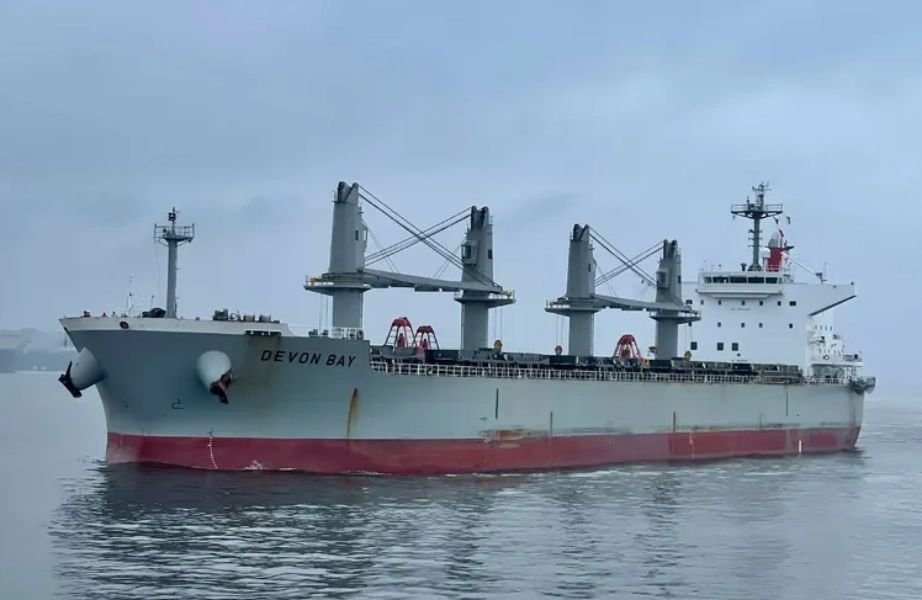
Liquefaction of a nickel ore cargo is emerging as the leading suspected cause of the fatal capsize of the ultramax Devon Bay off the disputed Scarborough Shoal, in what appears to be the latest in a long line of deadly bulk carrier losses linked to the high‑risk commodity.
The 2013‑built, 56,095 dwt Devon Bay, Singapore‑flagged and owned by K Line Pte Ltd, a subsidiary of Japan’s Kawasaki Kisen Kaisha (K Line), was carrying about 55,000 tonnes of nickel ore from Gutalac in the southern Philippines to Yangjiang, China when it listed and capsized late on January 22.
Philippine Coast Guard (PCG) commandant admiral Ronnie Gil Gavan said initial testimonies from crew pointed to cargo instability.
“The initial statements of the crew suggest that the cargo – it was carrying around 55,000 tons of nickel ore and there was liquefaction. The moisture content of the cargo caused the shifting of the weight to the left side of the ship or the port side… and the weather was not good. There were big waves. That is the initial suspicion that we have, no conclusive data yet,” Gavan told local media.
Of the 21 Filipino seafarers on board, 17 were recovered in a joint operation involving Chinese and Philippine coast guard units; two later died from their injuries, while four, including master Captain Elimar Jucal, remain missing. Gavan publicly praised Jucal’s “heroism”, noting the captain stayed onboard until the end.
The casualty has again thrust nickel ore – classified as a Group A cargo under the IMSBC Code – into the spotlight as “the world’s most dangerous cargo”, a label long used by Intercargo. When moisture exceeds the transportable moisture limit, apparently solid ore can behave like a liquid, allowing sudden, catastrophic shifts in the holds and giving crews little or no time to abandon ship.
Most past nickel ore disasters have involved shipments from the Philippines and Indonesia to China, with losses including Nasco Diamond, Jian Fu Star, Hong Wei, Vinalines Queen and Emerald Star. Intercargo’s latest Bulk Carrier Casualty Report found that between 2015 and 2024, cargo liquefaction – particularly of nickel ore and bauxite – was responsible for 55 of 89 bulk carrier fatalities.